What are GE foods?
GE foods are those
including ingredients made using techniques in which scientists insert
genes into an organism's DNA. [1]
Genes are templates that
cells use in creating proteins, which determine many of an organism's
characteristics. Changing an organism's genes therefore can cause its
cells to make novel proteins, causing it to exhibit a new trait.
For example, a gene
conferring cold resistance in fish can make a tomato plant create proteins
which similarly give it greater resistance to cold.
GE versus traditional
breeding
Traditional breeding is
another way of getting genes into an organism to cause it to exhibit a new
 trait. Although the biotechnology industry would have you believe that GE
is just like traditional breeding, it is radically different.
trait. Although the biotechnology industry would have you believe that GE
is just like traditional breeding, it is radically different.
In traditional breeding,
members of the same, or very similar, species are crossed to create
offspring with some novel trait. This greatly limits the genes that can be
combined. Furthermore, when different but similar species are crossed,
their offspring are infertile--preventing inter-species gene combinations
from propagating in the wild. For example, a donkey and a mare can make a
mule, but the mule will be infertile, the end of the line for the combined
genes.
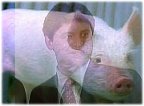 GE
smashes these natural barriers! Using GE, any gene from any plant, animal,
bacterium, fungus or virus can be inserted into the DNA in reproductive
cells of any other organism. If the resulting organism survives, it
generally can pass on its altered DNA, and whatever new traits it causes,
through normal reproduction. For example, GE enables scientists to create
pigs which have human genes, genes which will be passed on to future
generations of GE pigs.
GE
smashes these natural barriers! Using GE, any gene from any plant, animal,
bacterium, fungus or virus can be inserted into the DNA in reproductive
cells of any other organism. If the resulting organism survives, it
generally can pass on its altered DNA, and whatever new traits it causes,
through normal reproduction. For example, GE enables scientists to create
pigs which have human genes, genes which will be passed on to future
generations of GE pigs.
Inherent danger
Since an organism's genes
serve as templates in creating proteins, which determine many of the
organism's characteristics, new genes are inserted into an organism's DNA
so that it produces novel proteins and novel characteristics. The inherent
danger in creating crops and foods in this way is that these novel
proteins may easily have unforeseeable consequences.
The likelihood of
unforeseeable consequences is exacerbated by the fact that gene insertion
is actually wildly imprecise. Scientists cannot determine where, or how
many, genes end up in a host
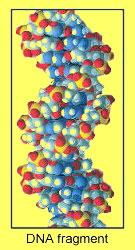 organism's DNA. The random insertion of genes can create proteins that
have never existed before in nature. It can also inactivate existing genes
(preventing them from expressing a normal protein) or activate inactive
genes (creating proteins that normally are not expressed).
organism's DNA. The random insertion of genes can create proteins that
have never existed before in nature. It can also inactivate existing genes
(preventing them from expressing a normal protein) or activate inactive
genes (creating proteins that normally are not expressed).
Environmental scientists
discovered decades after their introduction that synthetic pesticides
which do not exist in nature (such as DDT) caused massive harm to people
and the environment. [2]
GE foods (which contain proteins that do not exist in nature) may prove to
have similar unpredictable impacts.
The fundamental
uncertainty about creating new genetic combinations that propagate to
future generations is raising profound objections. Nobel laureate and
Harvard professor emeritus in biology Dr. George Wald put it this way:
"Our morality up to now has been to go ahead without restriction to
learn all that we can about nature. Restructuring nature was not part of
the bargain." [3]
Return
to Menu
[1] In some cases, the
food ingredient itself does not contain a foreign gene, but was produced
using a transgenic organism.
[2] DDT was found to
accumulate in fish and thin the shells of fish-eating birds, such as
eagles and ospreys.
[3]
Wald, George. "The Case Against Genetic Engineering," in The
Recombinant DNA Debate, Jackson and Stich, eds. pp127-128.
