 A
FEW WORDS ON MOTION SICKNESS... A
FEW WORDS ON MOTION SICKNESS...Motion sickness can occur when the sensory inputs about body position contradict what is expected. It can be provoked by abrupt changes in movement, such as occur during bumpy rides, turbulent flights, and rough seas. It can also occur when one is exposed to moving visual scenes while the body is in a relatively fixed state.
Early signs of motion sickness include pallor, restlessness, and cold sweat. In later stages, nausea, excessive salivating, and vomiting
occur.(1) The degree of symptoms that result from an acute exposure to provocative stimuli vary with the intensity of the stimulus and one's susceptibility to this condition.
About one third of the population is highly susceptible to motion sickness, a third experience it in fairly rough conditions, and another third become sick only in extreme
conditions.(1) Selected groups seem particularly susceptible, including children aged 3 to 12 years
(2), people who experience migraine headaches (3), and women, particularly during menstruation and
pregnancy.(3, 4)
The following information provides an overview of the theories regarding the etiology of motion sickness and reviews currently available treatments, including nonpharmacological remedies, over-the-counter products, and prescriptive-strength
medications.
ETIOLOGY
OF MOTION SICKNESS...
The precise etiology of motion remains a mystery. The classic "sensory conflict" explanation, posed by
Reason and Brand and supported by subsequent studies, suggests motion sickness is triggered when the brain interprets sensory messages regarding movement as inharmonious.(5) These messages are delivered by the parts of the body that detect motion, including the vestibular receptors, the eyes, and proprioceptors in the skin, muscles, and other tissues. Sometimes the incoming signals from these sensory sites conflict with each other; other times these signals conflict with the brain's "positional memory".
The traditional sensory conflict theory does not explain motion sickness produced by all conditions, however. For instance, it is unclear why passive low-frequency vertical linear acceleration can cause nausea in
humans.(6) Thus, additional sensory inputs other than those traditionally are thought to trigger motion sickness may play some role.
Mittelstaedt, for instance, recently introduced evidence suggesting inputs from visceral graviceptors may contribute to how the body determines its
position.(7, 8)
Another new theory for some cases of motion sickness is the postural instability theory, based on experiments in which motion sickness was preceded by statistically significant increases in several indices of postural sway. In these cases, motion sickness symptoms were not linked to sensory conflict, but rather to a decreased ability to actively control the body's postural motion.
ANTIMOTION
SICKNESS TREATMENTS...
A variety of antimotion sickness treatments are available which can protect most people if taken one to two hours prior to exposure and in sufficient
dosage.(9)
Most nonpharmacologic remedies currently available for motion sickness are not supported by scientific evidence of efficacy, although new therapies are currently under investigation.
Ingesting large amounts of ginger has long been touted as a cure, but there is little more than anecdotal accounts of any real benefit, although this herb could induce some placebo effect in individuals who experience motion sickness due primarily to psychological
factors.(9)
 Using acupressure to activate the P6 pressure point above the wrist has been shown to effectively combat nausea and vomiting associated with chemotherapy, pregnancy, and surgery
(10), but it has shown little effectiveness for motion sickness. The use of popular acupressure bands
(SeaBands™), which are worn around the wrist to apply pressure to the P6 point, also showed no benefit for combating motion sickness.(11, 12)
Using acupressure to activate the P6 pressure point above the wrist has been shown to effectively combat nausea and vomiting associated with chemotherapy, pregnancy, and surgery
(10), but it has shown little effectiveness for motion sickness. The use of popular acupressure bands
(SeaBands™), which are worn around the wrist to apply pressure to the P6 point, also showed no benefit for combating motion sickness.(11, 12)
Some preliminary evidence suggests that electrically stimulating this point may provide some benefit, however.
Hu et al found that the severity of motion sickness symptoms could be reduced by placing cutaneous electrodes over the P6 point.(13) In another small study of nine people,
Bertolluci et al noted that wearing a portable wristwatch size device that allows them to electrically stimulate the P6 point showed some effectiveness.(14) Continued research on this seems warranted for treating mild cases of motion sickness, although the cost of this treatment could be a drawback for many candidates.
Psychological therapies have also been investigated. Biofeedback does little to reduce symptoms or to increase tolerance to motion
(11, 15). Cognitive behavioral training can help to build some tolerance to provocative motion stimuli and to reduce the need for antimotion medications, but the process is quite time-consuming and thus impractical for most
people.(16)
One interesting study reported a significant decrease in vomiting episodes among 201 children, reportedly prone to motion sickness, when they wore prism glasses that had been prescribed to improve their mechanical reading skills. These glasses are typically worn by children with learning disabilities or Meniere's disease. The prism glasses are thought to decrease discrepancy between visual and vestibular cues and thus to reduce the negative effects of
vertigo.(17) Again, further study on their usefulness in treating motion sickness seems warranted.
PHARMACOLOGIC
TREATMENTS...
Two classes of drugs are known to be effective against motion sickness: those that are central cholinergic blockers and those that enhance dopamine-norepinephrine activity. These drugs act on various sites, including the vestibular receptors and nuclei, the cerebellum, the reticular area, and the vomiting center. All antimotion medications are also effective antiemetic agents.(1)
Researchers at the Naval Aerospace Medical Institute in Florida offer the following theory of how these agents work
(18): the central nervous system reacts to provocative motion stimuli and, in turn, vestibular impulses are transmitted to the vestibular nuclei, the cerebellum, and the brain stem reticular areas. In the vestibular nuclei and the reticular areas, neurons that are responsive to noradrenaline intermingle with those responsive to acetylcholine. These two neural populations appear to compete against each other. Those mediated by acetylcholine increase activity with vestibular stimulation and release a "neurotransmitter signal" which activates the vomiting center. Neurons responding to the noradrenaline promote stabilization, which staves off motion sickness. Some of the effective drugs block acetylcholine while others activate noradrenaline. The balance between these two neuron groups could be influenced by medications and would govern a person's susceptibility to motion sickness. The proper use of motion sickness drugs, then, could ensure that the balance remains favorable for the patient.
Cholinergic blockers include scopolamine, atropine, dimenhydrinate, cyclizine, meclizine, and promethazine.(9) The effective sympathomimetics include d-amphetamine, methamphetamine, premoline, phenmetrazine, phenemine, and
methylphanidate.(19)
These drugs are available in a variety of forms including oral, intramuscular, and suppositories. Drugs taken orally must be taken in a sufficient dosage at least an hour in advance to be effective; otherwise, they must be administered intramuscularly in most cases if motion sickness symptoms have already surfaced.(9)
OTC
MEDICINES...
Over-the-counter remedies are less effective than prescription-strength medications, but provide a lesser degree of side effects and long duration of 6 to 12 hours.(20) These must be taken at least an hour before exposure to be effective, since gastric motility decrease following the onset of motion
sickness.(9) These can be useful for travelers who experience mild to moderate cases of motion sickness. Most of these (remedy) medications are antihistamines, and their initial use stemmed from reports that people being treated for allergies also experienced fewer problems with motion sickness. Although it is unclear precisely how they work to suppress motion sickness symptoms, their anticholinergic properties appear to be the important
element.(21)
Anecdotal reports indicate large individual differences in the effectiveness of antihistamines as antimotion sickness drugs. Dimenhydrinate
(Dramamine™) appears to be the most effective. The usual adult dosage is 50 mg, which typically produces some drowsiness and minor dizziness.(9) It is not recommended when driving or working around machinery, but can be a good choice for long exposure to mild-to-moderate
motion.(18)
Cyclizine (Marezine™) is somewhat less effective at the usual adult dosage of 50 mg, but causes less drowsiness and dizziness and is often used to avoid travel sickness in children or very mild short-term exposures to motion in adults.(9) When
Weinstein et al compared cyclizine and dimenhydrinate in a study involving 5 college students deemed susceptible to motion sickness, they found that the two are similarly effective in preventing the overall subjective symptoms of motion sickness, such as dizziness, sweating, and nausea.
Marezine™, however, was associated with more improvement of GI symptoms and with significantly less drowsiness than dramamine 30 minutes after ingestion.(22, 23)
Meclizine (Bonine™, Antivert™) has a slower onset and longer duration (12 to 24 hours) of action than the other antihistamines. The slower onset may be why it also has a lower efficacy rating. Side effects include drowsiness, dry mouth, blurred vision, and dizziness.(9)
PRESCRIPTION
MEDICINES...
 SCOPOLAMINE SCOPOLAMINE
Scopolamine is the single most effective antimotion sickness
prescription drug, consistently providing more protection than any other single medication in clinical
trials.(9) It is particularly useful for intense motion or for patients who are very susceptible to motion sickness remedy.
Scopolamine is a belladonna alkaloid that acts like atropine. Like the other anticholinergics, this drug acts on the muscarinic receptors, and in this case, blocks all five subtypes. It is also effective in humans at a dosage that does not produce sedation, indicating that its actions may be specific within the vestibular
nuclei.(24) The mechanism of action is thought to be associated with inhibition of vestibular input into the CNS which thus inhibits the vomiting reflex. It may also directly act on the vomiting center in the reticular formation of the
brainstem.(1)
Scopolamine has been shown to be effective in all the classic cases of motion sickness, involving car, air, train, and
sea travel, as well as exposure to virtual reality systems.(25) It is currently available for prescription in two forms: a transdermal patch and a low dose tablet. Each dosage form has its respective benefits and disadvantages which warrant consideration when evaluating the needs of any particular patient.
 The scopolamine patch, (Transderm Scop™, Novartis Pharmaceuticals) is attached to the skin behind the ear in a hairless area and delivers 0.5 mg of scopolamine at a fairly consistent rate over 3 days. This makes the patch useful for long exposures to motion sickness, such as a prolonged sea voyage since the patient need not remember to take the shorter-acting tablets.
The patch must be applied well in advance, however, since an effective drug concentration is not achieved until 6 to 8 hours after application. This delay can be reduced to an hour or less by simultaneously administering a single dose of oral or buccal
scopolamine.(26)
Large variations in urinary excretion rates of the drug from patch-wearers, in absorption of scopolamine through the skin, and in symptom alleviation efficacy have been
reported.(27, 28) Variable absorption and possible underdosage of large patients may have contributed to the report that topical scopolamine is effective in only 50% to 74% of
users.(27) Also due to the fixed dosage, the patch may not be suitable for children or other small
patients.(29)
Common side effects of topical scopolamine include dry mouth (affecting about 2/3 of people) and drowsiness (affect less than 1/3).(30)
 Low dose scopolamine tablets, (Scopace™, Hope
Pharmaceuticals), are also available. These are formulated with 0.4 mg of scopolamine per tablet, and the prescribed dosage is one to two tablets every 8 hours as needed. Although scopolamine in tablet form is readily absorbed from the GI tract(9), it must be taken 1 hour before exposure to motion to reach an effective concentration. The dosing flexibility provided by the tablet makes this form well suited to shorter outings such as day fishing, car rides, or plane trips.
Low dose scopolamine tablets, (Scopace™, Hope
Pharmaceuticals), are also available. These are formulated with 0.4 mg of scopolamine per tablet, and the prescribed dosage is one to two tablets every 8 hours as needed. Although scopolamine in tablet form is readily absorbed from the GI tract(9), it must be taken 1 hour before exposure to motion to reach an effective concentration. The dosing flexibility provided by the tablet makes this form well suited to shorter outings such as day fishing, car rides, or plane trips.
The oral route offers certain advantages over the scopolamine topical patch. In a study conducted for NASA, oral scopolamine was twice as effective as the topical form in preventing motion sickness symptoms.(31) Another study showed that motion-induced symptoms decreased 75% with oral scopolamine compared to 63% with the patch
variety.(32) This may be due to greater consistency in dosage with the oral delivery system.
Another advantage of tablet form is cost. One dose of scopolamine tablet costs less than 10% of the cost of the patch(33).
 Like the patch, the standard dosage of oral scopolamine also produces some dry mouth and drowsiness. Performance side effects, however, reportedly occur less frequently with the oral form, however. These include decrements in tasks involving continuous attention or performance, memorizing new information, and self-rated feelings of alertness and
sociability.(34) Again, this may be due to the dosing flexibility of the tablet formulation, meaning practitioners can prescribe the lowest dosage needed to achieve the needed travel comfort.
Like the patch, the standard dosage of oral scopolamine also produces some dry mouth and drowsiness. Performance side effects, however, reportedly occur less frequently with the oral form, however. These include decrements in tasks involving continuous attention or performance, memorizing new information, and self-rated feelings of alertness and
sociability.(34) Again, this may be due to the dosing flexibility of the tablet formulation, meaning practitioners can prescribe the lowest dosage needed to achieve the needed travel comfort.
Although some drowsiness may be a welcome side effect for travelers who are not operating a vehicle or equipment, this and other performance side effects of scopolamine can be eliminated by adding 5 to 10 mg of the sympathomimetic medication d-amphetamine
(Dexedrine™).(35, 36) The drowsiness produced by scopolamine and the excitement produced by d-amphetamine effectively cancel each other. This combination also produces the fastest rate of habituation in motion sickness, but also leads to increased dry mouth symptoms.(36)
d-AMPHETAMINE and EPHEDRINE
Because the sympathomimetics, such as d-amphetamine and ephedrine, increase the release of norepinephrine into the CNS, they appear to counter the increased activity of acetylcholine-sensitive neurons stimulated by vestibular activation.(36) d-Amphetamine has been shown to protect against motion sickness when used alone and to act synergistically when combined with scopolamine or
promethazine.(36) It reduces the sleepiness and performance decrement produced by scopolamine. The routine use of this controlled drug is unjustified, however, considering its addiction potential.
Ephedrine, which is not a controlled drug, could be used instead, although in combination with the anticholinergics, it is much less effective than d-amphetamine, and its usefulness is questionable based on available laboratory
studies.(37)
PROMETHAZINE
In the typical 25 mg oral dose, promethazine (Phenergan™), which is an antihistamine, is slightly less effective than 0.6 mg scopolamine at preventing motion
sickness.(9) Promethazine is also the only phenothiazine that is effective against motion sickness, perhaps because it reportedly has the strongest central anticholinergic action among this class of
drugs.(18)
The onset of effectiveness occurs at 2 hours and its duration ranges from reported 6 hours
(9) to as long as 18 hours (28). Side effects include significant drowsiness, but less dry mouth and dizziness than occurs with scopolamine. Like scopolamine, adding d-amphetamine or ephedrine to the promethazine regimen can reduce drowsiness.(35)
SUMMARY...
Although the precise etiology of motion sickness is still unclear, several effective treatments are available to prevent its symptoms. Numerous clinical trials support the anticholinergic drug scopolamine as the most effective treatment to prevent motion sickness. This prescription medication, available in both tablet and topical form, is particularly useful for people who suffer moderate to severe symptoms. The shorter-acting (8-hour) tablet allows one to control the precise dose of scopolamine received and should be taken one hour before travel. The scopolamine patch dispenses the medication over 72 hours and is convenient for long exposures. However, variable skin absorption and a fixed patch dosage that may not be suitable for all patients results in reduced efficacy and increased incidence of side effects compared with scopolamine tablets.
Another prescription medication, the sympathomimetic drug d-amphetamine, has also been shown to be very effective against for moderate-to-severe motion sickness; however, its addiction potential makes routine use unacceptable.
For more mild cases of motion sickness, over-the-counter remedies have been proven useful. Most of these medications are antihistamines, and dimenhydrinate appears to be the most effective of this class. The use of nonpharmacologic remedies, such as ingesting ginger supplements and applying acupressure to the wrists, is supported by anecdotal reports and awaits confirmation with controlled clinical studies.
Some
practical advice is always useful:
-
avoid staying inside the cabin
while underways, especially when under engine power;
-
try
to breathe fresh air;
-
keep an eye on the horizon;
-
avoid
dehydration: drink as much water as possible;
-
eat
lightly: apples usually help calm the stomach;
-
if
you feel throwing up will be inevitable, do it overboard -
cleaning will be much easier, and the chance of starting a
"chain reaction" among the rest of the crew, much
smaller !
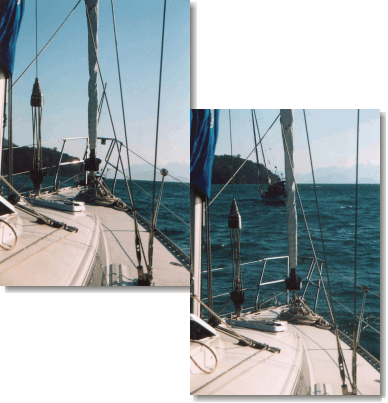
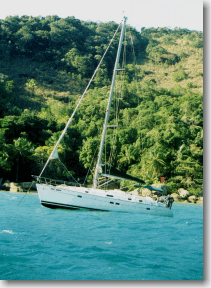
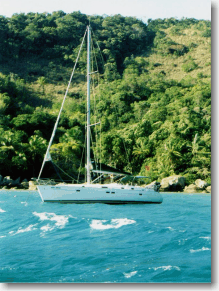
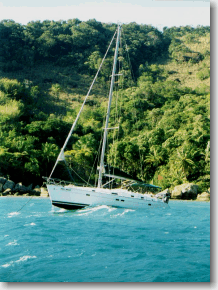
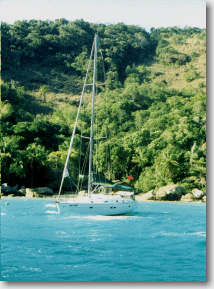
But
don't be afraid: most of the anchorages and sailing areas we will be
visiting are SO CALM, that you sometimes will not believe you are
inside a sailboat. Except for the open-seas coast of Ilha
Grande, and an occasional rare wavy situation, it won't be easy to
take pictures like the ones you see in this webpage. And after all,
thanks to our yacht's design and the deep (2.20m) keel, you will find
out that Charada is a very stable sailboat. To this day, no major
seasickness consequences have been recorded aboard !
Finally,
if you do suffer from motionsickness, consult with your physician in
advance and
share this information with him/her, before buying any medicine. And
remember, scopolamine is not widely available in Brazil, so bring it
along if needed !
REFERENCES:
- Murray JB, Psychophysiological
aspects of motion sickness. Perceptual and Motor Skills
85:1163-1167, 1997.
- Kozarsky PE. Prevention
of common travel ailments. Infect Dis Clin North Am 12:305-324,
1998.
- Grunfeld E,
Gresty E. Relationship
between MS, migraine, and menstruation in crew members of a round
the world yacht race. Brain Res Bull 47:433-436, 1998.
- Kennedy RS,
Lanham SD, Massey CJ, Drexler JM, Lilienthal MG. Gender
differences in simulator sickness incidence: implications for
military virtual reality systems. SAFE J 25:69-76, 1995.
- Reason JT, Brand
JJ. Motion
sickness. London, Academic Press, 1975.
- Oman CM. Motion
sickness: a synthesis and evaluation of the sensory conflict
theory. Can J Physiol Pharmacol 68:294-303, 1990.
- Mittelstaedt H. Somatic
graviception. Biol Psychol 42:53-74, 1996.
- Kohl R, Homick
JL. Motion
sickness: a modulatory role or the central cholinergic nervous
system. Neuroscience and Biobehavioral Review 7:73-75, 1983.
- Wood CD. Pharmacological
countermeasures against motion sickness. In Crampton GH, ed.
Motion and Space Sickness. CRC Press, Boca Raton, 1990, p. 344.
- Vickers, AJ. Can
acupuncture have specific effects on health? A systematic review
of acupuncture antiemesis trials. JR Soc Med 89: 303-311, 1996.
- Bruce, DG,
Golding JF, Hockenhull N. et al. Acupressure
and motion sickness. Aviat Space Environ Med 61: 361-365, 1990.
- Warwick-Evans LA,
Masters IJ, Redstone SB. A
double blind placebo controlled evaluation of acupressure in the
treatment of MS. Aviat Space Environ Med 62:776-778, 1991.
- Hu S, Stern RM,
Koch KL. Electrical
acustimulation relieves vection-induced motion sickness.
Gastroenterology 1992;102:1854-1858.
- Bertolucci LE,
Didario B. Efficacy
of portable acustimulation device in controlling seasickness.
Aviat Space Environ Med 66:1155-1158, 1995.
- Jozsvai EE,
Pigaeu RA. The
effect of autogenic training and biofeedback on motion sickness
tolerance. Aviat Space Environ Med 67:963-968, 1996.
- Dobie TG, May JG.
Cognitive
behavioral management of motion sickness. Aviation, space, and
Environmental Medicine. October 1994;C1-C20.
- Vente PEM, Bos
JE, de Wit G. Motion
sickness amelioration induced by prism spectacles. Brain Res Bull
47:503-505 1988.
- Wood CD. Antimotion
sickness and antiemetic drugs. Drugs 17:471-479, 1979.
- Kohl RL, Calkins
DS, Mandell AJ. Arousal
and stability: the effects of five new sympathomimetic drugs
suggest a new principle for the prevention of space motion
sickness. Aviat Space Environ Med 57:137-143, 1986.
- Wood CD, Graybiel
A. A theory
of MS based on pharmacological reactions. Clin Pharmacol Ther
11:621-629, 1970.
Kohl R, Homick JL. Motion sickness: a modulatory role or the
central cholinergic nervous system. Neuroscience and Biobehavioral
Review 7:73-75, 1983.
- Weinstein SE,
Stern RM. Comparison
of Marezine and Dramamine in preventing symptoms of motion
sickness. Aviat Space Environ Med 68:890-894, 1997.
- Muth ER, Jokerst
M, Stern RM, Koch KL. Effects
of dimenhydrinate on gastric tachyarrhythmia and symptoms of
vection-induced MS. Aviat Space Environ Med 66:1041-1045, 1995.
- Yates BJ, Miller
AD, Lucot JB. Physiological
basis and pharmacology of motion sickness: an update. Brain Res
Bull 47:395-406, 1998.
- Regan EC, Ramsey
AD. The
efficacy of hyoscine hydrobromide in reducing side effects induced
during immersion in virtual reality. Aviat Space Environ Med
67:222-226, 1996.
- Golding JF,
Gosden E, Gerrell J. Scopolamine
blood levels following buccal versus ingested tablets. Aviat Space
Environ Med 62:521-526, 1991.
- Doweck I, et al. Rate
of absorption of scopolamine after application of scopoderm-TTS.
Aviation, Space, and Environmental Medicine. May 1994;A24.
- Stott JRR. Management
of acute and chronic motion sickness. In Motion sickness:
Significance in aerospace operations and prophylaxis. Nato-Agard,
France, 1991, p.175.
- Klein BL.
Ashenburg CA, Reed MD. Transdermal
scopolamine intoxication in a child. Pediatr Emergency Care 1:208,
1985.
- Prescibing
Information. CIBA
Pharmaceuticals.
Wood MJ, Wood CD, Stewart JJ, Manno BR, Mimms BE. Comparison
of dosage routes for antimotion sickness drugs. Aviation, Space,
and Environmental Medicine. May 1987, p. 504
- Graybiel A, et
al. Prevention
of experimental motion sickness by scopolamine absorbed through
the skin. Aviation, Space, and Environmental Medicine. 47:1096,
1976.
- 1998 Redbook. Medical
Economics Co. Oradell, NJ.
- Parrott AC. The
effects of transdermal scopolamine and four dose levels of oral
scopolamine (0.15, 0.3, 0.6, and 1.2 mg) upon psychological
performance. Psychopharmacology. 1986;89:347-354.
- Parrott AC. Transdermal
scopolamine: a review of its effects upon motion sickness,
psychological performance, and physiological functioning. Aviat
Space Environ Med 1989;60: 1-9.
- Wood CD, Manno
JE, Manno BR, Odenheimer RC, Bairnsfather LE. The
effect of antimotion sickness drugs on habituation to motion.
Aviat Space Environ Med 57:539-542, 1986.
- Tokola O, Latinen
LA, Aho J, Gothoni G, Vapaatolo H. Drug
treatment of motion sickness: scopolamine alone and combined with
ephedrine in real and simulated situations. Aviat Space Environ
Med 55:636-641, 1984.
- Hope
Pharmaceuticals,
website.
|
