| When Book Five opens up, Socrates and his companions are discussing what is a just, good man. However, this is merely a transitional method to lead from Book Four to Book Five. In Book Four, the connection between the Greek state and the human soul is established. Basically, the soul of Greece is a macrocosm of the human soul; in other words, what is represented by Greek society is represented through each individual's soul in the society. Don't worry about that yet- it will be made very clear once this wave is explained.
 Socrates says to Glaucon, "We started our discussion, I believe, by ascribing to the men the duty of guarding a flock?" At this point, Socrates begins his discussion of the role of women in society. He starts by comparing humans to a pair of dogs- one male and one female. The dogs, he explains, are expected to share equal responsibilities, and that restricting the females to remain inside just to take care of the puppies is absurd; similarly, male dogs should not be expected just to guard their family. Socrates then asks whether male and female dogs need to be trained in the exact same manner if the female dogs are expected to perform in the same way as the males. Everybody agrees that they should, and this leads Socrates to ask whether it should not be the same with men and women. He explains how nature has made an obvious difference between men and women; however, two men with completely different educations, jobs, and lives are also different by nature. Would this not mean that if a man and a woman were trained in exactly the same way, were both taught the same things, and both had the same jobs, that they would be similar by nature? When Socrates raised this question (though he did so in much more than one sentence), the others were shocked. Men and women being equal during this time was an absurd thought for anyone to have. However, when he explained it everybody began to see the light. He went on with this subject, now that everyone thought they understood it, and only raised more "peculiar" observations than before. If men and women are to be equal, then it would mean that women could also become guardians. However, they would have to hold the same education as the men, and would have to exercise with the men. Socrates does point rather sympathetically that due to their natural weakness in gender, women will only perform the less burdensome tasks that go with being a guardian. It is interesting to note, however, that in order for women to be equal to men, they have to exercise with the men and be given the same education as men. And since the ancient Greeks exercised in the nude... wait a minute. You mean the women are going to be exercising naked with the men? That seems kind of weird, doesn't it? It is weird enough to think of a society where men exercise naked together, let alone men and women exercising naked together. Of course, it was part of ancient Greek society, and it was natural for them. Socrates defends this idea by saying "any man who laughs at their nakedness will be 'gathering unripe fruit,' for he does not know what he ridicules nor where his laughter leads." Socrates says to Glaucon, "We started our discussion, I believe, by ascribing to the men the duty of guarding a flock?" At this point, Socrates begins his discussion of the role of women in society. He starts by comparing humans to a pair of dogs- one male and one female. The dogs, he explains, are expected to share equal responsibilities, and that restricting the females to remain inside just to take care of the puppies is absurd; similarly, male dogs should not be expected just to guard their family. Socrates then asks whether male and female dogs need to be trained in the exact same manner if the female dogs are expected to perform in the same way as the males. Everybody agrees that they should, and this leads Socrates to ask whether it should not be the same with men and women. He explains how nature has made an obvious difference between men and women; however, two men with completely different educations, jobs, and lives are also different by nature. Would this not mean that if a man and a woman were trained in exactly the same way, were both taught the same things, and both had the same jobs, that they would be similar by nature? When Socrates raised this question (though he did so in much more than one sentence), the others were shocked. Men and women being equal during this time was an absurd thought for anyone to have. However, when he explained it everybody began to see the light. He went on with this subject, now that everyone thought they understood it, and only raised more "peculiar" observations than before. If men and women are to be equal, then it would mean that women could also become guardians. However, they would have to hold the same education as the men, and would have to exercise with the men. Socrates does point rather sympathetically that due to their natural weakness in gender, women will only perform the less burdensome tasks that go with being a guardian. It is interesting to note, however, that in order for women to be equal to men, they have to exercise with the men and be given the same education as men. And since the ancient Greeks exercised in the nude... wait a minute. You mean the women are going to be exercising naked with the men? That seems kind of weird, doesn't it? It is weird enough to think of a society where men exercise naked together, let alone men and women exercising naked together. Of course, it was part of ancient Greek society, and it was natural for them. Socrates defends this idea by saying "any man who laughs at their nakedness will be 'gathering unripe fruit,' for he does not know what he ridicules nor where his laughter leads."
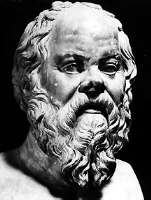
Sure, this is all a good idea. Make men equal to women, right? I mean, back then this idea truly was original. But just what did Socrates mean? Well, if you read the Understanding the Republic section, you'll remember that anything Socrates and his companions say about the City in Speech, they are saying it about the human soul. So, how on earth does men and women exercising together in the nude deal with the human soul? Well, Socrates is saying that everybody's soul has two parts- a masculine part and a feminine part. In the city, men and women are to be educated in the same way, as well as exercise in the same way. In the soul, should not the feminine and masculines parts be taught the same ideals and values? In other words, both parts of the soul should be just and work out of reason rather than act out of passion. Now, if both are to rule evenly, then that means both are used in an equal manner. It is nature that most men's souls will normally act with the masculine side and women's souls will normally act with the feminine side. So, you don't see many men crying, but you don't see a lot of women acting out of rage either. By letting both of them exercise, a human's true soul can be seen. But what about exercising naked? Well, a truly wise soul (which is the desired leader of a soul, just as the Philosopher King, who is wise, leads the city... more on this later) is able to undress and open itself to new ideas. In a similar way, Socrates could be indirectly referring to himself, because he has abandoned all shame and embarrassment and is free with his search of knowledge. This is also Socrates' way of getting back at all the playwrights that had ridiculed him over time. Even after they had overportrayed his weight and not-so-pretty appearance, Socrates comes back with his later description of the Philosopher King. Basically though, Socrates is showing that they can poke as much fun at him as they want, but it is the philosophers of their society that truly guide the city. There is also a connection between the feminine and masuline soul and Cleon's speech in Thucydides' Peloponnesian War. Click here to read more about this connection.
In conclusion...
- Men and women should be treated equally in Greek society; The masculine and feminine sides of the soul should equally guide a person
- In order for men and women to be equal, they must be educated in the same manner and exercise with each other; The masculine and feminine sides of the soul need to be equally exercised and equally taught to guide the person
- Going along with remaining equal to men, women would also have to exercise in the nude with the men; A person's soul must shed all embarrassment from society and learn to seek knowledge
|