|
Ship Series
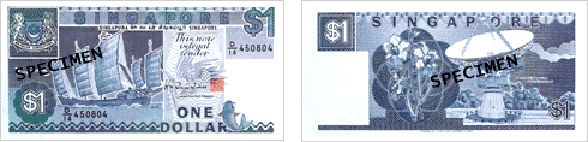
This
is the $1 note of the Ship series. It is also the smallest of
all the notes in this series, and it was published in 12
January 1987. This is a blue colored note. At the back of the
note is a picture of the Sentosa Satellite Earth Station and
it was one of the higher technological ones back then. This
pictures shows that we are the forerunners in technology,
ready for the 21st century, and not behind any of the other
large nations. Next the orchid beside it, is the Vanda Miss
Joaquim, named after the lady who crossbred two other orchids
to come up with this. This orchid is very hardy, displaying
the qualities of Singapore. In the background are trees and a
blue sky. As Singapore is very well known to be a Garden City,
the whole background picture and the orchid depicts very well
what Singapore is like. At the front of the note is a Chinese
“Sha Chuan”. This depicts the way many of our forefathers
took to come here to work. Most of them sailed here from all
of Asia, and the Sha Chuan was one of the methods used. Next
there is a crane and a Chinese carp. The carp usually
signifies prosperity that was very appropriate at the time
this note was printed, as we were facing an economic downturn.
The pictures in the front show tradition and history while the
pictures at the back shows technology and our environment.
These four aspects shows Singapore very clearly as a strong
nation who keeps the benefits of tradition and take also
technology, forming a very good contrast, thus bringing out
tradition and technology.
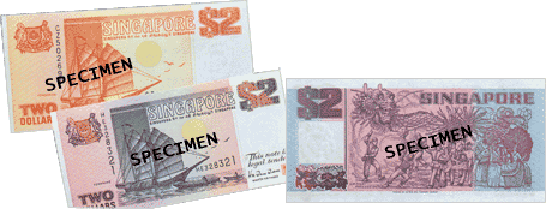
The
$2 notes come in two colors, the orange and the purple but the
front and back designs are all identical. The red note was
produced on 28 January 1991 while the purple note was printed
on 16 December 1991 with the red note being the lesser of the
both. The printing of these two notes does not signify at
special thing, but the notes signifies Singapore. At the back
of the picture, there is our National flower, the Vanda Miss
Joaquim. Next to it is the picture of a Chingay procession. If
one takes a closer look at the picture we can tell that there
are people of many different races taking part in the
procession. This Chingay procession takes place after the
Lunar New Year and is participated by many different
organizations and various races. Each of the organization
presents an item throughout the show and performs their
traditional dances. There are schools and communities that
take part, making it seem extremely exciting and fun. The
picture shows Chinese performing the dragon dance. At the
front of the note, is the picture of the Tongkang. The
Tongkang was used by our forefathers back then, when they came
here to work. At that time airplanes were not available yet,
thus their mode of transport was usually by the sea. A the
background is a rising sun. The rising sun is very appropriate
to be placed behind the Tongkang as it signifies the hopes our
forefathers had when they came here. They hoped to earn money
so that their children back in China can have a proper
education. It also shows the spirit of a young nation being
born, full of aspirations and strength.
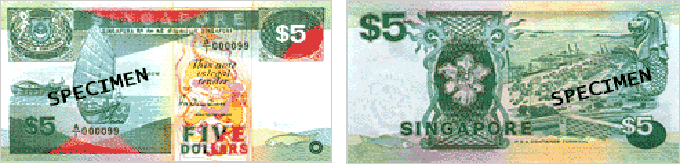
This
is the $5 note of the ship series and it was first issued on
21st
August 1989. It is a green colored note. At the back of the
note is the body of a dragon, displaying the energy and
strength of our nation. Right in the centre of the body is our
national flower the Vanda Miss Joaquim, it is an orchid named
after its founder Miss Vanda Joaquim.The flower is original as
it had been crossbred using two other orchids. Beside it is
the view of the PSA Container terminal. The PSA Container
terminal has always been the pride of Singapore. It had been
ranked constantly as the best port in the world, with very
organized and efficient system. It also proves to the world
that although we are a very young nation, we are still able to
be competitive and it helps us to give the world confidence in
doing business with us. Right beside it is the national symbol
the Merlion. Again the Merlion is formed by a fish and a lion
and is a fictitious animal, but in my heart the Merlion is
real. At the front of the note is the picture of a Twakow. The
Twakow was used by our forefathers when they came to Singapore
to search for a job. As there were no airplanes at that time,
most immigrants came here through the sea. The sea was also a
very important source of food. The fish at the bottom of the
note is called the Commerson’s Anchovy. It was a source of
food for the people. Above it is a picture of a Chinese lion
with a ball in its mouth. This picture signifies strength and
prosperity just what Singapore wanted. These pictures
contrasted technology and tradition very well, bringing out
the best in each aspect.
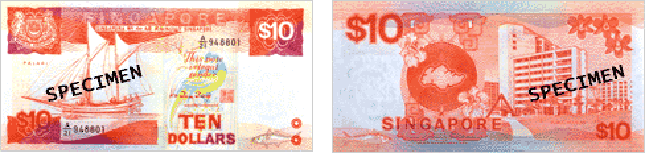
This
is the $10 note for the ship series and it was first issued on
1st
March 1988. The note is red. At the back of the note is the
picture of the map of Singapore and surrounding it is our
national flower, the Vanda Miss Joaquim, an orchid named after
its founder Miss Vanda Joaquim, who cross bred two other
orchids before coming out with this completely new flower.
Beside it is the picture of Housing Development Board (HDB)
flats. The picture of the flats have been taken from Potong
Pasir as its design is extremely unique. The picture shows the
good organization of the HDB flats and how they first
implemented the plan, to get rid of the attap houses, towards
the road of the modernization of Singapore. At the front of
the note, we are able to see a phoenix at the centre. It is a
fabulous bird in worship of the sun. It was first spoken of in
Roman legend and often being compared to being undying. This
is the spirit that Singapore most probably wants its citizens
to have. Next to it, we have the barter trading vessel called
the “Palari”. It is used back then for barter trading,
where men swapped items with other men for things they needed
or wanted, when they monetary system was not fully in place
yet. At the bottom of the note is a fish known as the round
scad. It is a tropical fish as is often used as a bait for
fishing. These pictures contrasted technology and tradition
very well, bringing out the best in each aspect.
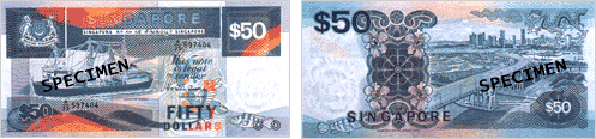
This
is the note of the $50 in the ship series. It was first issued
on the 9th
of March 1987. It is a blue colored note. At the back of the
note is the picture of the map of Singapore and surrounding it
is our national flower, the Vanda Miss Joaquim, an orchid
named after its founder Miss Vanda Joaquim, who cross bred two
other orchids before coming out with this completely new
flower. Next to it is a bird's-eye view of the Benjamin
Sheares Bridge and in the background is the busiest part of
Singapore where millions of monetary transactions are made
each day, Shenton Way. Benjamin Sheares Bridge was named after
our second president, Mr. Benjamin Sheares. The bridge is used
by many people daily to get to work and many others. From
there we can have a very clear view of the Singapore skyline,
with the tall skyscrapers in Shenton Way, and also the PSA.
When night falls, the view from there is utterly magnificent.
At the corner of the picture is a dragon, signifying the
financial and physical strength of Singapore. At the front of
the picture, is a coaster vessel called the “Perak”. It is
used widely at our ports to transports goods and is much more
high in technology as compared to the ships featured in the
previous notes. This depicts the level of technology we were
at during the 1980s. Next to it is a pair of mandarin ducks
and a six-banded grouper. The grouper has been know to be a
local delicacy served at a high price at many restaurants.
These pictures contrasted technology and tradition very well,
bringing out the best in each aspect.
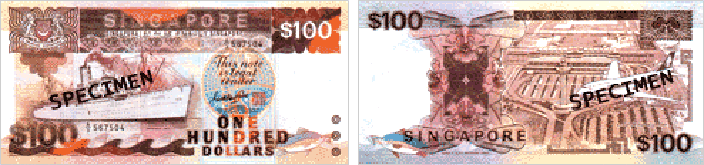
This
is the note of the $100 in the ship series. It was first
issued on the 1st
of August 1987. It is a brown colored note. At the back of the
note are pictures of our national flower, the Vanda Miss
Joaquim, an orchid named after its founder Miss Vanda Joaquim,
who cross bred two other orchids before coming out with this
completely new flower, surrounding a focus point. I feel that
the point is a focal point of our visions. Next to it is a
bird's-eye view of the Singapore Changi Airport The Singapore
Changi Airport has always been the pride of Singapore. It had
been ranked constantly as the best airport in the world, with
a very organized and efficient system, providing good
facilities for its users. It also proves to the world that
although we are a very young nation, we are still able to be
competitive in the world and it helps us to give the world
confidence in doing business with us. At the background is an
aeroplane with the Singapore Airlines sign on it. Although it
is still very young as compared to other airlines, it is
already a very established airline and is well known
throughout the world for the good services it provides. When
night falls, the view from there is utterly magnificent. Looking
at the airplanes go by at night can take our troubles away. At
the front of the picture, is a passenger liner called the
“Chusan”. It is used widely at for cruises and is much
more high in technology as compared to the ships featured in
the previous notes. This depicts the level of technology we
were at during the 1980s. Next to it is a Chinese crane,
signifying prosperity, and beside it is a Slender shad. The
fish is a delicacy to be served on the dinner table. These
pictures contrasted technology and tradition very well,
bringing out the best in each aspect.
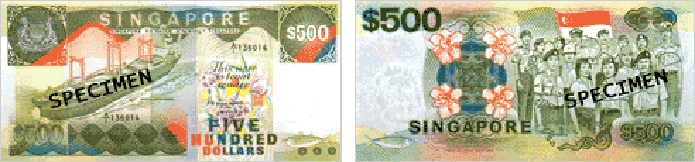
This
is the note of the $500 in the ship series. It was first
issued on the 1st
of March 1988. It is a green colored note. At the back of the
note are pictures of our national flower, the Vanda Miss
Joaquim, an orchid named after its founder Miss Vanda Joaquim,
who cross bred two other orchids before coming out with this
completely new flower, surrounding a focus point. I feel that
the point is a focal point of our visions. Beside it is a
picture of men and women from the three services of the armed
forces and the civil defense force. This shows the part of
military defence, and that our citizens are fit and ready to
defend our country from any invading nations. By seeing them
standing to attention, I know the level of discipline they
have. The Civil defence force is also ready to defend any
interior conflicts like riots or fires. There is a Singapore
flag flying high above them with pride. This shows that they
love Singapore and place the country above themselves. It also
depicts the pride they have towards the nation. At the front
of the picture, is a general cargo vessel called the
“Neptune Sardonyx”. It is used widely at the PSA for the
transport of cargo and goods and is much more high in
technology as compared to the ships featured in the previous
notes. This depicts the level of technology we were at during
the 1980s. Next to it is a very colourful picture of a Chinese
peony and a butterfly, signifying the art and culture of our
nation, and beside it is a Indian Mackerel. The fish is a
common dish to be served on the dinner table. These pictures
contrasted technology and tradition very well, bringing out
the best in each aspect.
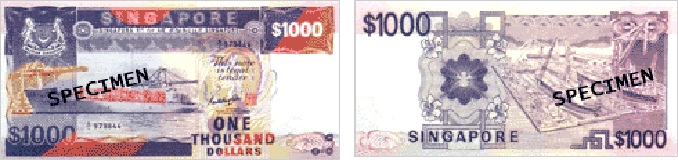
This
is the note of the $1000 in the ship series. It was first
issued on the 22nd of October 1984. It is a purple colored
note. At the back of the note are pictures of our national
flower, the Vanda Miss Joaquim, an orchid named after its
founder Miss Vanda Joaquim, who cross bred two other orchids
before coming out with this completely new flower, surrounding
a focus point. I feel that the point is a focal point of our
visions. Next to it is a bird's-eye view of a ship-repair yard
in the PSA. The PSA has always been the pride of Singapore. It
had been ranked constantly as the best port in the world, with
a very organized and efficient system, providing good
facilities like this ship-repair yard for its users. It also
proves to the world that although we are a very young nation,
we are still able to be competitive in the world and it helps
us to give the world confidence in doing business with us. At
the background is a complex structure of the ship repair yard,
showing that our port does not have a lack of technology. At
the front of the picture, is a container ship called the
“Neptune Garnet” and at the background is a picture of a
small part of the PSA. The ship featured is used widely for
transportation of those huge containers that we often see at
the PSA and is much more high in technology as compared to the
ships featured in the previous notes. This depicts the level
of technology we were at during the 1980s. Next to it a
phoenix at the centre. It is a fabulous bird in worship of the
sun. It was first spoken of in Roman legend and often being
compared to being undying. This is the spirit that Singapore
most probably wants its citizens to have and beside it is a
polka-dot grouper. The fish is an aquarium fish and is very
big. These pictures contrasted technology and tradition very
well, bringing out the best in each aspect.

This
is the note of the $10000 in the ship series and also the
largest denomination. It was first issued on the 21st
of August 1989. It is a red colored note. At the back of the
is a picture of our national flower, the Vanda Miss Joaquim,
an orchid named after its founder Miss Vanda Joaquim, who
cross bred two other orchids before coming out with this
completely new flower, and the large flower signifies our
pride to be a Singaporean. Beside it is a picture of the 1987
National Day Parade held at the Padang. There are every
different race taking part in the march showing Singapore as a
multi-racial society. The straight rows signifies discipline
of our troops, who are ready to take part in war if our
country’s existance is threatened. At the front of the
picture, is a general bulk carrier called the “Neptune
Canopus”. It is used widely at the PSA for the transport of
large cargo and goods and is much more high in technology as
compared to the ships featured in the previous notes. This
depicts the level of technology we were at during the 1980s.
Next to it is a very colourful picture of a Chinese dragon,
signifying the art and culture and also the strength of our nation. Beside
it is a White Promfert. The fish is a common dish to be served
on the dinner table, but it is quite a delicacy. These
pictures contrasted technology and tradition very well,
bringing out the best in each aspect. |



