 |
|
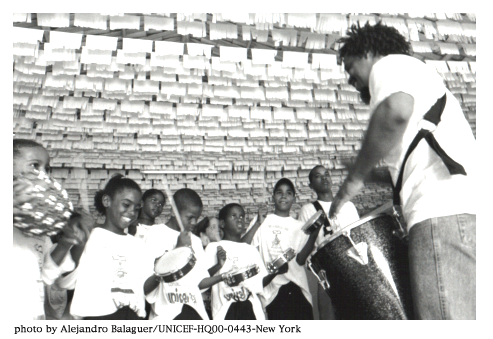
"In 2000 in Brazil, UNICEF continues to work with UN, government and community organiations in support of the country's 60.2 million children (37% of all Brazilians). Although Brazil has great natural wealth and a large economy, it also has the greatest level of socio-economic disparities in the world, with 25% of the population living below the poverty line. Up to 30% of newborns are not registered at birth. Maternal mortality rates are high due to inadequate pre and post-natal care and to an estimated 1.8 million adolescent pregnancies each year. More than one million children 7-17 years of age have never been to school. Violence in the streets, schools and homes is rampant, with 30% of deaths among adolescents aged 15-19 years due to murders. Half a million Brazilians are now HIV+, including rising numbers of children, while 30,000 children have been orphaned by AIDS. "Despite these challenges, infant and under-five mortality rates, the number of working children and overall poverty rates have decreased in the last decade. UNICEF's cooperation programme is guided by the 1990 national Child and Adolescent Statute (ECA), based on the UN Convention of the Rights of the Child. New initiatives include support for: campaigns to ensure birth registrations; community-based alternatives to child labour in rural areas and urban waste dumps; HIV/AIDS awareness, prevention and support services; 'Peace in Schools' violence-deterrent programmes and complementary school activities in sports, cultural and academic areas; adolescent social and health projects to build skills, community leadership, pride in local cultures and traditions and to offer alternatives to high-risk or antisocial behaviours; and support for training of teachers, health workers, police and detention officers working with juveniles. "The Picture above: Playing traditional instruments, a musician leads children in a percussion band, in Ile Axe Opo Afonja, a poor neighbourhood of Salvador, capital of the north-eastern state of Bahia. Combining African and Catholic spiritualism with songs, dances, percussion rhythms and capoeira - an Afro-Brazilian fusion of dance and martial arts - the festivities are promoted by local cultural and capoeira groups, assisted by UNICEF, to raise awareness of their Afro-Brazilian heritage and engender respect for their national culture." UNICEF, 3 United Nations Plaza H6F,
New York |


|
|
|
|
|
|
|
|
|
|
|
|
|
|
|
|
|
|
|
|
|
|
|
|
|
|
|
|
|
|
|
|
|
|
|
|
|
Ilê Axé Opô Afonjá |
| visit the official site
of the Ilê Axé Opô Afonjá |