|
||
| Welcome
Definition
and Properties of Laser Light Laser Types and Classifications
Protective Measures - Laser Safety
|

Laser Biological HazardsSkin
Skin is the largest organ of the body and, as such, is at the greatest risk for coming in contact with the laser beam. The most likely skin surfaces to be exposed to the beam are the hands, head, or arms.
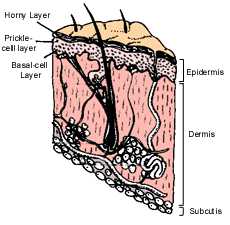
Skin Components
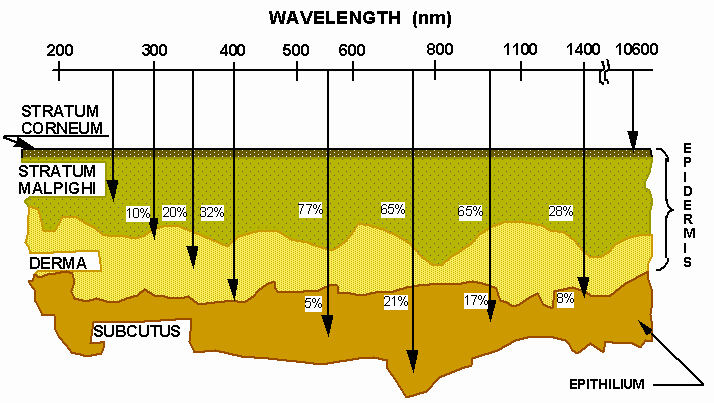
How Does Laser Light Effect the Skin?
Laser effects on tissue depend on - the power density of the incident beam, absorption of tissues at the incident wavelength, time beam is held on tissue, and the effects of blood circulation and heat conduction in the effected area.
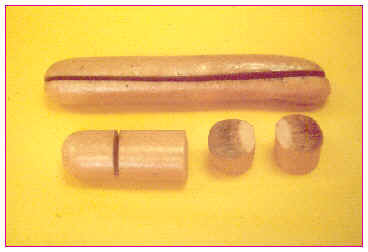
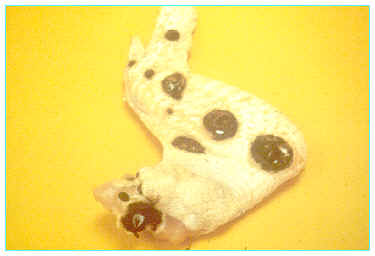
Tissue Damage from a CO2 Laser
250 Watt Laser Moving at 1 Inch per Second
250 Watt Laser in Single Pulses Immediate EffectsAs shown above, the immediate effect of exposure to laser light above the biological damage threshold is normally burning of the tissue. Injury to the skin can result either from thermal injury following temperature elevation in skin tissues or from a photochemical effect (e.g., "sunburn") from excessive levels of actinic ultraviolet radiation.Delayed EffectsThe possibility of adverse effects from repeated or chronic laser irradiation to the skin has been suggested, although it is normally discounted. Only optical radiation in the ultraviolet region of the spectrum has been shown to cause long-term, delayed effects. These effects are: accelerated skin aging and skin cancer. At present, laser safety standards for exposure of the skin attempt to take these adverse effects into account.
|