Contents
 |
|
|
|
|
|
|
|
|
|
|
|
|
|
|
|
|
|
|
|
|
|
|
|
|
|
|
|
|
History of chocolates
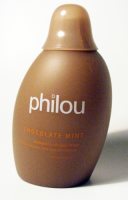 Chocolates
is found everywhere and in almost all products nowadays. From normal milk
chocolate bars to chocolate scented hair care, soaps, bath and body gels and
candles. We just cannot have enough chocolates in our life. So how did
chocolates come into our life? I would like to add that when I was researching
on the history of chocolate, I found many different versions of it. I took what
I think is most believable and from sources that I think are reliable.
Chocolates
is found everywhere and in almost all products nowadays. From normal milk
chocolate bars to chocolate scented hair care, soaps, bath and body gels and
candles. We just cannot have enough chocolates in our life. So how did
chocolates come into our life? I would like to add that when I was researching
on the history of chocolate, I found many different versions of it. I took what
I think is most believable and from sources that I think are reliable.
Chocolate originated from Central and Northern America. It was Christopher Columbus who first brought some cocoa beans back to Spain, but no one know what to do to those cocoa beans and it was neglected. It was until Hernan Cortez conquered the Aztec Indians of Mexico till they first got any clue on the usage. Cortez learned of a drink that the Aztecs thought have magical powers, and can bestow both power and wisdom. They called it "xocolatl" or "bitter water", while the tree from which the cacao seeds are taken from is called "Theobroma" or "food of the gods". The cacao seeds were also used as the Aztecs' currency.
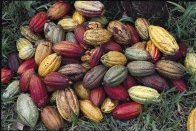
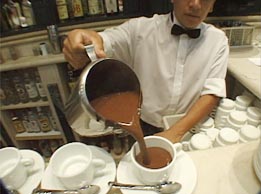
When Cortez returned home to Spain, he brought the cocoa beans and process used to prepare the drink back with him. The Spaniards played around with the ingredients of the drink and the process to change the chocolate drink from the bitter and peppery drink that the Aztecs made. They added (Cacao seeds)(Allen M. Young) vanilla and sugar to change it into one that is similar to what we drink today. The Spaniards kept the drink as a closely guarded secret for almost a century before the drink was spread to France, when King Louis married a Spanish royalty. Some of the cocoa beans were part of the bride's trousseau and went with her to France for her to have her favorite drink during breakfast. The drink then spread to the whole of Europe. Some condemned it as an evil drink. Some countries did accept the drink, but the drink was only for the wealthy as it was very expensive. The first chocolate house opened in London in 1657, and chocolate houses soon became trendy places where the wealthy people went to savor the chocolate drink.
As the plantations of the cacao seeds grew, the drink became popular and affordable. In England, the heavy import duties were reduced in 1853, to allow a number of cocoa manufacturers to get into the business. The drink became popular in North America after the Boston Tea Party when tea was being boycotted.
Another century passed before anyone perfected
the process of making a solid chocolate.
 In
the late 1700's, a steam engine was built by an Englishman. It's purpose was to
crush and mix the chocolate paste. Then in the early 1900's, a Dutchman invented
a cocoa press, which was used to press the cocoa butter out of the roasted cocoa
beans. This led the way to the development of cocoa powder and the first
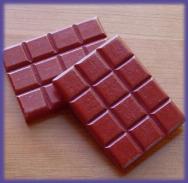
chocolate bar was made by mixing the cocoa butter and chocolate liquor with
sugar. It was a Swiss man who perfected the means of condensing milk and then
sold the process to Henri Nestle, who then went on to produced the first ever
milk chocolate bar. Rodolphe Lindt came up with a process called "conching"
which further refines the chocolate and the process of making filled candies was
created by Jules Suchaud and this is how our beloved chocolate came about.
In
the late 1700's, a steam engine was built by an Englishman. It's purpose was to
crush and mix the chocolate paste. Then in the early 1900's, a Dutchman invented
a cocoa press, which was used to press the cocoa butter out of the roasted cocoa
beans. This led the way to the development of cocoa powder and the first
chocolate bar was made by mixing the cocoa butter and chocolate liquor with
sugar. It was a Swiss man who perfected the means of condensing milk and then
sold the process to Henri Nestle, who then went on to produced the first ever
milk chocolate bar. Rodolphe Lindt came up with a process called "conching"
which further refines the chocolate and the process of making filled candies was
created by Jules Suchaud and this is how our beloved chocolate came about.