Contents
 |
|
|
|
|
|
|
|
|
|
|
|
|
|
|
|
|
|
|
|
|
|
|
|
|
|
|
|
|
General Information on chocolates
I think it is necessary to include the meaning of some terms
used in this website here so that you would not get lost when we talk about
those terms.
Cocoa is
the powder that comes from steam pressing unsweetened chocolate. It is
strongest in flavor, with the least amount of fat.
Cocoa butter
is natural vegetable fat from the cacao plant.
Chocolate liquor
is a dark brown liquid that come from the grinding of roasted cocoa beans.
Conching
is the process of intensive mixing, agitating, and aerating of heated liquid
chocolate. Refining
is the grinding of all the components in the liquid chocolate to produce an even
and smooth texture.
The quality and flavor of
any chocolate would depend on the type or types of beans used, how they are
harvested, fermented and roasted, the quality and amounts of
the other ingredients that were added, and the time of conching. Cocoa
beans grow in pods on cocoa trees and these cocoa tree only grows in countries
that are within 600 miles from the equator.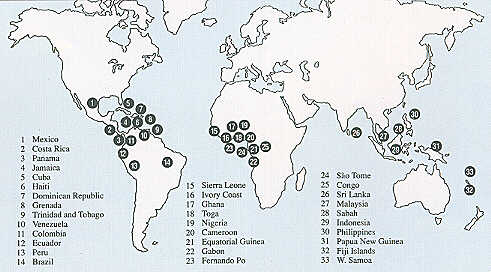 The
countries that grow cocoa trees are shown below in the map. There are three types of cocoa trees,
namely the Forastero,
the Criollo, and the Trinitario. Each tree will yield about 1-2 pounds of
dried beans each year.
The
countries that grow cocoa trees are shown below in the map. There are three types of cocoa trees,
namely the Forastero,
the Criollo, and the Trinitario. Each tree will yield about 1-2 pounds of
dried beans each year.
The Forastero tree produces around 80% of the world's production and normally comes from Africa, Brazil, Central and South America, and the West Indies. It provides the body in finished chocolate and makes up a large percentage of the cocoa blends. The Criollo tree produces around 10% of the world's production and is grown in Central and South America. It is a fragile tree when compared with the Forastero tree but it produces the best quality beans.
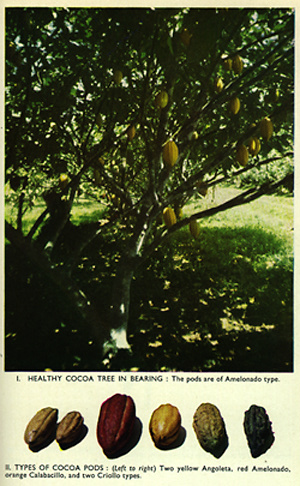 The Trinitario tree also
produces around 10% of the world's production and is a cross breed of the Forastero
and Criollo tree. It is grown in Sri Lanka, Indonesia, Central and South
America, with the best quality of beans coming from Trinidad. Chocolate is
generally made from a mixture of the 3 types of cocoa beans. The mixtures with
larger percentage of Criollo with Triniatrio beans will have a more aromatic and complex flavor.
The Trinitario tree also
produces around 10% of the world's production and is a cross breed of the Forastero
and Criollo tree. It is grown in Sri Lanka, Indonesia, Central and South
America, with the best quality of beans coming from Trinidad. Chocolate is
generally made from a mixture of the 3 types of cocoa beans. The mixtures with
larger percentage of Criollo with Triniatrio beans will have a more aromatic and complex flavor.
Raw cocoa beans are very bitter. The flavor and aroma of the chocolate would only appear after the beans have been fermented, roasted and aged. After the beans have been roasted, they will then be shelled in a process called winnowing. This process would leave behind the inner nibs, which contains 50-55% cocoa butter. At this point the different types of beans are mixed together. The different manufacturer has their own unique formula.
After the nibs are removed from the shell, they are grounded to extract cocoa butter from the beans. The remains is a thick dark brown paste, which is the chocolate liquor or chocolate mass. The chocolate liquor contains all the aroma and flavor of the chocolate. If additional cocoa butter is removed from the chocolate liquor at this point, then solid cocoa powder "cake" is pulverized and sifted to produce the unsweetened cocoa powder.
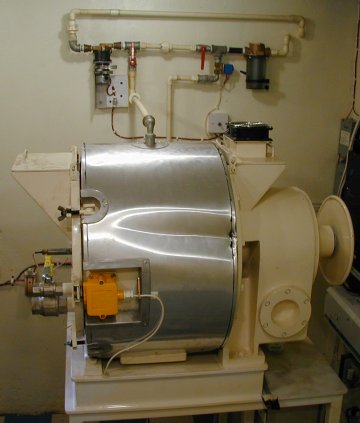 Depending
on the type of chocolate that we want to produce, the other ingredients can now
be added and the chocolate liquor be refined. This process is called conching and
it removes
the residual moisture and volatile acids in the liquid chocolate, and at the
same time breaks down the
solid pieces that remains in the cocoa butter. The time taken for this process
might take from a time of several
hours to several days, and this plays a important role in the quality of the
final
product.
Depending
on the type of chocolate that we want to produce, the other ingredients can now
be added and the chocolate liquor be refined. This process is called conching and
it removes
the residual moisture and volatile acids in the liquid chocolate, and at the
same time breaks down the
solid pieces that remains in the cocoa butter. The time taken for this process
might take from a time of several
hours to several days, and this plays a important role in the quality of the
final
product.