
|
| page is revised on 23rd February, 2004 |
| Purusha Suktam |
   |
| by m kishore mohan |
| The celebrated 'Purusha suktam ' extolls the Godhead Supreme. From Rg Veda, this suktam or hymn of 'purusha' occupies a prime position amongst 100 or so important suktams. Purusha in sanskrit means the Primeval Spirit . ' Suktam' or hymn literally stands for ' well said ' . Thus, this hymn is the true description of the Lord God, the creator. Purusha sukta is a widely used sukta, at almost all the rituals- whether it is the worship of the deity at home or at temples, recitation of religious scriptures, vedic rites establishing the sacred fire or even the cremation of a dead brahmin's body. Performance of homa with chanting of sixteen mantras of this sukta was advised for begetting a worthy son. It is also used for the Sodasopachara puja( worshipping in sixteen ways) to Lord Vishnu. The hymn can be used for meditating upon the Lord Narayana. It is said the Brahma and others have invoked the Lord Vishnu with this suktam , to request him to take birth as Lord sri Krishna. While the concept of Purusha is found in almost all of six visions of Indian philosophy including the mutually exclusive Sankhya and Vedanta, as well as Bhagavad Gita and Upanishads, the description of Purusha in Rg Veda is as graphical and awesome as the Viswarupa of the Lord in the Gita. Possessed of thousands of heads, eyes and feet, he has enveloped this univese on all sides and has also transcended it. He himself being this entire unvierse, he is also immanent in it. Not only thge present creation but also the ones of the past and the future are verily He. what appears as the living beings, sustained by food are also He. Though all this (the manifested world) reveals his greatness, the Purusha himself is far greater than it. In fact, the entire manifested universe of living beings and lifeless objects is only a fraction of his , whereas his major part is concealed in heaven. The Purusha sukta is an integral part of Rg Veda samhita (10.7.90.1-16),though said to be a later addition. It also appears in the Taittiriya Aranyakas(3.12.13)(of Yajur Veda), the Vajasaneyi Samhita (31.1-6), the Samaveda Samhita(6.4) and also, the Atharvana Veda (19.6) Apart from this, an explanation of some parts of this hymn is also found in the Satapatha Brahmana,the Taittiriya Brahmana and the Svetasvatara Upanishad. The Mudgalopaisad gives a commendable summary of the hymn. The contents largely are reflected in the Bhagavata (2.5.35 to 2.6.1-29) and in the Mahabharata(Moksadharma parva 351 and 352). The Rg vedic Purusha suktam has 16 mantras. The currently available text has 24 mantras or stanzas. The first 18 mantras are called Purvanaryana(which consists of the sixteen stanzas of Rg Vedic suktam) and the rest as Uttara narayana. Sometimes, a six more stanzas are added , called Vaishnavanuvaka. These stanzas are aken from another famous hymn,' vishnu suktam' (also from Rg Veda) There is some perceptable difference of order in mantras found in Rg Veda and the Taittriya aranyaka. while the first 6 mantras are identical, the 7th and 18th of Yajurvedic version is found as the 15th and 16th in Rg Veda, respectivley. The 17th and 18th mantras of Yajuveda are not found in Rg Vedic reading at all. The Rushi to whom the Purusha sukta is revealed is Narayana, said to be an avatar of Lord vishnu and the chandas ( or metre) is tristup (16th mantra of Rg Vedic edition) and Anustup(the rest). |
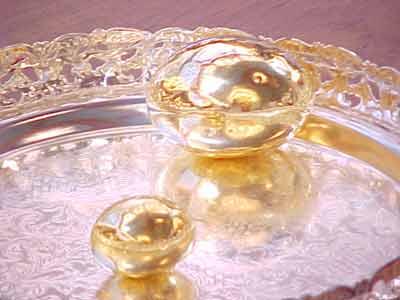 |
| The Lingam represents the cosmic egg my group on vedic history my group on astrology |