


High Art or Commercial Culture?




|
|
|
|
|
|
|
|
|
|
|
|
|
|
|
|
|
|
|
|
|
|
|
|
|
|
|
|
|
|
|
|
|
|
|
|||||||||||||||||||||||||||||||
| Controversy: High Art or Commercial Culture? |
||||||||||||||||||||||||||||||||
|
||||||||||||||||||||||||||||||||
| Andy Warhol | ||||||||||||||||||||||||||||||||
|
||||||||||||||||||||||||||||||||
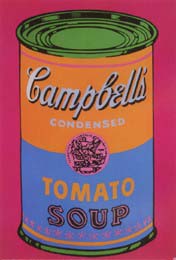
| Does Pop Art conform to commercialism? To determine an answer to this question, it is important to remember the roots of Pop Art. Yes, Pop Art deals with the consumer culture, but does it aesthetically conform to the notion of commercialism? It was created to poke fun at the culture and what society was perceived to hold true to their heart rather than to promote it. It is a reflection on the emptiness of the cultural image and society. Andy Warhol produced many | ||||||||||||||||||||||||||||||||
|
||||||||||||||||||||||||||||||||
| Exhibit Reviews | ||||||||||||||||||||||||||||||||
|
||||||||||||||||||||||||||||||||
| works of art that dealt with popular food items that society bought because it was a staple. He was merely making a statement that his work of art was a staple of society because he could mass produce them and distribute them in the same ways. Artists sell out to commercialism if their sole intent is to make money off of their artwork for it would have no aesthetic value what so ever. | ||||||||||||||||||||||||||||||||
|
||||||||||||||||||||||||||||||||
|
||||||||||||||||||||||||||||||||
|
||||||||||||||||||||||||||||||||
| Issues | ||||||||||||||||||||||||||||||||
|
||||||||||||||||||||||||||||||||
|
||||||||||||||||||||||||||||||||
| Andy Warhol, Campbell's Tomato Soup | ||||||||||||||||||||||||||||||||
|
||||||||||||||||||||||||||||||||
| It is not uncommon to question whether or not these subjects are depicted in essence of their art values or their commercial success. Yes, it is hard to separate the two, but they may be linked together, with a positive effect. These artists did depict many objects that were popular in society, but there is little evidence that this contributes solely to their success. Regardless of the reasons why ordinary people bought these works, something positive appealed to their senses, whether it was familiarity or stability, they were enthralled with the work itself. I do not find that the objects sold the paintings, but the artists sold their intents and beliefs to those willing to listen. | ||||||||||||||||||||||||||||||||
|
||||||||||||||||||||||||||||||||
|
||||||||||||||||||||||||||||||||
|
|
||||||||||||||||||||||||||||||||