| Pampanga Philippine Festival Pinetensya Manila Cebu Davao Philippines geography Philippine Food Philippine national athem Baguio |
 |
 |
 |
 |
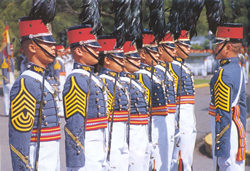
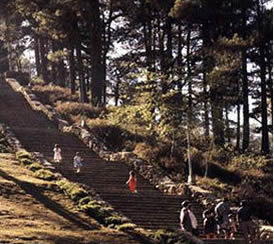
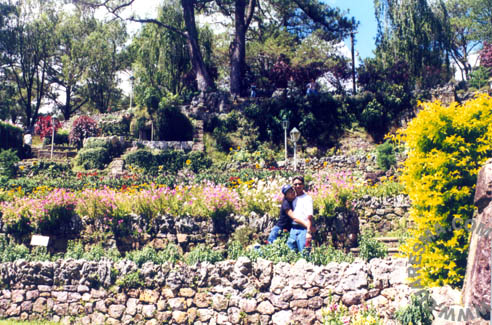
| Baguio City (1990 pop. 183,142), Benguet prov., NW Luzon, the Philippines. Baguio is the summer capital of the country, with many government buildings. It is also a noted mountain resort situated in beautiful pine forests and is the center of a major gold-producing area. The city is noted for the wood carvings of its Igorot aborigines. Nearby, at Lepanto, are important copper mines, and there is a major hydroelectric development on the Agno River. Originally settled by the Spanish, Baguio developed only after the American occupation, when a modern city was laid out (1909) by Daniel H. Burnham and roads were built (the first in 1913) to connect it with the main highways. The city was captured early (Dec., 1941) in World War II by Japanese land forces. Baguio is the seat of the national Philippine Military Academy, the Univ. of Baguio, and St. Louis Univ. Baguio has a number of attractions to please the most discriminating of sightseers. More importamtly, most of these tourist sports are easily accessible via taxi or jeepney from Session Road. Burnham Park - Situated at the heart of the city, Burnham is the traditional venue of the city's numerous festivities. The park is named after the city's master planner Daniel Burnham. Its man-made lagoon is the site of many boating excursions, Bikers, hikers and skaters delight in the park's criss-crossing walkways. And of the romantic, a walk in the rose gardens is an absolute must. Mines View Park - Over the years, the Park has been transformed into a shopping showcase of sorts. It's here where you can load up on the province's bounties: hand woven jacket and blankets, silver knickknacks and jewelries, and various jams and preserve. Of course, none of these goodies could complete with the Park's breathtaking view of the hills and valleys of the Cordillera and the gold mines of Benguet. Club John Hay - A tour of Baguio is incomplete without a bite of the Club's jumbo-sized burgers and sundaes. Formerly the R & R center of the United States Armed Force personnel in the Phillippines, the Club features hotel type rooms, seven food outlets, an 18-hole golf course, six tennis courts, a six-lane bowling center, basketball and volleyball courts, a heated swimming pool plus more for a definitively sporty weekend. Baguio Cathedral - Rising above the city skyline are the pinkish hues of the Baguio Cathedral. The cathedral is but one of a number of religious landmarks which dot the city. There is the Bell Temple, north of the city; the Maryhurst Seminary with its brilliant gardens; and Lourdes Grotto with its 252 steps to heaven. Banaue - Although Banaue is nine hours away from Baguio by bus, the tourist who takes the time to see this marvel of culture and architecture would be greatly rewarded. Known far and wide as the eighth wonder of the world, the Banaue Rice Terraces were carved from the mountain ranges centuries ago by the Ifugaos, one of the oldest known mountain tribes of the province. Sagada - One of the ten towns comprising Mountain Province is Sagada which is known for its numerous subterranean caves of their ancestors, the Sagadg area is a must-see for the archaeology buffs. Added attractions include the natural clear waters of Bokong Waterfall for a quick morning dip and the studio of renowned lensman Eduardo Masferres, whose collection of photographs of the Cordilleras is a photographer's envy. Souvenirs The shopping opotions in Baguio are endless. You only need to know where to look. Silver - Ifugao blacksmiths and Baguio craftsmen are renowned for their interesting collection of silver jewelry. The St. Louis University Silver Shop, just a few paces away from Baguio Cathedral, allows visitors to watch young silver craftsmen at work. Visitors can also purchase the pieces they want. Wright Park also festures row upon row of stalls selling silver accessories. For best buys, Ibay's Silver Shop and Phil. Treasure are recommended. Hand-Woven Fabrics - The tribesman of Bontoc, Igorot, Ifugao and Kalinga weave beautiful cotton fabrics with elegant ethnic motifs called lepanto. You can find such fabrics at the City Market. If you'd like to see the actual weaving process, visit the Easter Weaving School down Easter Road where threads are magically transformed into bags, blankets and blouses. Sweets and Preserves - If it's strawberry jam you want, proceed to the Good Shepherd Convent. The nuns of Good Shepherd raise funds for their various charities (including unwed mothers and their babies) by cooking up some of the most delicious tasting fruit preserves this side of earth. Try the nun's strawberry and ube jams, cashew and peanut brittle, and coco jam. During peak seasons, visit the convent in the morning as there's bound to be a long line for the jams. Flowers and Vegetables - The Baguio City Market is a sanctuary for the most colorful of floral blooms. It's also where you can find the freshest produce straight from the farms of La Trinidad and Benguet - from sweet strawberries and giant red tomatoes to bright green lettuce and lively mushrooms. Baguio City Market also features handicrafts of all kinds from baskets to backpacks. Travel Smarts Getting There. From Manila, visitors can take a 45-minute flight via Philippine Airline landing in Baguio Airport. Or take the six-hour bus ride through Kennon Road, Marcos Highway or Naguilian Road. From the airport or bus terminal, it's easy to flag down a cab to get to your accommodations. Further down, Ambuklao Road leads to Banaue, and Halsema Highway to the rest of the Cordillera. Staying In. As for accommodations, there are at least a thousand and one choices: from luxury city hotels, homey apartelles and pension house to quaint little country inns. First-time visitors are advised to make reservations before going up. During the summer, the number of tourists can go as high as 200,000. The peso is the medium of exchange - although the dollar is also widely accepted. Major credit cards are recognized in most establishments. And if you're a little short of cash, there's always the friendly ATM machine, which is already a fixture at Session. Getting Around. Jeepneys and tricycles negotiate the city's winding road network with ease. Taxicabs also abound. But if you really want to see and smell Baguio, take long leisurely walks. It's far headltheir. |
 |
 |
 |
 |
 |
 |
 |