| Guagua, Pampanga Arayat, Pampanga Pampanga Festival San Fernando Holy week in Pampanga Lantern Festival Malls Night Place in Pampanga Pinatubo eruption 1991 Pampangeos Food Piyesta Death March |
 |
 |
 |
 |
 |
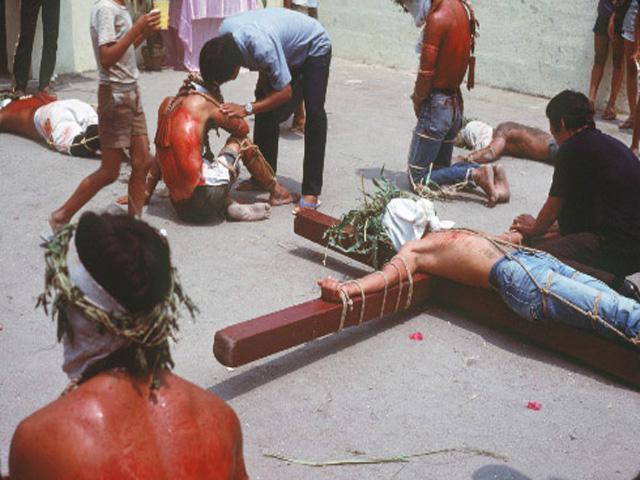
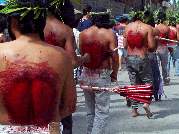
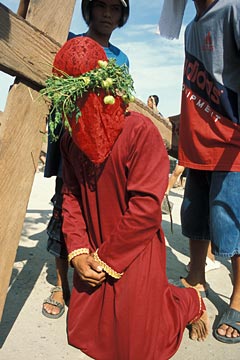
| CRUCIFIXION RE-ENACTMENT If you are talking about the Holy week you probably gonna heard about our place Guagua, Pampanga Well the Picture that you will see in this page use to happen very holy week in my Place. People in Philippines Believe that hurting them selves or let say Putting their selve or reneacting the crucifixion wil lessen their sins. Many provinces in the catholic culture of the Philippines have crucifixion ceremonies during Easter, or "holy week" as they refer to it. But only one, in Gua Gua, Pampanga, less than two hours north of Manila, features such a real life re-enactment. This may sound a little gory but it's a great cultural experience to see if you happen to be nearby during Easter - or "Holy Week." It's a great sightseeing and one of the best photo opportunities. One of the best travel photos I've ever taken was shot from crawling on my stomach amongst a dozen others where I was able to capture the silhouette of the nail punctured left hand on the cross. Filipinos mimic Jesus' crucifixion on Good Friday about 12:00 noon. About 10 people, including a woman, will be crucified in the central Luzon Island town on Good Friday in a bloody imitation of the crucifixion of Jesus Christ some 2,000 years ago. It's been a tradition there since after the second world war. It is their own religious belief. Filipinos do it to atone for their sins. This year, there are about 10 barangays (districts) according to a local barangay captain Zoilo Castro. One crucifixion will take place at noon time in the Cutud district of San Pedro town, 80 kilometres (50 miles) north of Manila. The best is outside of Gua Gua, Pampanga, because the "Christ"'s hands are pierced with spikes after being tied to the wood cross. There's not as much blood as you might expect since the tying of the arms in 2 places helps to prevent bleeding like a tourniquet. A field has been cleared to be used as the site of the crucifixion. Three crosses are hoisted up for a few minutes. As the "Christ," is being prepared there's a eery humming chant that allows the "Christ" to reach a trance like state so I doubt he feels much pain. It's a mystical experience for all who witness the event. About a dozen other Filipinos walk barefoot, some with masked faces, down the streets leading to the open field where the three crosses are erected. Being the hot, dry, summer season, the tropical heat of the sun relects the sweat and blood as they beat their backs to a bloody pulp with bamboo "cat-of-nine tails" whips. These whips are made from bamboo. They make barely visible slices across each other's backs with homemade glass disks made from coke bottles imbedded in wooden mallots. So the pain is probably not as intense as the great amount of bleeding makes you think but the spectacle provides quite a show ad great photos. The crucifixion, which draws large crowds of local and foreign tourists, started in 1946 and has endured ever since. Last year, 15 people were crucified, the highest number since the ritual began. No one has ever died from the bloody rites. The Philippines is predominantly Roman Catholic. The Catholic Church frowns upon the ritual, which combines Catholic fervour with primitive beliefs. The Lenten season is also a period of fasting and penitence in Asia's only majority Catholic country. |
 |
 |
| Front of a Church Praying |
| Walking in the Street |
| Copyright @ 2002 Pilipino in Japan! Inc. All rights reserved. |