| Guagua, Pampanga Arayat, Pampanga Pampanga Festival San Fernando Holy week in Pampanga Lantern Festival Malls Night Place in Pampanga Pinatubo eruption 1991 Pampangeos Cuisine Piyesta Death March |
 |
 |
 |
| Copyright @ 2002 Pilipino in Japan! Inc. All rights reserved. |
| HAVING grown up in Pampanga, which is famous for its cuisine, Because some dishes took hours or a day to prepare, the walls of the house absorbed the aromas. A meal was always a symphony of flavors blossoming in the tongue. Fermented vegetables provided a textural contrast to the fried foods and rice. Every meal included at least four viands. For snacks, the halo-halo was just a simple combination of three basic ingredients, unlike the Tagalog�fs isang-dosenanag sarap, but made memorable by delicately shaved ice and rich milk. Ginataang munggo was served with coconut cream on top and boiled tubers were generously topped with raw brown sugar and grated fresh coconut. "Mangan" means "to eat" in their vernacular. Exotic foods The halo-halo comes from a famous Guagua formulation. The beauty of this dessert lies in its simplicity. There are only three ingredients--the rich custard flan, sweetened banana and coconut. The fruits are cooked in sugar for several hours until they are sticky and slick. Dee, Ocampo�fs partner, scoured all over Taiwan to get the right ice shave. When you taste the halo-halo, the milk is sweetened and thickened by starchiness of the fruits. To this generation raised on fast foods some of the dishes may sound so arcane. The kilawin babi is made of pork baga and liver marinated overnight in vinegar, salt, pepper, and then sauteed in onion and garlic. The baga and liver are simmered until their juices dry up in the oil. Umba is the local version of pata tim. The meat is flavored with vinegar, brown sugar, pepper and bay leaf. The banana blossom adds texture to this dish. Bawang gule is a side dish of spring onions and chives with garlic and shrimps. Lagat apalya is bitter gourd with pungent onions and garlic mixed with scrambled eggs. Lagat alagao is catfish marinated in soy sauce, vinegar and pepper and boiled and sauteed with turmeric and alagao leaves. During the opening day, the popular dishes were the foods familiar to the Manilenos. The pancit luglog is covered with a rich sauce made with shrimp heads that takes hours to make. It is topped with all kinds of dried fish, fried shrimp flakes, spring onions, boiled egg and punctuated with kamias instead of calamansi. Goto or porridge with chunks of meat is accompanied by canisters of garlic, fried ginger, spring onions and calamansi. The karekare is made only with oxtail instead of cuts of tripe and stewed in a sauce of freshly ground peanuts instead of bottled peanut butter. Distinctive taste The strength of Kapampangan cuisine is natural, and its intricacy is acquired from the blend of many ingredients. A mixture of Spanish and Malay influences, this cuisine is hearty yet delicate. It can also be resplendent. Any Kapampangan will attest that once you�fve become acquainted with their food, you won�ft mistake it for anything else. Unlike the plain-looking cuisine of the Tagalog, Kapampagan food is more colorful and attractively appetizing.. The cuisine is more concerned with fresh ingredients that are well mixed, sometimes prepared for several hours and simmered for a long time that the dish holds the full flavor of all the juices. The fusion of textures is as important in the presentation of food as the blending of various tastes. That�fs why the Kapampangan paksiw is more robust and is lightly piqued with a special chili and bitter gourd. The foods are spelled the Kapampangan way such as camias, paksi (sans the "w"), queso. Some of the words maintain the diacritical marks that are typical of the traditional Pilipino such as single and gule. One of its biggest come-ons is the Im-Bento, the local version of the Japanese bento box. Instead of a lacquered box, rice, soup of the day, achara, fermented foods, a meat or fish dish and vegetables are served on large tray. A full meal costs less than P150. The dishes are cheap, ranging from P35 to P195 |
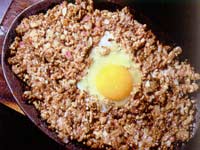 |
| Sisig is a native Pampango dish |
 |
 |
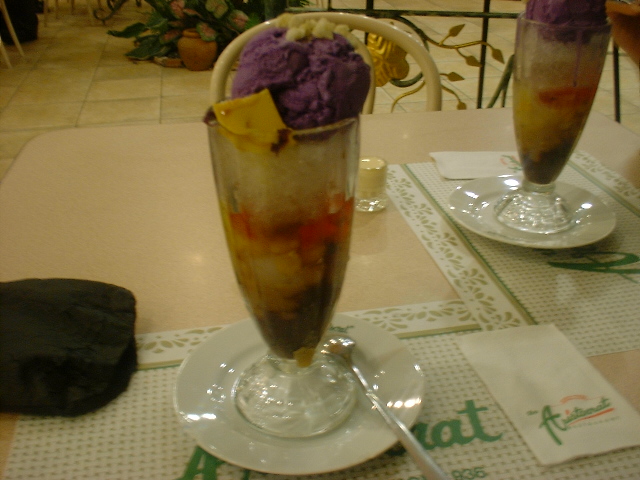 |
| Halo-halo |
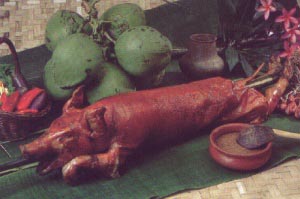
| Lehson Baboy, Roasted Pig |
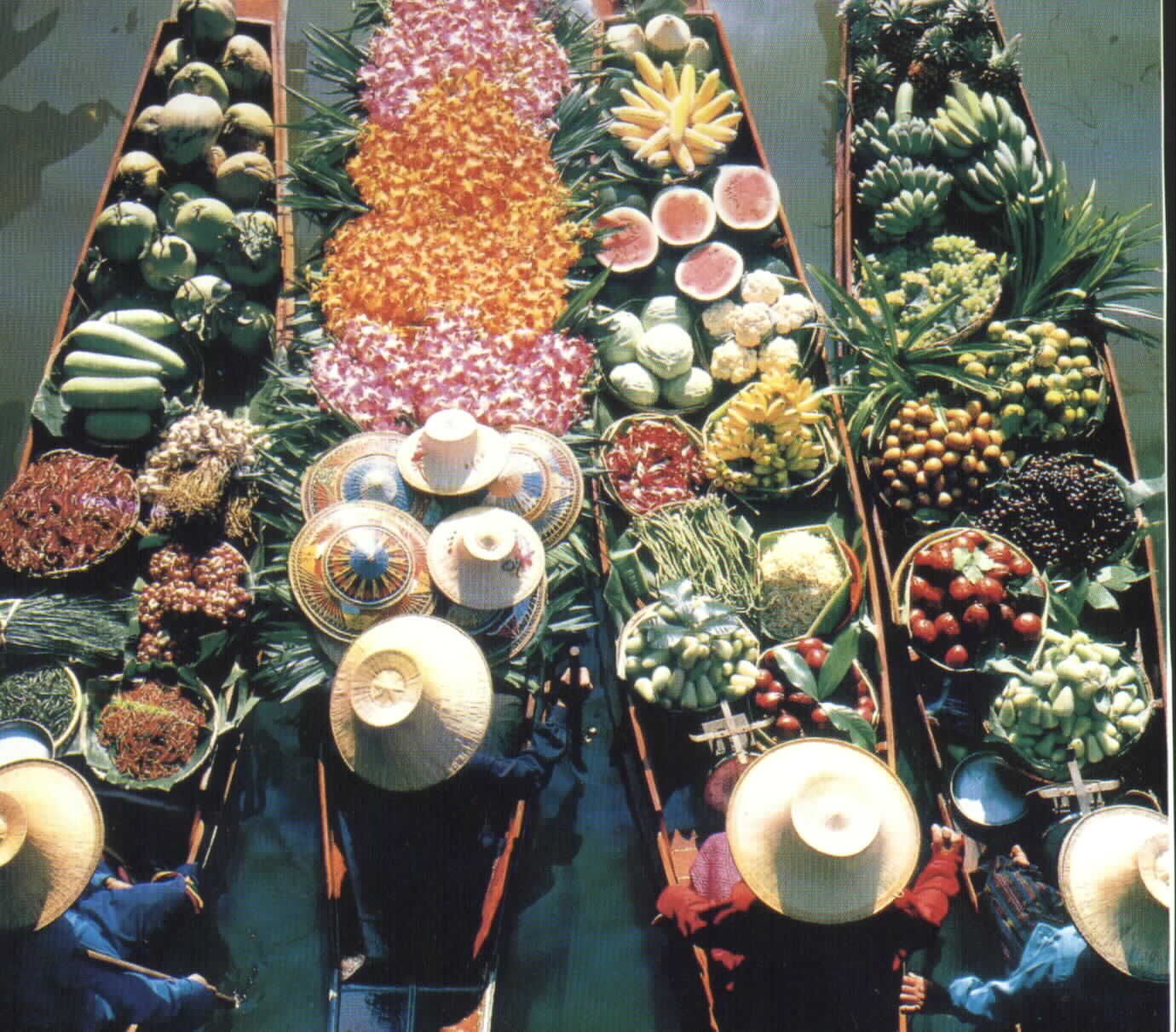 |
| Philippines Fruits |
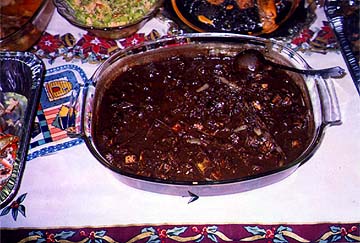 |
| Dinuguan. Pork in Blood Stew |