 |
|
|
|
|
|
|
|
|
|
|
|
|
|
|
|
|
|
|
|
|
|
|
|
|
|
|
|
|
|
|
|
|
|
|
|
|
|
|
|
|
|
|
|
|
|
|
|
|
|
|
|
|
|
|
|
|
|
|
|
|
|
|
| Message Board |
|
|
Bowhunting Instruction Classes |
|
|
|
|
| Stalking Thickets |
|
|
Maximizing Native Food Plots |
|
|
|
|
| Stalking the Timber |
|
Off Season Workout Plan |
|
|
|
|
Just Links |
|
| Scouting Work Sheets |
|
Pack it Light |
|
|
|
|
|
| The One Hundred and Eighty Acre Challenge |
|
|
| Glass and Stalk Bowhunting |
|
|
To me this is the most rewarding way to bowhunt for whitetail. Most of the techniques talked about are from trial and error of my own outdoor adventures. Years of being an outdoor photographer and talking to educated people. Have taught me some of the skills needed to become confident in scouting, still hunting, glassing, stalking, and ground blinds.
I realized that getting close to wildlife takes as much craftiness as the animals you are in the hunt for. Over time I have learned how weather changes can affect deer and how they go about there daily routine. In return, factors how much time you spend in the right or wrong places. I have also learned that how animals adapt to there surroundings takes good surveillance skills and persistence. The terrain they use is like a book, you just have to know how to read and comprehend it. |
|
|
The outdoors have been a passion of mine for as long as I can remember. Without showing to much age I will say, I was born before most states opened an archery hunting season. With in these pages, I will talk about several techniques that I have used over the years. From the beginning stages of pre season scouting. To the most advanced strategies of stalking whitetail deer.
Look around this e-zine for Information on many subjects including ,..
Off season fitness and nutrition, equipment, practice techniques, observation skills, understanding deer sign and behavior, anatomy and biology, how to read and log deer sign, important gear to have, food plots native and agricultural, terrain structures, weather conditions, topo and aerial maps, compass reading, tracking blood trails, processing your venison, stories of past hunts, and a lot more. Book mark this site and check back often. When I learn something new I tell everyone about it for free. |
|
|
|
 |
|
|
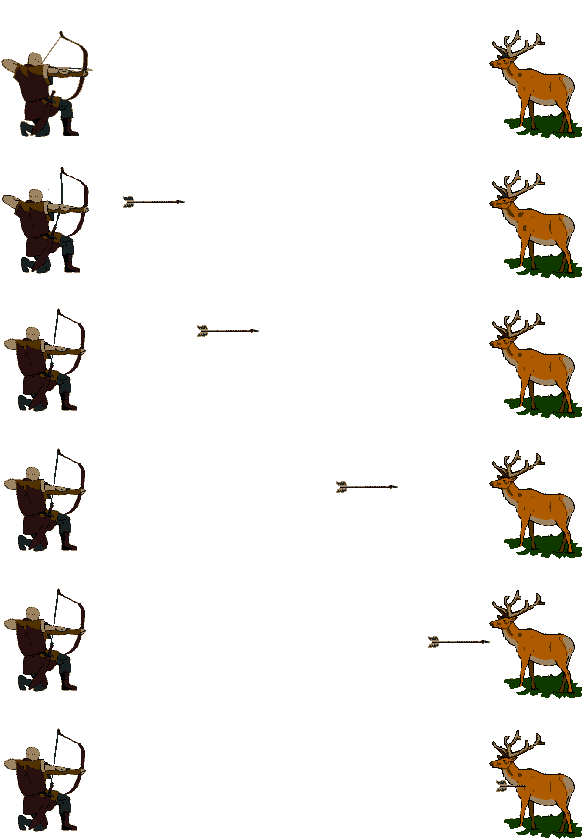
""Still hunting is the process of walking quietly and slowly through game habitat, trying to see an animal before it sees you. Stalking is the culmination of the still hunt, wherein the hunter, having located an animal, attempts to close to within bow range.
This is the real essence of hunting and requires more skill than driving or blind hunting. It is by far the most difficult and the most satisfying way to hunt, for it places the bowhunter on more even terms with his quarry.""
>>---Fred Bear-----> |
|
|
|
|
|
 |
|
|
|
|
|
|
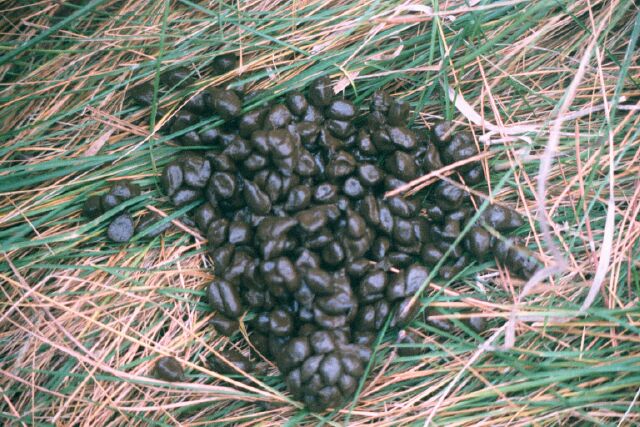
Scouting is the only way to find deer activity and behavior sign |
|
|
|
 |
|
|
|
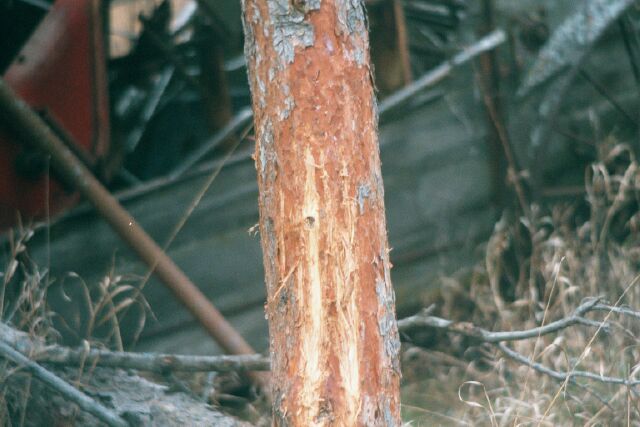
With effortless sign like this to read, it didn�t take me long to figure out there was a fine deer in this area. My first speculation was that it unquestionably had to be larger then a spike. LOL
This rub was just off a trail from the oak ridge top. As you can see the buck had no apprehension of the farm equipment. Providing evidence that if an object is left in his area for a length of time, it will soon become accustomed to. Including ground blinds so the earlier you set them up the better. |
|
|
|
|
|
 |
|
|
|
| This rub had happened a short time ago. Perhaps even just before my sighting of it. You can see that the bark is still green (alive) and the hanging hair-like strands are not coiled or withered. Without getting to close I looked at the bark shavings on the ground witch were still wet like they had been just put there. Fresh sign like this is a great indication of a hot spot to ambush an unsuspecting whitetail. |
|
|
|
|
|
 |
|
|
|
|
|
|
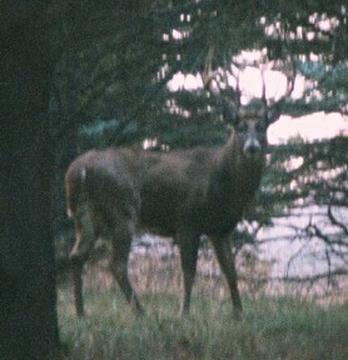
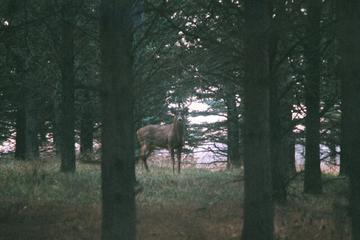
I knew this twelve point would be in the area soon because of the time I spent scouting. His travel route was about 300 yards in distance from bedding to feeding. Starting at the top of an oak ridge and ending in a small 15 to 20 acre corn field at night. He would stay hidden from on-lookers using the terrain such as the shelf on the oak ridge. To the deep ditches filled with six foot tall swamp grass. Even the thick evergreens you see him in now. He could keep himself invisible from the time he left his bed until he reached the food plot. |
|
|
|
|
|
 |
|
|
|
| My scouting blind, (made from a fallen tree top) was so close to the trail that I had to wait for him to get far enough past me in order to take the picture. I knew the click of my SLR would send him crashing away into places unknown. As you can see the 50 yards was still to close for the noise of the shutter, and his head turned in a flash. Being that was the only sound and I was completely blending in with the surroundings I had been undetected. In time he just started to graze and move on comfortably to his destination. |
|
|
|
|
|
|
My favorite Terrain Features |
|
|
|
Ditch crossings; |
|
|
|
Creek and river crossings; |
|
|
|
| Deer detour around steep- banked ditches. Look for any deep ravines and walk their full length. Most have a ditch at the bottom. Most likely there will be trails at the foremost end of the ditch and at any location where the banks are gradual. The banks separated by the greatest distance will concentrate the most deer traffic. When bucks are looking for does to chase and tend, set up in ditches between two doe bedding areas. |
|
|
|
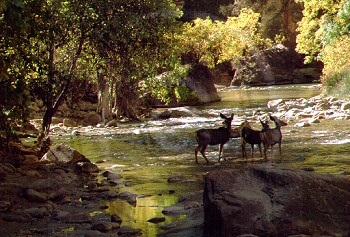
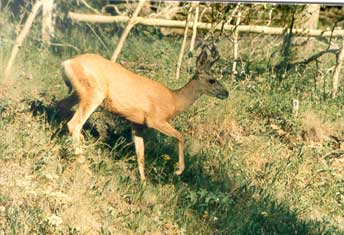
Deer avoid the deeper water whenever there is a shallow crossing nearby. Set sights on shallows and under water ridge tops between pools witch tend to concentrate traveling deer. Walk the banks of the creek or river looking for trails leading into the water. The best ones for the rut lie between two doe bedding areas. |
|
|
|
 |
|
|
|
 |
|
|
|
|
Saddles; |
|
|
|
Deer unconsciously use dips in a ridgeline as a low profile way to cross from one valley to the next. Saddles give them great security and the least amount of effort. Subtle saddles under a ten foot change in elevation are best found when scouting. Topo maps won�t show any changes outside a ten foot grid line pattern. Any dip is a likely crossing and worth investigating. |
|
|
|
| Side hill trails; |
|
|
|
|
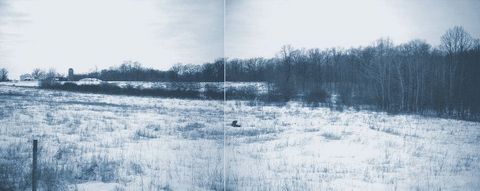
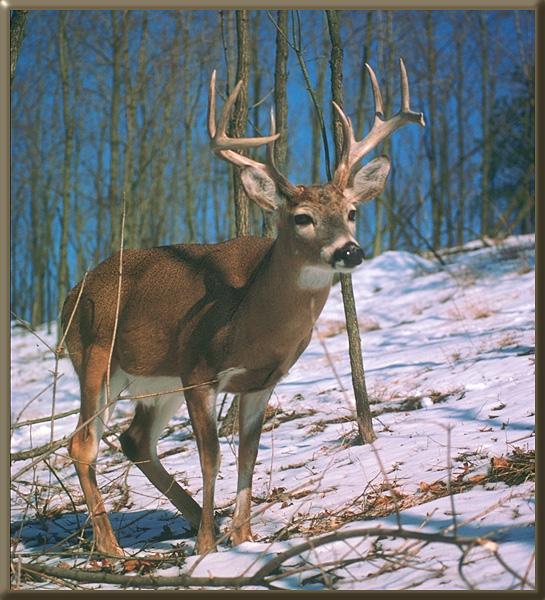
| Side hill trails take more experience. You find them about 1/4 to 1/3 of the way down the slope. Even if you don�t see a trail bucks use these corridors all the time during the rut. Side hill trails are among the most dependable terrain patterns that you can find in ridge country. But not always obvious look carefully. Watch for wind conditions before hand. Also pay close attention to the thermals. Depending on morning and evening situations. |
|
|
|
|
 |
|
|
|
 |
|
|
|
|
Ridge crossings; |
|
|
|
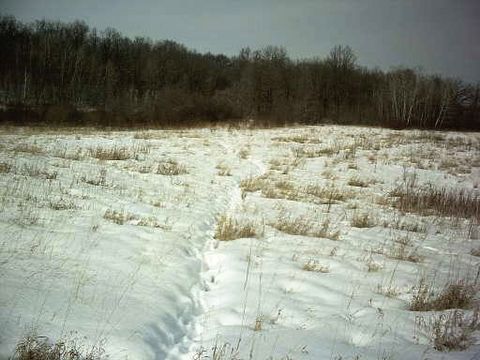
Bucks cross open ridges at the places where opposing draws point toward each other. These terrain features hide them when they are crossing from the timber on one side hill to the other for the most amount of time. |
|
|
|
 |
|
|
|
|
|
|
|
|
|
|
|

|
|
|
|
 |
|
|
|
