
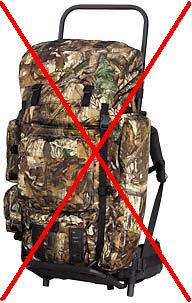
In most cases the time spend still hunting the area you decide will take all day but you hardly cover any distance. Remember the first rule SLOW. Your truck or camp will be close enough that you wont need a three thousand cubic inch back pack. Slapping branches and snagging limbs trying to sneak about will be most of what you will accomplish. Not to mention the extra weight to unbalance you all day.
Imagine trying to stay in control, taking a shot when you are bent into a seated position half twisted backwards, and shaking with buck fever with a thirty five pound pack on your back. A friend told me a story of a hunt he had, when he was forced to give up a shot on a nice deer while leaving his stand. The extra weight of his tree stand packed on his back made getting into position impossible to stay steady enough for the shot. The story goes on but you get the point.
This may seem like a no brainer, but you may be surprised when you get to a new area one hundred miles away and realize they are still in the den on the desk. Put them on your check list and mark it off only after they are in the pack. Not after you buy them. Otherwise, you may have to call your wife to bail you out of trouble. That will make for a great weekend hunting story come Monday morning at work.
Scent control or not.
This can bring up as much conversation as an argument between a tree stand hunter and a stalker. Trying to decide on the �best� way to go is personal choice. I have played all the right cards and shot deer fifteen yards from me without a scent control type suit. I have also played the same hand and got busted thirty yards out.
I do believe a scent control suit is a good choice. But I do not think they save you all the time. They only lock the scent that is within the suit itself. Unless You cover your face, hair, breath, or anything else that is exposed you are in the same boat as without scent control. Then there is wind direction to concider. But you should have that part down by now.
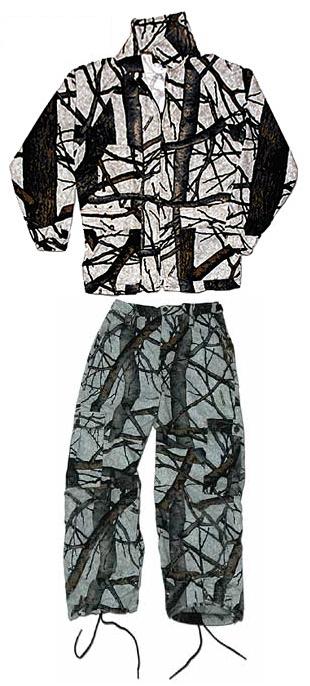
To me the importance of a good camo outfit is blending in. I have a pattern for whatever type terrain that I stalk. Some patterns will be used for a wide range of areas, like a sky line pattern is great for stalking in the snow covered woods. As long as I blend into shadows and light I feel the camo is doing the job.
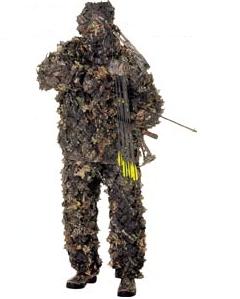
Ideally a suit with scent control cover from head to toe with a 3D leaf type affect in early and late fall is perfect. (extras including boots, face net, gloves, and hat) After snow fall a sky line snow type pattern with scent control head to toe.
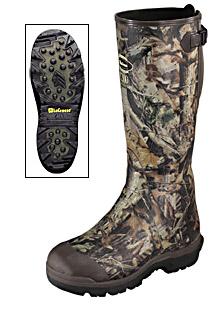
I have two pair of rubber boots, one for early season with no insulation and another with insulation for colder late season. Both are completely camo, eighteen inches high and all rubber with an aggressive sole as possible. I like to sprinkle a little bit of baking soda into them while they are not on my feet. Then spray them down with scent killer, (wildlife research brand) before placing them into a plastic tub with all of my boot scent pads, and any other outer foot ware. Just before I am going to put them on my feet. I will shake them a bit to spread the baking soda all over the inside, then dump out the extra. Spray again with scent killer just before leaving to hunt.
These are high on my very important list. Especially when I am in new area. The notes I take and markings I make during a season will give me a better insight for years to come. Topos give you the lay of the land as a hole. Finding the ridges, shelves, saddles, clearings, rivers, creeks, water holes, steep grades, swamps, funnels, property lines, and food plots. Are so much easier once you learn how to read a topo map. In combination with a compass you will gain the confidence to travel into territory that might otherwise get you off track or lost.
Don`t wait until you get lost to try to find your way out. Mark on your map every change that will be recognized from any direction. Including the direction you were going when you made the mark. I like to use the hikers thumb technique. By placing my thumb on the map where I am at all times insures my way in any direction I wish to wonder. Often times you may have to change the direction of travel while still hunting to work with the wind changes and thurmals.
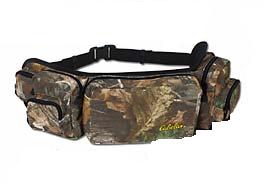
I prefer to use a fanny pack made of fleece with several pockets and a water bottle holster. I like pockets because it cuts down on the noise made by what ever is inside. By placing objects in there own pockets saves time in fumbling for them in the bottom of a backpack or single pouch fanny pack. Between three and four hundred cubic inches of capacity should be more then enough room for all you need for a day stalk. That is big enough so you only need to buy one for the hole season. So later when cold weather comes around you can bring extra outer clothing. Like gloves, nit hat, wool socks, face mask, etc.
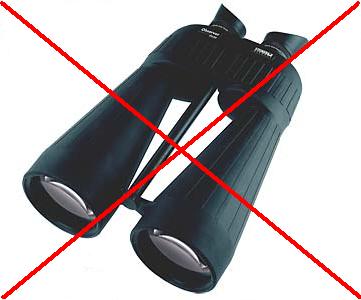
One thing to consider when buying a pair of binoculars is, most of the time when stalking you will be looking at thick brush. Trying to pick deer parts out at a close range. Usually within fifty to eighty yards. A huge pair that brings ten miles into one hundred feet is useless save them for your long range scouting.
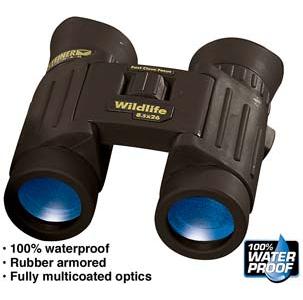
I use a pair that brings one thousand yards into about three hundred feet. They are ten by twenty six power and only weigh about 9oz.
This is one place I do not skimp on price. The particular brand I have is still less then two hundred dollars. One hand focus operation is a must. Eye cups are a personal choice, but I prefer them because it helps to maintain focus on the subject. When both eyes are comfortable and open wide you will see more and quicker.
Make sure when you look through them that all of the picture is clear. Some will have the outer edge of the circle a bit blurry witch to me is a cause for more movement to scan the area and eventually running deer. I also use a pair with a game sensing lens coating witch adds contrast to the colors so game stands out from the woodlands. Rubber weather case is shock and slip proof.
A lot of hunters carry other drinks with flavor to satisfy thirst. Until they make one that smells like the outdoors I`ll take water. I have herd people say some fruit flavored sport drinks may make the deer curious and move in closer or follow your trail. For me I seem to get more thirsty with anything other then water because of the amount of sodium in them. Plus they make me have to urinate more. I don`t need the nutrients or sugars from those type of drinks while still hunting. If I am working that hard that means I`m sweating and that creates more problems.
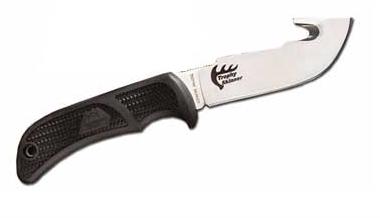
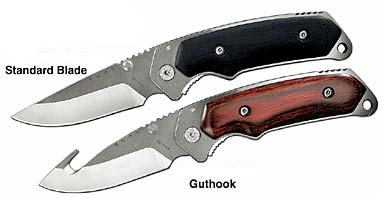
I know my knife is as sharp as it can be because doing so is on my off season �wish I was hunting� chores. Be that as it may, make sure it is sharp and of good quality. A four inch folding blade is usually enough for most big game. That is more personal choice over a strait blade including a gut hook. Also carry a sharpener that can be used easily to touch up the edge during the field dress / cleaning process. I also have an extra knife and sharpener in my pack. Folding knives or strait blade should be kept in a sheath for safety reasons as well as protected from the elements.
Flashlights have become just like any other equipment and have fallen into an incredible price range. Aviator lights, a five and a half inch twenty hour xenon bulb at around $185.00 to plastic department store lights for .99 cents. I`m not sure how many of us can afford a flashlight for almost two hundred bucks. But one thing for sure, do not rely on the ninety nine cent plastic toy model. All you have to keep in mind is, will it fit in my fanny pack and leave room for other equipment. Last longer then four or five hours on a charge. Be bright and dependable, but mostly out door resistant. A flashlight is something that still hunters only use on occasion. When say shot placement was off a bit and tracking goes into the night hours. Or else arriving to your hunting location or packing up in the dark. Therefore, whatever you decide on the quality and price range is definitely personal choice. Just make sure you have one and it works. If it takes batteries check them before you leave the house and replace them often.
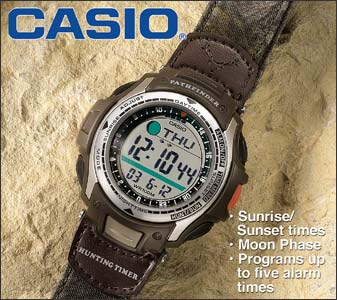
Not only is this a good idea to have for keeping an eye on shooting times. It should be an absolute must for all sportsman. Your preseason scouting has shown deer movement between the hours of 2pm and 6pm and your watch is on the desk next to your license.
You decided to do a little scouting before you slip into the edge of the doe bedding area. Again you look down to check the time to mark your notes and no watch.
Some models are equipped with fantastic extras that can be handy for scouting and observation. To list a few features�
Barometer, thermometer, digital compass, luminescent back light, stop watch, alarms, resistant to temperatures of -15, sunrise sunset times, and the cool one, moon phase through out the month. (check Cabela`s for the model Pathfinder hunting timer by Casio)
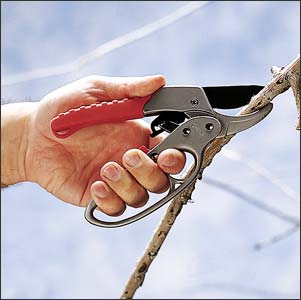
The folding saw and pruners I use have a sheath that I run the waist strap of my fanny pack threw. So that eliminates taking up more room in the pack. The saw is something I hardly ever use on trees. I bought the one that has an extra fine tooth blade with the course so I could cut bone. The pruners I will use a lot more then the saw because how often are you cutting branches that big when stalking. In the winter I use the pruners more to clear trails for the next season. They are nice to have when you decide to hide behind a brush pile and you need a shooting window. You should also consider spending the money on the ratchet type. One hand cutting is great for a lot of reasons. Plus you can take out bigger branches and keep your saw in the sheath. The less time you spend taking things out of your pack then looking for them later. The more time you are hunting.
I carry one of each just to have them, a tube grunt and a can estrus. Usually I don`t need them being I spend so much time scouting. I have there travel and habits pretty much figured out. During the rut when I do spend some time sitting in natural ground blinds I will try calling now and then. I keep a reed type call in my mout when blind hunting. Less movement, also I can use my hands for other things like binoculars, or drawing my bow. Long fawn cries on a turkey call works great for calling in doe. Stopping deer for a shot is easy with a mouth reed also.
You can get as bright or flashy a color you want in this. I like to keep it simple white because I only use it to mark blood trails. Any other trails I mark on my topo map. I`ve seen a lot of good stands marked by tape from other hunters that left a calling card for intruders. Even if the person doesn`t hunt the stand because of continence they may walk the ribbon trail just to see how good the spot is for another time. Leaving scent for the deer to pick up and you wont see nothing for days.
These I use to funnel deer movement. By putting one on a boot and using a skunk or human urine. I will create a half circle crossing a trail that I know the deer use to go to food plots. Forcing them to avoid the danger and move in the opposite direction of the scent. Leading them in between my blind and an obstacle like a fallen tree, river, or steep bank.
This comes in handy for a couple reasons. I started using it when I was a kid tying one end to a small tree about thirty inches high, pull it across a deer trail and tying the other end to a twig, letting it hang over a branch on a small tree on the other side of the trail. So when the deer walked the trail they would pull the twine by force. Making the end with the twig fall to the ground as they walked by the trees. Poor mans trail timer, by checking the timers with binoculars from a distance. I could figure out the travel route and the time cycle it took to be back to an area. This is great for small woodlot hunting when they travel a five to seven day pattern from lot to lot.
I also use the twine as a drag string for my scent pads in two different ways. One as a drag tied to my waist about fifteen feet long with a small stick to keep it down to the ground and a scent pad.
The second way is tied to a stick the same way but I stand at a distance that is paced off from a ground blind. Make a mock scrape with the stick that is tied to the twine. Add the scent pad and urine blend, and toss it out as far as I can in three or four different directions. Pulling it back to the scrape I made by the twine leaving no scent other then the urine. Then I leave the stick dangling in a tree so wind can pick up the scent and cover me long enough for a shot. Be sure and use gloves sprayed with scent killer during the process.
I use this like I have a ton of it. Every time I take my gloves off the first thing I do is spray my hands. Incase I touch something and not realize it, I leave very little scent behind. I spray the bow because it hangs in the office and smells like home. Everything of mine and on me that is out in the woods is sprayed and often. It say`s it works for days after drying. Well that�s all good but I still use a ton of it. DON`T FORGET THE BOTTOM OF YOUR BOOTS.
There are a few companies that carry this in a small squeeze bottle. I use it a lot when I`m stalking river bottoms, ridge slopes, and any place the thermal or swirling air can get you pegged by deer. Most times I stay out of areas that have unpredictable wind. But as the season draws closer to the end and I know there is deer in there somewhere this little bottle can help you change with the wind direction.
This is obvious, why get blood on your sleeves of your clothes and ruin them. I like to bring a couple pair of dish washing or surgical rubber gloves to ware under the long plastic gut gloves. Just in case the tare open.
