
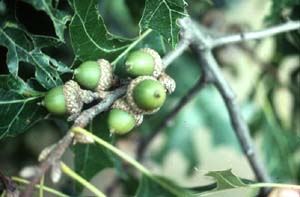
Whitetail food preferences are reliant on plant species in an area and the time of year. Green leaves, herb plants and new growth on wooded plants are eaten in the spring and summer. In late summer, fall and early winter, both hard and soft fruits. For instance, apples, pears and acorns are important in their diet. In the winter, evergreen leaves, hard browse and dry leaves are eaten. A good variety of natural foods at all times of the year is essential for an area to incorporate a healthy deer population.
The white-tailed deer is a herbivore and a browser. Also a ruminant (four�chambered stomach), which makes digestion of various foods versatile in its feeding habits. Consuming a variety of leaves, twigs, bark, and buds of trees and shrubs, plus hard and soft fruits, vines, forbs, lichens, mushrooms, cultivated crops, and some grasses.
There are three key periods of the year to consider when maximizing the availability of native forage. Spring when deer are trying to recover from the stress of winter and the rut. Summer when antler growth occurs, does are lactating, and newborn fawns are growing. Fall / Winter when deer are preparing for winter conditions and the rut.
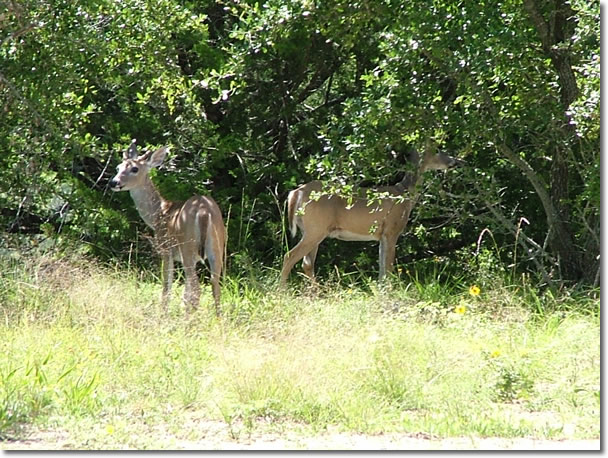
Fertilizing woodlands and patches of native vegetation is an effective method of improving the health and grouth of trees and plants for deer. The suggested application is one treatment in the early spring followed by another in late summer. These natural food plots become excellent areas to hunt during the early fall. Plant cultivated crops for summer supplemented food source in small patches in clearings and open fields.
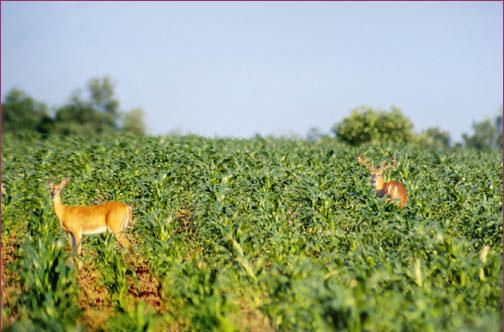
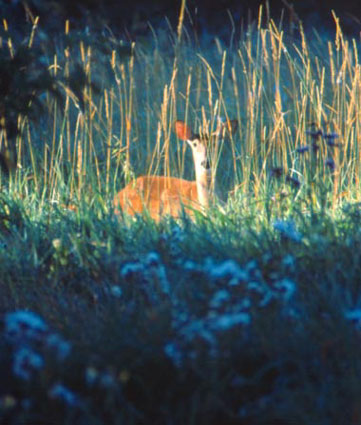
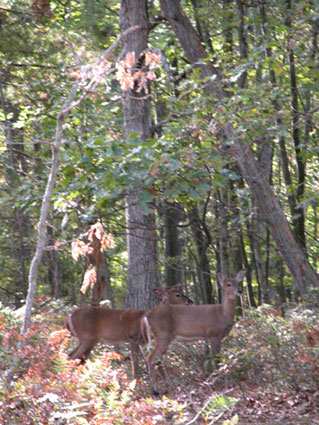
Summer is one of the most critical times of the year for managing wildlife habitats. Late summer is one of two times in the year when native foods are least available or low quality. As a result, whitetail supplement native vegetation with agricultural food plots for optimum nutrition. Fertilize planted crops, field edges, break lines and fruit trees.
During fall and early winter, the whitetail�s diet switches to high carbohydrates as they prepare for winter and the stress of the rut. During this time deer feed heavily on mast crops such as acorns and soft fruits.
Know where deer are bedding and cut off a couple tree branches with plenty of browes tips. This is what the primary food source is right now and by placing them in piles close to bedding areas they won't have far to travel. Finding beds should be easy in the snow if you have it. But for a few ideas, look near river bottoms, south east facing slopes, high grass edges, and swamps at the break lines where the adjacent woods meet.
In addition to topping trees, select a few younger trees and cut about three-fourths of the way through it. Then bend it toward the ground without breaking it. Lay a branch or two over the tree that you cut from the others with the branches up so that it stays bent over. The tree will keep regenerating new stem systems for years. All those leaves and branch tips stay within reach of deer and feed them a long time. Not to mention the deer stay in your scouting / hunting area for longer periods of time.
Visit the web site at www.qdma.com
