


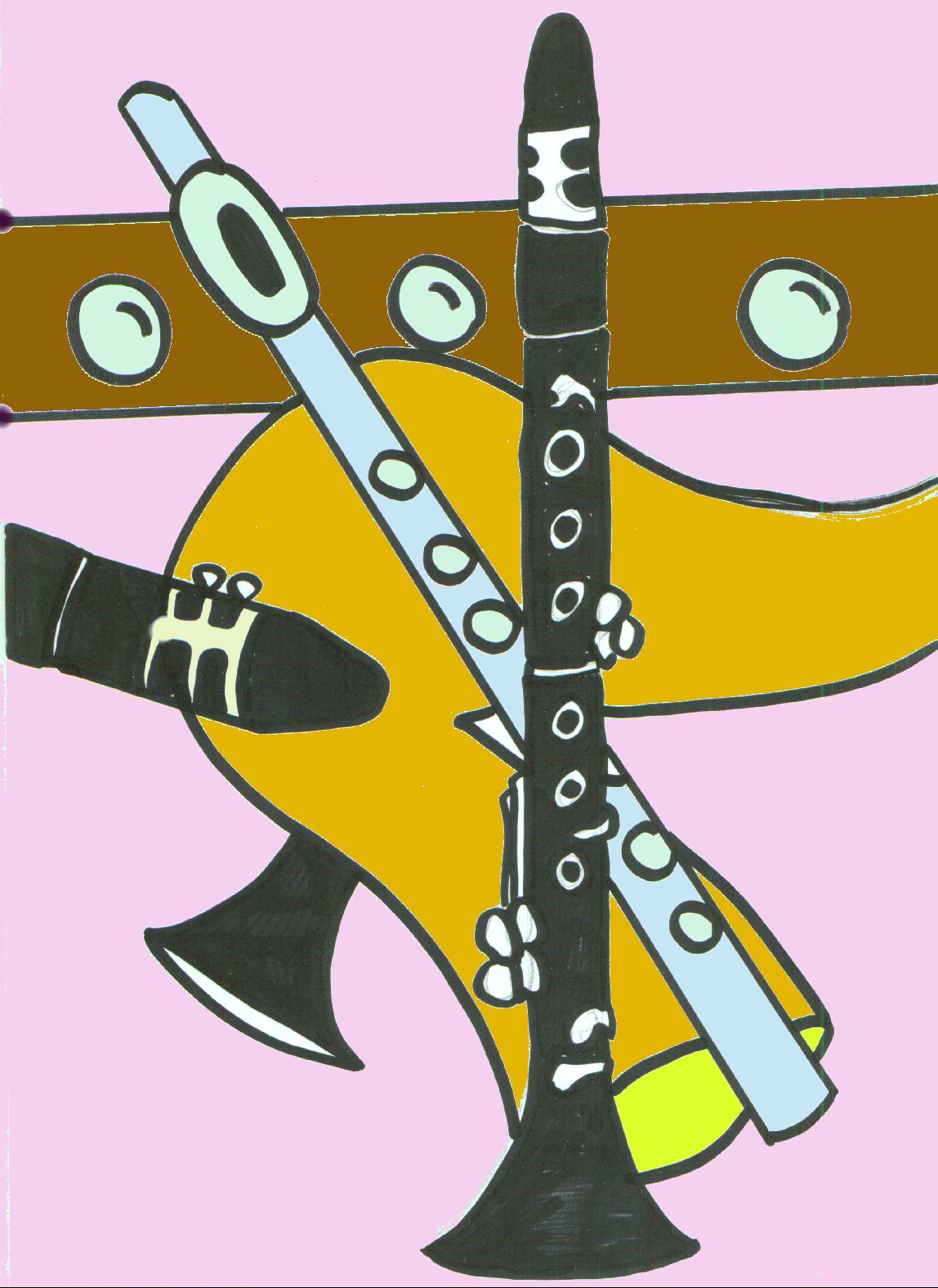
As the only woodwind instrument not to have a reed, the flute is also sometimes confused with brass instruments, although it is firmly placed in the woodwind section. The sound is produced by blowing across the hole in the mouthpiece, rather like blowing across the top of a bottle. For information on the flute CLICK HERE!




It is a common misconception that a saxophone is actually is a brass instrument because of its colour. This is not true. Although it most commonly does have a brass colour, it also has a single reed, and a mouthpiece very similar to a clarinet. To find out more information about the saxophone CLICK HERE
The clarinet is one of the most versatile instruments in the orchestra, and certainly of the woodwind section. It also has a single reed, and is generally made of wood. For more information
CLICK HERE




The oboe is played using a double reed, which is fitted into the mouthpiece. It looks a little like a thinner version of a clarinet, and it is the instrument which the orchestra tunes up to. The biggest and lowest of the woodwind instruments is the bassoon. It also has a double reed, and is also usually made of wood. For information on the oboe or the bassoon
CLICK HERE!