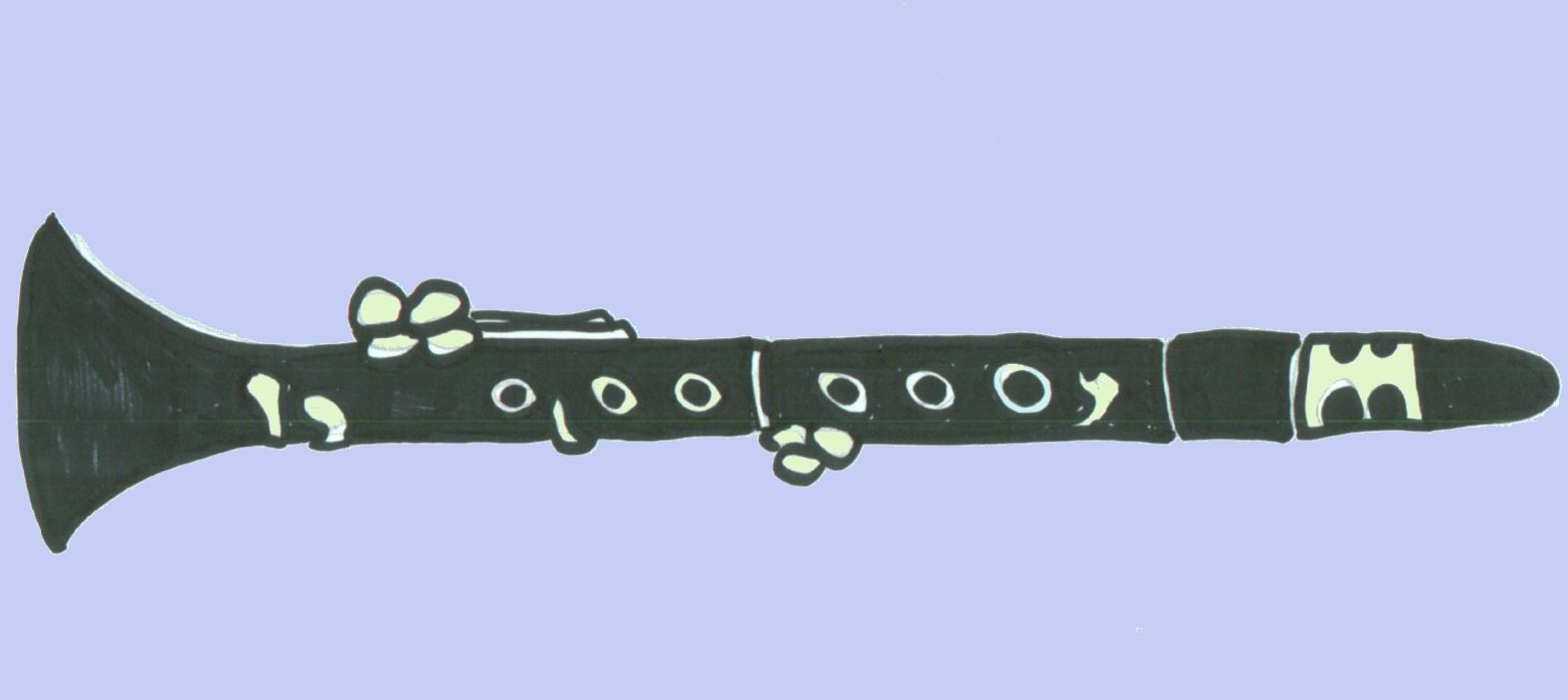
The first form of the clarinet was available in Western Europe in the 17th century in various pitches and was commonly called a "chalumeau". The word chalumeau is French, and is the name for any small reed-blown pipe. The lower octave of the clarinet is nowadays referred to as he "chalumeau" register. The clarinet was first developed from the chalumeau around 1700 by the German instrument maker J.C. Denner.
Clarinets can be found in orchestras, windbands and jazz bands. Famous clarinet compositions include Mozart, Brahms and Schumman's Clarinet Concerto.