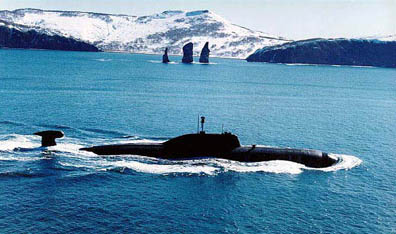
Nuclear power in submarines and aircraft carriers are a great improvement over previous types of power used in these machines. First and foremost, nuclear power in submarines requires no oxygen, allowing the ship to stay submerged potentionally for weeks at a time. The previous type of power in submarines was always based on an electrical battery. Using diesel fuel or other substances to power a moter, electrical energy would be built up in a battery, allowing the submarine to submerge. The main drawback to this source of energy was that the combustion reaction that occurs during the use of diesel fuels requires oxygen, and thus requires the submarine to surface. This kind of power was also very inefficient, requiring tons of liquid fuel to produce the amount of electrical energy needed to power the large engines.
Nuclear fuel is small and efficient, using very little to produce a large amount of elecricity. This is ideal for submarines, which, while large, have very little space for spare fuel. The bottom line of nuclear power in submarines is the fact that it generates a large amount of power using something that takes up very little room onboard, and requires no oxygen. This fact is also the same in aircraft carriers. While many times larger than submarines, carriers still require something that can produce extreme amounts of power while taking up minimum space.