


I'm sure some of the frequent visitors
will notice how often this site is updated.
If you have any questions


concerns
comments
please contact me here.
Fatloss:The Process
Aerobic Workouts
A Simplification of the Mechanism
Exercise utilizes calories. If you've been on a treadmill, there is a built-in instrument that measures caloric burn (accuracy is questionable). That means that for the exercise you have done, this is how much energy you have used. The origin of the energy varies, it could be from sugar (blood sugar) or it could be from fat (if blood sugar levels are inadequate for fueling your body). This is why I said the optimum time to exercise aerobically is first thing in the morning when blood sugar levels are low.
Resistance Workouts
Metabolic Rate
Scheduling Workouts
Here is my workout schedule for both aerobic and anaerobic workouts.
Aerobic exercises, are workouts that cause you to breathe hearder, and that cause your heart rate to go up. Running, walking are good examples of aerobic exercises, however the definition of aerobic exercises is by no means limited to these activities only. Jump roping, hiking, swimming - anything that gets you breathing harder is fine. Exercise of this nature are as equally important to eating healthily as you will discover for yourself and see in the next page. Both help to eliminate fat on a gradual basis which is the healthiest way to go about fatloss.
Frequency
How often you should perform exercise really depends on your current activity/fitness level. I can give a fixed number for how long you should do aerobic exercise, regardless of how often you do it. Any exercise that keeps your heart rate elevated for 30-40 minutes is more than enough. As for how often now, I would suggest starting three times a week (preferably every alternate day - Monday, Wednesday, Friday for instance). I didn't follow a frequency routine however. Whenever I had spare time, I would exercise, this would mean if I didn't have a class, or on the weekends if I had a few hours to myself. That just happened to be daily in my case and I began to feel better and see results gradually too.
In the previous page you read that exercise requires your body to use fuel reserves, we'll expand on that here. Exercise is a means for your body to burn calories. Calories is simply a measurement of energy, when you see on a nutrition label that a four cookies have approximately 120 calories, that means that by ingesting four cookies, you are gaining this much energy that should be burnt off if you don't want a gain in fat. Any surplus energy is stored as fat and that's why eating properly is an important co-tool for fatloss.
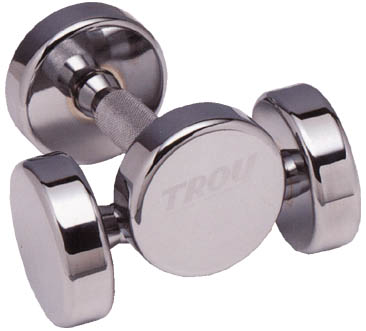
Resistance exercises/workouts involve using weights, dumbells, barbells, etc. They are more a muscular workout than a fat-burning one and are classified as anaerobic exercises - however these types of workouts are useful in terms of elevating your BMR (basal metabolic rate). This is simply your metabolic rate at rest. Some of you may not care about building some muscle, however some muscle-building resistance workouts are required because muscle utilizes the most calories out of any other body-tissue in order to sustain itself. (1 pound of muscle gained = 50 extra calories needed to be utilized in order to sustain it.) In other words, by building muscle, you are elevating your resting metabolism, meaning that whenever your blood-sugar levels do fall to an inadequate state Fat will be forced to be the fuel your body reverts to. Muscle-building also tightens up slack muscles and gives you the shapely physique I know you are looking for.
For all types of exercises (aerobic/anaerobic) there is an increase in your metabolic rate for hours afterward. After running for 30 minutes, you have burnt a good deal of energy and for a few hours after this, the rate at which catabolic reactions take place is elevated. (Catabolic reactions = catabolism = breaking down of large compounds into smaller ones - in this case fat).
Performing aerobic and anaerobic exercises concomittantly may be difficult to schedule into your day, depending on how busy you are or your situation involving access to a gym. For aerobic exercise I used the stationary bike daily at the gym and for resistance (anaerobic) workouts I had my own bench press that I bought for a mere $60.00 (CAD). On days where I had early classes or had early commitments I always made sure I made time for my aerobic biking - even if that meant waking up earlier. Resistance exerises I just threw in whenever time presented itself. Resistance exercises are not as important as aerobic exercises in terms of fatloss so it wasn't a let down if on a few days I didn't get a chance to perform them.
It is also important to introduce variation into your workouts. There will be a time in your journey towards fatloss where you will find your results to slow down and maybe stop altogether. It is important to not become discouraged by this, and to remember that this is preventable if you vary your workouts from time to time, and make them more challenging as time progresses. When I first heard aboutt his, I varied my aerobic workouts by time. Every so often I would go for five minutes more until I finally reached the 45 minute mark where I could not go any further. I did eventually reach a plateau, although much later than anticipated. I recommend every six-weeks to make your workouts more intense and surprise your body with variation to prevent these plateaus from happening. Click here to learn more about pleateaus.
Home|About the Webmaster|Eating Healthily|Links|E-mail the Webmaster
