


Calculation and execution of procedural knowledge
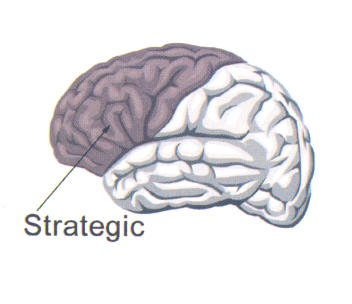
Procedural knowledge is retrieved in the recognition network, but applied to the current problem through the strategic network (Ashcraft, Kirk & Hopkp, 1998). Shalev (2004) reports that dyscalculics can have significant deficits in applying procedural knowledge correctly (for example, misplacing digits or undertaking the exercise in the wrong direction. Siegler (2003) suggests that many may suffer from the inability to choose the appropriate strategy to solve a given problem. However, there are many individuals with dyscalculia who have no problem applying proceedural knowledge. Remember Matt who could not retrieve facts? He evidences no probelms executing calculation (Marcaruso & Sokol, 1998). On an encouraging note, Shalev (1998) did find that when children evidenced major procedural problems with calculation, they often employed fall back strategies, like counting on their fingers (Ardilla & Roselli, 2002).
Approximation
Dehaene and Cohen (1991) report a dissociation between approximation and exact calculation. One of their patients made terrible errors carrying out simple calculations, but was able to confidantly approximate answers to arithmetic problems. A boy named Doug, on the other hand had no difficulty carrying calculation out correctly, but failed to make appropriate approximations (i.e. he suggested it was about 96 miles from Boston to L.A. (Marcaruso & Sokol, 1998).
Working Memory
There is debate as to the role that working memory, the ability to hold information "on line" while carrying out a task (Banich, 2004), plays in dyscalculic's difficulties. It is clear that arithmetic tasks like carrying (in addition) place a heavy load on working memory (Ashcraft, Kirk & Hopko, 1998). Working memory may be a strength for some and a weakness for others, as some researchers (Siegal & Ryan, 1989) found children with dyscalculia did poorly on non-verbal working memory tasks, while others (Swanson, 1993) found no difference in dyscalculic's performance on verbal and non-verbal working memory tasks (Marcaruso & Sokol, 1998).
Attention
Dyscalculia is commonly diagnosed alongside ADHD. Even when a specific ADHD diagnosis is not made, many individuals with dyscalculia present attentional difficulties (Ardilla & Rosselli, 2002). Lindsay, Tomazic, Levine & Accardo (2001) report that children with dyscalculia make more omission errors and have more inconsistent time responses (two signs of attentional problems) than non dyscalculic children.