

Fact Retrieval and Counting
Though poor arithmetic fact retrieval is often cited as one of the defining characteristics of dyscalculia (Shalev, 2004; Ardila & Roselli, 2002), there are many individuals with dyscalculia who have excellent fact recall. For example, Maracruso and Sokol (1998) contrast two students: Robyn who has no trouble with fact recall, and Matt who has great difficulty remembering even much practiced addition and multiplication facts. Some individuals may even have severe difficulty retrieving facts associated with one operation, but strong facility remembering facts associated with other operations (Marcaruso & Sokol, 1998). While not all dyscalculics have difficulty counting, Hitch and McAuley (1991) found that many children with dyscalculia had sub-par coutning skills, whether counting objects or sounds (Marcaruso & Sokol, 1998).
Procedure Retrieval
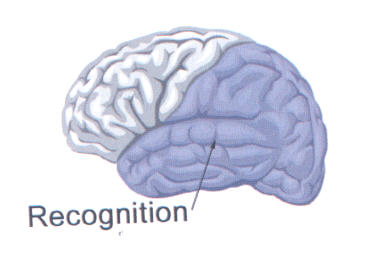
The execution of arithmetic procedures is part of the strategic network, but recalling a proceedure is the job of the recognition network (Banich, 2004). Some individuals with dyscalculia may have what Shalev (2004) refers to as inadequete or "flawed" proceedural knowledge. For example, they may misuse arithmetic signs (believe that the + sign signifies subtraction) or have a garbled understadning of how to carry in multi-digit addition. These same individuals may have no trouble actually carrying out procedures, if they are frequently reminded of the procedural information/knowledge they are lacking. Conversely, many dycalculics may have excellent retrieval of proceedures.
Numeral Naming and Comprehension of Numerals/Number Words
O'Hare, Brown & Aitken (1991; as cited in Marcaruso & Sokol, 1998) found that children with dysfunction in the left hemishpere often had difficulty naming written numerals correctly. Similarly, yet distinctly, some dycalculics have severe problems writing the correct corresponding numerals after hearing number spoken ("nine thousand nine hundred thirty" -> 9,9030), while others cannot correctly verbalize a given numeral (372 -> "three seven hundred two") (Marcaruso & Sokol, 1998). There are also individuals who fail to recognize the importance of the order of the numerals in a multi-digit number (i.e. they read 67 as 76) (1998). However, for many people with dyscalculia, one or more of these factors may be a strength rather than a weakness.
Non Arithmetic Specific Skills
Rourke (1987) found that many dyscalculics had poor tactile analysis of objects and (1988) inadequete prosody in verbal language. Loveland (1990) described dyscalculic individuals as having difficulty interpreting non-verbal events (Ardila & Rosselli, 2002). Conversely, Ardila and Rosselli (2002) suggest that dycalculics have strong performace in tactile and visual perception tasks.