
bilateral angular regions are active during exact calculation, while bilateral intraparietal, precentral, dorsolateral and superior prefrontal regions are active during approximation (Ruxandra et al., 2000; Dehaene, Molko, Cohen & Wilson, 2004).
|
|
|
|
|
|
|
|
|
|
|
|
|
|
|
|
|
|
|
|
|
|
|
|
|
|
|
|
|
|
|
|
|
|
|
|
|
|
| home | |||||||||||||||||||||||||||||||||||||
| definition | brain | personal | |||||||||||||||||||||||||||||||||||
| references | |||||||||||||||||||||||||||||||||||||
| Mathematics and the Brain | |||||||||||||||||||||||||||||||||||||
| Numbers come naturally... | |||||||||||||||||||||||||||||||||||||
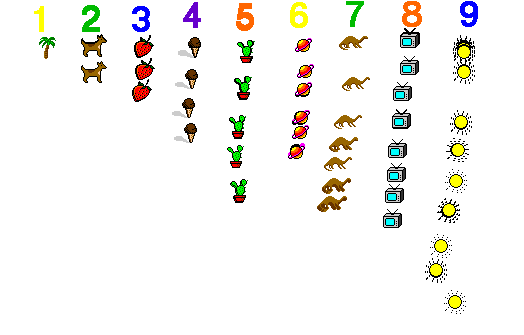
| Mathematics is comfortably nestled in our brains. Researchers contend that we, as humans, have a mental representation of numbers, typically displayed as a number line, in our brains (Butterworth, 2005; D'Arcangelo, 2001; Dehaene, 1997). Karen Wynn (among others) offers evidence suggesting humans have an innate concept of number. Wynn's work shows that even pre-verbal infants can add and subtract small quantities (Wynn, 1998)! | |||||||||||||||||||||||||||||||||||||
|
|||||||||||||||||||||||||||||||||||||
| Activation in the brain... | |||||||||||||||||||||||||||||||||||||
| click here for a 3-D model of the brain | |||||||||||||||||||||||||||||||||||||
|
|||||||||||||||||||||||||||||||||||||
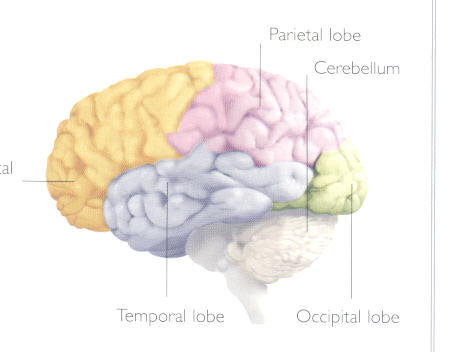
| The parietal lobe (pink area) is home to all things number (D'Arcangelo, 2001). Butterworth (2005) suggests that seperate areas within the parietal lobe are used for addition, subtraction, multiplication and division since each can be selectively damaged by brain lesions. Our memory for arithmetic facts and proceedures are both located in the parietal lobe , though they are distinct from one another (Ashcraft, Kirk & Hopko, 1998). The prefrontal lobe (yellow area) is also used to carry out calculation and approximation (Sahlev, 2004). | |||||||||||||||||||||||||||||||||||||
| image from Carter, 1999, p. 15 | |||||||||||||||||||||||||||||||||||||
| More specifically... | |||||||||||||||||||||||||||||||||||||
| The intraparietal sulcus becomes active during all number related tasks. Usually, the left inferior prefrontal cortex and bilateral angular regions are active during exact calculation, while bilateral intraparietal, precentral, dorsolateral and superior prefrontal regions are active during approximation (Ruxandra et al., 2000; Dehaene, Molko, Cohen & Wilson, 2004). |
|||||||||||||||||||||||||||||||||||||
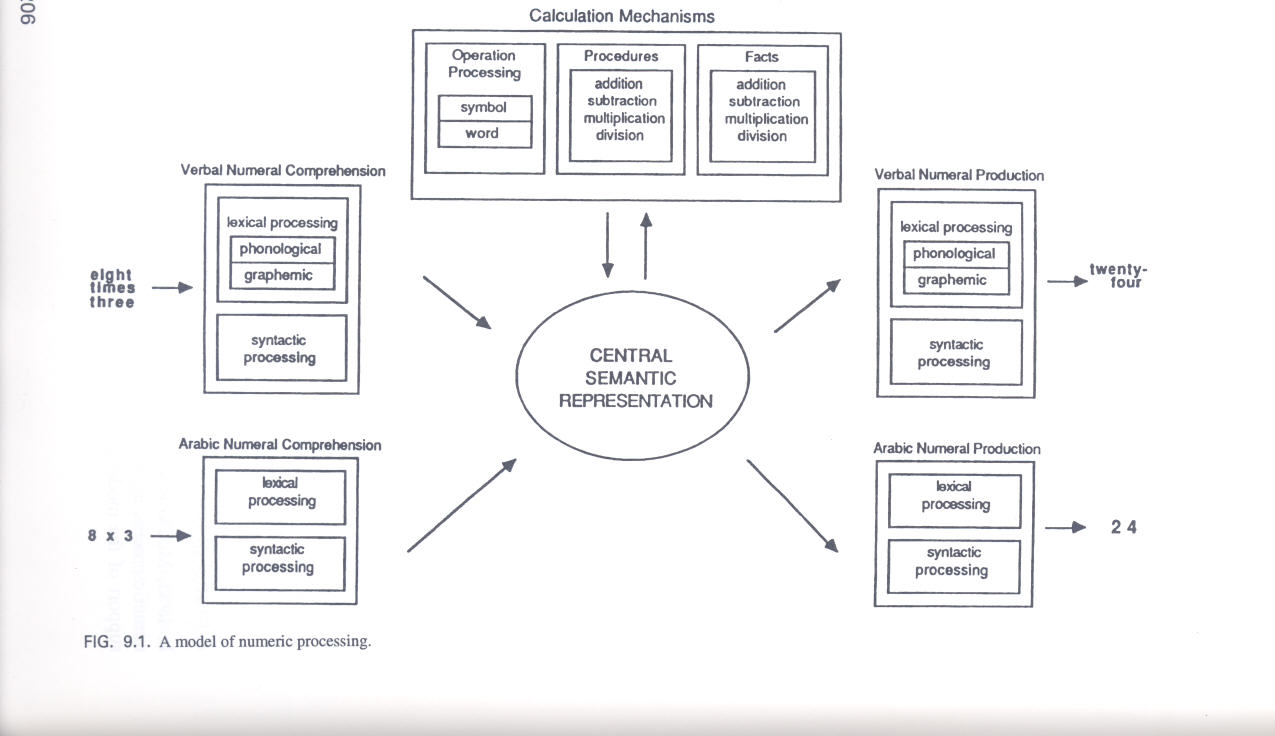
| Many distinct cognitive functions are necessary to make arithmetic happen... | |||||||||||||||||||||||||||||||||||||
| Any of these functions can be disrupted by developmental dyscalculia or brain lesions. Each function plays an important part in our mathematical knowledge and understanding. | |||||||||||||||||||||||||||||||||||||
|
|||||||||||||||||||||||||||||||||||||
| Image reprinted from Marcaruso & Sokol, 1998, p. 206 | |||||||||||||||||||||||||||||||||||||