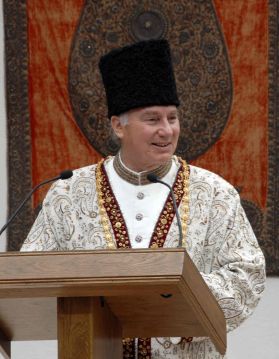
|
please remain
connected to the internet to download & view the
images.
place your cursor on any blank
image and right click on show picture.
refresh
your page
 the
top half of this article is new the
top half of this article is new
with an evidentiary
prologue
added to my original
email
GOLDEN
JUBILEE
1957 - 2007
TIME AND KNOWLEDGE
NAZRANA
dedicated to our beloved
khudawind
noor mowlana hazir imam
on his
most holy and auspicious
GOLDEN
JUBILEE JULY 11, 2007
IN ISLAM AND THE SHIA IMAMI ISMAILI TARIQAH
may it please our beloved
khudawind
excerpt
THE
SPIRIT OF PLURALISM
is
not a pallid
 religious compromise.
it
is a sacred religious imperative.
 [1+9+3+6
==> 19-NINETEEN
x 1] [1+9+3+6
==> 19-NINETEEN
x 1]
aggregation
Dec.
13,
1936
 [and
Italy[1]
(Sardinia] [and
Italy[1]
(Sardinia]
-
[12
+ 13
= 25]
-
25:
==> 5
x
5]
2+5:
==> 7
x
1
[1+9+3+6
==> 19-NINETEEN
x 1]
'elowahh
{el-o'-ah rarely (shortened) 'eloahh {el-o'-ah}
M.
GOD (ARAB
.ALLAH
. with art ...  of the true God)
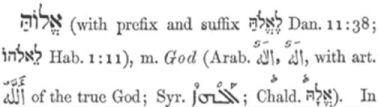
'
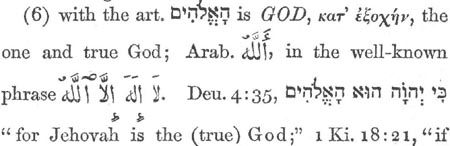
elowahh
(Strong's 0433), occurs 57
times in 56 verses: Page 1, verses 1 - 25 [57
==>
19
x 3]
GodH433
אלהּ / אלוהּ
'ĕlôahh
a. abraham's profound prayer was granted;
b. and then, allah bestowed a SIMILAR blessing upon abraham again;
Wa 'Ismā`īla Minaş-Şābirīn
And
Ishmael of
the steadfast
|
Rabbi Hab Lī
Minaş-Şāliĥīn (37:100). |
My Lord! Vouchsafe me
of the righteous. |
a. abraham's profound prayer was granted;
( compare Genesis
15:2; :3; :4 KJV) &
Joshua 24:3 compare Genesis
15:2; :3; :4 KJV) &
Joshua 24:3
|
|
Fabashsharnāhu Bighulāmin
Ĥalīm (37:101).
19) Sūrat Maryam
Wa
Ādhkur Fī Al-Kitābi 'Ismā`īla 'Innahu Kāna Şādiqa Al-Wa`di Wa
Kāna Rasūlāan Nabīyāan (19:54). |
So We gave him
[abraham] tidings of a gentle
son [1].
19) Sūrat Maryam
And make mention in the Scripture of
ISHMAEL. Lo! he was a keeper of his promise, and he was a
messenger (of Allah), a prophet (19:54).
|
|
Wa
'Ismā`īla Minaş-Şābirīn
And Ishmael of
the steadfast
|
-
Falammā Balagha Ma`ahus-Sa`ya Qāla Yā
Bunayya 'Innī 'Araá Fīl-Manāmi 'Annī
'Adhbaĥuka
-
Fānžur Mādhā Taraá
-
Qāla Yā 'Abati Af`al Mā Tu'umaru
Satajidunī
-
'In Shā'allāhu Minaş-Şābirīn
(37:102).
|
-
And when (his son) was old enough to walk with him,
(Abraham) said: O my dear son, I
have seen
in a dream that I must
sacrifice
thee.
-
So look, what thinkest
thou?
-
he said: O my father! Do that
which thou art commanded.
-
Allah willing, thou shalt find me of the
steadfast. 'In
Shā'allāhu Minaş-Şābirīn
|
|
Wa
'Ismā`īla Minaş-Şābirīn
And Ishmael of
the steadfast |
|
21)
Al-'Anbyā'
Wa 'Ismā`īla Wa 'Idrīsa Wa Dhāl-Kifl Kullum
Minaş-Şābirīn
(85). |
And ISHMAEL, and Idris, and Dhu'l-Kifl. All
were of the steadfast --
Minaş-Şābirīn |
b.
and then, allah bestowed a SIMILAR blessing upon
abraham again;
compare
(Joshua 24:4 DRB)
|
|
37.112:
C4105.
Isaac was
Abraham's second
son,
born of Sarah, when Abraham was 100
years of
age. See n.
4101.
He was also
blessed and became the ancestor of
the Jewish people.
See
next note.
Yusuf Ali's
Commentary from
QuranTrans
|
Wa Bashsharnāhu Bi'isĥāqa
Nabīyāan Minaş
- Şāliĥīn
(37:112).
37:112. And we gave
him tidings of Isaac[2],
a prophet of the righteous.
Pickthal's Quran
Translation
|
|
|
|
|
|
-
Wa
Bāraknā `Alayhi
-
Wa
`Alaá
'Isĥāq
-
Wa Min
Dhurrīyatihimā
Muĥsin
Wa Žālimun
Linafsihi Mubīn (37:113).
|
-
And
conferred blessings We upon him [ishmael]
-
and
upon Isaac.
-
And of their
seed are some who do
good,
and some who plainly wrong
themselves.
|
37.101:
C4096. This was
in the fertile land of Syria and Palestine. The boy thus born was,
according to Muslim tradition, the
first-bom son of Abraham, viz., Ismail. The name itself is from the root Samia, to hear,
because Allah had heard Abraham's prayer (verse 100). Abraham's age
when Ismail was born was 86 (Gen xvi. 16).
C4097. The boy's
character was to be Halim,
"forbearing". This title is also applied to Abraham (in ix. 114 and
xi. 75). It refers to the
patient way in which both father and son cheerfully offered to suffer
any self-sacrifice in order to obey the Command of Allah. See next
verse.
Yusuf Ali's Commentary from QuranTrans
(Joshua 24:5
DRB) AND I sent Moses and
Aaron, and I struck Egypt with many signs and
wonders.
Moses and
Aaron
|
Wa
Laqad Manannā `Alaá Mūsaá Wa Hārūna (37:114). [19
x 6] |
And
We verily gave grace unto Moses and
Aaron, |
|
Wa
Najjaynāhumā Wa Qawmahumā Minal - Karbil-`Ažīm (35:115). [7 x
5 & 5 x
23] |
And
saved them and their people from the great distress,
|
although separated by
millenniums at least, one scripture still collaborates and
corroborates the other.
multiplied HIS SEED
[ by
ISHMAEL]
AND I
multiplied his seed
- multiplicavique
semen
eius
(Genesis 12:2 KJV) And I will make of thee
[abram] a great nation[1], and
I will bless thee[1], and make thy name
great; and thou shalt be a blessing:
(Genesis 17:6
KJV) And I will make thee exceeding
fruitful[1], and I will make nations of thee, and
kings shall come out of thee.
(Genesis 17:7
KJV) And I will establish my covenant between me and thee and
thy seed after thee in their generations for an everlasting covenant,
to be a God unto
thee, and to thy seed
after thee.
compare
(Genesis 17:20 KJV)
-
And as for ISHAMEL,
-
I have heard thee:
-
Behold, I have blessed him[2],
-
and will make him fruitful[2],
-
and will multiply him
exceedingly;
-
twelve princes shall he
beget,
-
and I will make him a
great nation[2].
according to the old
testament, all those PROMISES and BLESSINGS were conferred upon ISHAMEL long before the physical birth of
isaac.
-
however later moses, joshua,
isaiah, david and jesus, etc., made mention of the same ;
-
each, in his own
respective and distinctive way;
-
and also, laid firm and
solid foundations thereof;
leading directly to the
last and final dispensation of islam, as we have it.
collaboration and evidence
look at the scriptural facts
only
'TAKE
NOW'
the command
was: 'TAKE
NOW thy son, thine only son Isaac';
(Genesis 22:1
KJV) And it came to pass after these things,
that God
did tempt
Abraham, and said unto him, Abraham: and he
said, Behold, here I
am.
'TAKE NOW'
(Genesis
22:2 KJV) And he said, 'TAKE NOW
thy
son, thine only son Isaac, whom
thou lovest, and get thee into The land of
Moriah; and offer him there for a burnt offering upon
one of
the mountains which I will tell thee
of.
(Genesis 22:4 KJV)
Then on the third day Abraham lifted up
his eyes, and
saw the place afar
off.
question
1.
WHERE WERE
BOTH ABRAHAM AND HIS ONLY SON ISAAC, AT THIS SPECIFIC POINT IN TIME
AND PLACE - 'TAKE NOW?
2.
WERE THEY
EVEN TOGETHER, as we have been lead to believe?
3.
HOW DO WE
KNOW THAT?
4.
the book of
genesis is totally and absolutely silent on this issue.
5.
therefore,
where did abraham and his only son Isaac start out originally;
6.
for their
long journey ['TAKE
NOW];
7.
in order to
proceed to ONE OF the mounts in the land of moriah?
8.
that said,
both abraham & isaac journeyed for more than 3 days from
someplace
['TAKE
NOW] ;
9.
to get
there in order to fulfill the lord god's command.
no matter how you look at
it in the old testament only, this matter remains totally UNRESOLVED
up to this point in time.
so, abraham could not have
been commanded to sacrifice his only son, isaac unto the lord
god.
on the contrary, the scales
tilt in the other direction altogether.
-
went together to
Beersheba
-
and Abraham
dwelt at Beersheba.
-
'thy son, thine
only son'
-
who
was he?
-
what
was his NAME?
(Genesis 21:14 KJV)
And Abraham rose
up early in the morning,[1]
and took
bread, and a bottle of water,
and gave it unto Hagar,
PUTTING IT
ON HER SHOULDER,
AND THE CHILD,
and
sent her away:
and she departed,
and wandered in the wilderness
of BEERSHEBA. [7 x 3 & 7 x 2]
(Genesis 21:17 KJV)
And God heard
THE VOICE OF THE LAD;
and the angel of God called to Hagar out of heaven,
and said unto her,
What aileth thee, Hagar?
fear not; for God hath
heard THE VOICE OF THE LAD where he is.
(Genesis 21:12
KJV) And God said unto Abraham, Let it not be grievous in thy
sight because of THE
LAD,
and because of thy bondwoman;
(Genesis 21:18
KJV) Arise, lift up THE
LAD, and hold him in thine
hand; for I will make him a great
nation.
(Genesis 21:19
KJV) And God opened her eyes, and she saw a
well of water; and she went, and filled the bottle with water, and
gave THE
LAD drink. [7
x 3] & [19]
(Genesis 21:20
KJV) And God was with THE
LAD; and he grew, and dwelt
in the wilderness, and became an archer.
THY SON, THINE ONLY SON:
ishamel
(Genesis 21:14 KJV)
And Abraham rose up early in the
morning[1], ....
-
and took bread, and a
bottle of water,
-
and gave it unto Hagar,
-
putting it on her
shoulder,
-
and the child [ishmael],
-
and sent her
away:
-
and she
departed,
-
and wandered in the
wilderness of Beersheba.
[7 x 3 & 7 x
2]
question
where was ishmael AFTER
THIS TIME?
compare
isaac
(Genesis 22:3 KJV) And Abraham
rose up early in the morning[2],
-
and saddled his
ass,
-
and took two of his
young men with him,
-
and
Isaac his son,
-
and clave the wood for
the burnt offering,
-
and rose
up,
-
and went unto the place of
which God had told him.
(Genesis 22:16 KJV) And said,
By myself have I sworn, saith the LORD, for because thou hast done
this thing, and hast not withheld
THY SON,
THINE ONLY SON:
(Genesis 22:17 KJV) That
in blessing I will bless
thee, and in multiplying I will multiply thy
seed as the stars of the heaven, and as
the sand which is upon the sea shore; and thy seed shall possess the
gate of his enemies;
(Genesis 22:18 KJV) And in thy seed shall all the nations of the
earth be blessed; because thou hast obeyed my
voice.
question
where was isaac AFTER THIS
TIME?
an unfathomable mystery
evolves
WHERE WAS
ISAAC?
THE BOOK 0F GENESIS REMAINED DEAD SILENT ABOUT
ISAAC AFTER THE SAID
SACRIFICE.
breaking the silent MYSTIC code
(Genesis
21:33
KJV) 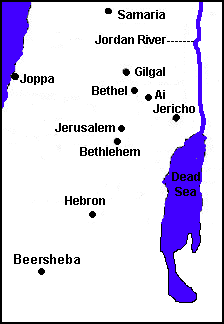
And Abraham planted a grove in Beersheba, and called there
on the name of
the
The area of
Beersheba is first
mentioned in The
Bible as the place where Hagar went after she was
sent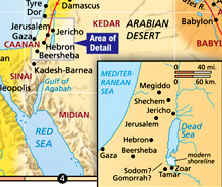 away from Abraham because
of family conflicts with Abraham's wife Sarah. Hagar was
Abraham's Egyptian-born concubine who had a son (see Ishmael) by
Abraham when Sarah thought that she herself was unable to have
children - a commonly accepted practice of the time. Then, when
Sarah did have a son herself (see Isaac), she could
no longer tolerate Hagar's presence, so she forced Hagar to leave.
Abraham reluctantly agreed to Sarah's demand. away from Abraham because
of family conflicts with Abraham's wife Sarah. Hagar was
Abraham's Egyptian-born concubine who had a son (see Ishmael) by
Abraham when Sarah thought that she herself was unable to have
children - a commonly accepted practice of the time. Then, when
Sarah did have a son herself (see Isaac), she could
no longer tolerate Hagar's presence, so she forced Hagar to leave.
Abraham reluctantly agreed to Sarah's demand.
Hagar was not abandoned by God
however. He spoke to her directly and helped her. Ishmael went on to
become very successful, becoming a great nation from his descendants -
the Arab peoples of today. He returned for his father Abraham's
funeral at Hebron where
he and Isaac placed his body in what has become known today as the
"Tomb of The Patriarchs."
MOST IMPORTANT
&
intriguing question
an unexplained gap of
37 - 40 years
& SOME
irreconcilable
facts
-
where did abraham
reside when, he was called upon to sacrifice his one and only son,
isaac to the lord
god?
-
abraham himself did
not reside at and/or near jerusalem
at
the time.
-
on the contrary, abraham
journeyed for more than 3 days to get at Jerusalem
in
mount
Moriah.
collaboration and evidence
(Genesis 22:1 KJV) And it
came to pass after these things, that God did tempt Abraham, and
said unto him, Abraham: and he said, Behold, here I
am.
(Genesis 22:2 KJV) And he
said, TAKE
NOW thy son, thine only son Isaac,
whom thou lovest, and get thee into The land
of Moriah; and offer him there for a burnt offering
upon one of the mountains which I will tell thee of.
(Genesis
22:4 KJV)
Then on the third day Abraham lifted up
his eyes, and
saw the place afar off.
(Genesis 22:9 KJV) And they came to the place
[The
land
of
Moriah] which
God had told him of; and Abraham built an altar
there, and laid the wood in order, and bound Isaac his son, and laid
him on the altar upon the wood.
distance from Beersheba
to
Jerusalem
Abraham
started early in the morning (Gen_22:3, Gen_22:4),
with his son Isaac and two servants, to obey the divine command;
and
on the third day (for the distance from Beersheba
to
Jerusalem
is
about 20 1/2 hours;
Rob. Pal. iii. App. 66, 67) he saw in the distance the place
mentioned by God, the
land
of
Moriah
,
i.e., the mountainous country round about
Jerusalem
.
From
Beer-sheba to the Shalem of Melkizedec
Gen_22:4-10
The
story is now told with exquisite simplicity. “On the third
day.” From Beer-sheba to the Shalem of
Melkizedec, near which this
hill is supposed to have been, is about forty-five miles.
If they
proceeded fifteen miles on the first broken day, twenty on the
second, and ten on the third, they would come within sight of the
place early on the third day.
from the
above details, it looks as though both the father and his only son,
isaac had started out from beersheba and proceeded to the land of
moriah.
however,
this is NOT what the book of genesis says, after all is said and
done.
into
The land of
Moriah
(Genesis 22:2 KJV) And he said, Take now thy son, thine
only son Isaac, whom thou lovest, and get thee into the land
of Moriah; and offer him there for a burnt offering
upon one of the mountains which I will tell thee of.
at Jerusalem
in
mount
Moriah
(2 Chronicles 3:1
KJV) Then Solomon began to build
the
house of the LORD at Jerusalem
in
mount
Moriah
, where the LORD appeared unto David his
father, in the place that David had prepared in the threshingfloor
of Ornan the Jebusite.
|
The
land
of
Moriah
This is supposed to mean
all
the mountains of Jerusalem, comprehending
Mount
Gihon
or
Calvary
, the mount of Sion and of
Acra
|
|
H4179
מריּה / מוריּה
môrîyâh
BDB
Definition:
Moriah = “chosen by Jehovah”
1) the place where Abraham took Isaac for sacrifice
2)
the mount on the eastern edge of
Jerusalem
on
which Solomon built the temple
Part
of Speech:
noun proper locative
A
Related Word by BDB/Strong’s Number:
from H7200 and H3050 |
H4179
מריּה מוריּה
môrîyâh môrîyâh
mo-ree-yaw',
mo-ree-yaw'
From H7200 and H3050; seen
of Jah; Morijah, a hill in
Palestine
:
- Moriah.
H4179
מריּה / מוריּה
môrîyâh
Total KJV Occurrences:
2
moriah, 2
Gen_22:2,
2Ch_3:1
|
Abraham returned
to
Beersheba
(Genesis
22:19
KJV) So Abraham returned unto his
young men, and they rose up and went together to Beersheba;
and Abraham dwelt at Beersheba.
abraham dwelt at BEERSHEBA
please note
that before abraham received the divine command (Genesis
22:1 KJV)
to sacrifice his one and only son,
isaac;
• abraham himself dwelt at BEERSHEBA (Genesis 21:33
KJV);
• (Genesis 21:34
KJV)
• And Abraham
sojourned in the Philistines' land many days.
• however, both
sarah and isaac did not dwell WITH HIM at any of those places at the
time;
•
that said, there is absolutely no scriptural evidence to show
that ABRAHAM EVER JOURNEYED BACK to where
sarah (Genesis 23:2 KJV);
• and isaac resided
(Genesis 24:62 KJV);
• to bring isaac
with him from his maternal home;
• in order to
sacrifice his one and only son, as divinely commanded
;
•
and still, abraham returned to
BEERSHEBA INSTEAD;
• after depiction of
complete obedience and willingness to sacrifice his one and only
son.
for the record, even jesus of the later christian
era DID NOT display that kind of fortitude, resolve, willingness,
obedience or heroism before his so-called
cruci_FICTion.
(Genesis 21:17
KJV)
And God heard THE VOICE OF THE LAD;
and
the angel of God called to Hagar out of heaven, and said unto her,
What aileth thee, Hagar? fear not; for God hath
heard THE VOICE OF THE
LAD where he
is.
(Genesis
21:20 KJV) And God was
with THE LAD; and he grew, and dwelt in the
wilderness, and became an archer. [7 x 3 & 5
x 4]
compare
the lad5288 isaac
(Genesis
22:5 KJV) And
Abraham said unto his young men, Abide ye here with the ass; and I
and the lad5288
will go yonder and worship, and come again to you.
(Genesis 22:12
KJV) And he said, Lay not thine hand upon the lad5288,
neither do thou any thing unto him: for now I know that thou fearest
God, seeing thou hast not withheld thy son, thine only
son from me.
however, please note also that on his way back,
ISAAC, the lad5288 WAS LEFT BEHIND by
abraham on one of the mounts in the
land of moriah.
H5288
נער
na‛ar nah'-ar
From H5287; (concretely) a boy (as
active), from the age of infancy to adolescence; by implication a
servant; also (by interchange of sex), a girl (of
similar latitude in age): - babe, boy, child, damsel [from the
margin], lad, servant, young (man).
moreover, abraham did not even
return to sarah, until AFTER her death.
an unexplained
gap of
37 - 40
years
on
the other hand, sarah, who had earlier
forced hagar and her son ishmael into exile for personal gain and
selfish motives god forbid, WAS HERSELF DESERTED BY ABRAHAM,
as was her/HIS 'promised son', isaac.
|
(Genesis 21:11 KJV) And the thing
was
very grievous in Abraham's sight because of his
son.
(Genesis 21:12 KJV) And God said
unto Abraham, Let it not be grievous in thy sight because of
the lad, and because of thy
bondwoman; in all that Sarah hath said unto thee,
hearken unto her voice; for in Isaac shall thy seed be
called.
(Genesis 21:13 KJV) And also of
the son of the bondwoman will I make
a
nation, because he is thy
seed. |
whereas,
sarah may have died in total isolation and despair
thereafter.
isaac
may have left his mother's house as well.
so, there were absolutely no winners
here despite all the divine promises and sarah's
intrigues.
the LORD יהוה yehôvâh3068
God
אל 'êl
ale.410
H883
בּאר
לחי ראי
be'êr
lachay rô'îy
be-ayr'
lakh-ah'ee ro-ee'
From H875 and H2416 (with prefix) and H7208; well
of a living (One) my Seer;
Beer-lachai-roi, a
place in the Desert: -
Beer-lahai-roi
the divine plan
enforced
(Genesis 16:11 KJV) And the angel of the LORD said unto
her--hagar, Behold, thou art with
child, and shalt bear a son, and shalt call his name
Ishmael; because the LORD
יהוה yehôvâh3068
hath heard thy
affliction.
(Genesis 16:13 KJV) And she called the name
of the LORD יהוה yehôvâh3068 that spake
unto her, Thou God אל 'êl
ale.410 seest me: for she
said, Have I also here looked after him that seeth
me?
(Genesis 16:14 KJV) Wherefore the well was called Beerlahairoi[1] ; behold, it is between
Kadesh and Bered. ; behold, it is between
Kadesh and Bered. |
double
jeopardy
AND ISAAC DWELT BY THE WELL
LAHAIROI[1]
And Isaac came
from the way of the well Lahairoi[2]
-
what was isaac doing at this
place;
-
that
is BEFORE the DEATH of sarah
;
-
AND AFTER THE DEATH of
abraham?
Genesis 25:11
KJV
(11) And it came to pass
-
AFTER
THE DEATH of Abraham,
-
that God blessed his son
Isaac;
-
AND
ISAAC DWELT BY THE WELL
LAHAIROI[1]
(Genesis 23:2 KJV)
And Sarah
died in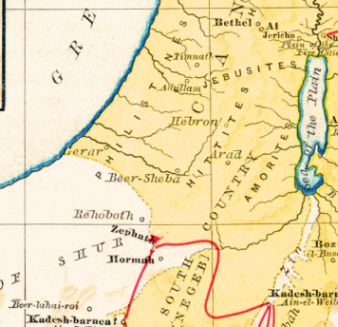 Kirjatharba; the same is Hebron ..... Kirjatharba; the same is Hebron .....
Genesis 24:62-67
KJV
(62) And Isaac came from the
way of the well Lahairoi[2]H883 ; for he dwelt in the south country. [still
further south of beersheba].
H883
בּאר
לחי ראי
be'êr
lachay rô'îy
be-ayr'
lakh-ah'ee ro-ee'
From H875 and H2416 (with prefix) and
H7208; well of a living (One) my
Seer; Beer-lachai-roi, a place in the Desert: - Beer-lahai-roi.
(Genesis
24:62 KJV) And
Isaac came
from the way of the well
Lahairoi[1];
for he dwelt in the south
country.
ISAAC was still mourning
his mother's death on its 3rd anniversary
(Genesis 24:67) And
Isaac brought her into his mother Sarah's tent,
and took Rebekah, and she became his wife; and he loved
her: and Isaac was comforted after his
mother's death.
Genesis 25:20 KJV
And Isaac was forty years old when he took Rebekah to wife,
the daughter of Bethuel the Syrian of Padanaram, the sister to Laban
the Syrian.
and
Isaac was comforted after his mother's death;
which was three years ago;
^^^^^^^
see Gill on
Gen_25:20; and had made such impressions upon his spirit, that at
times he was very sorrowful, and much distressed on that account;
but now being blessed with so agreeable a yokefellow, his sorrow for his mother subsided, and he
became cheerful and comfortable.
Genesis 24:62-67
KJV
(67) And Isaac brought her into his
mother Sarah's tent, and took Rebekah, and she became his
wife; and he loved her: and Isaac was comforted after his mother's
death.
despite the above - AFTER
THE FACT DETAILS, please note that there is no record of ISAAC ever
having been present at sarah's death bed and/or at her
funeral OR, AT HER FINAL RESTING PLACE.
ONLY abraham made all the
FINAL burial arrangements for her.
[1]
Abraham had been ABSENT from Hebron
... not far from
40-forty years
[2]
SARAH died
.....,
37-thirty-seven
years
AFTER the birth of Isaac, at
Hebron
Abraham had been ABSENT from Hebron, which is also called
Mamre in this very chapter Gen_23:17, Gen_23:19, not far from 40 - forty
years, though he
appears to have still kept up a connection with it, and had at present
a residence in it. During this interval the
sway of Arba may have
commenced.
“In the
land of Kenaan,” ;
in contradistinction to ;
Beer-sheba in the land of
the Philistines,
where we last left Abraham.
“Abraham went to
mourn for Sarah,”
either from Beer-sheba
or some
out-field where he had cattle pasturing.
Gen
23:1-2 -
Sarah is the only
woman whose age is mentioned in the Scriptures, because as the mother
of the promised seed she became the mother of all believers (1Pe_3:6).
She died at the age
of 127, 37- thirty-seven years after the birth of Isaac, at
Hebron, or rather in the grove of Mamre near that city
(Gen_13:18),
-
whither Abraham had once more
RETURNED
-
AFTER
-
a lengthened stay at Beersheba
(Gen_22:19).
an unexplained gap of
37
- 40 years
-
MEANING: isaac must have
been no more than 3-three years old;
-
when abraham left hebron
for nearly 4-four decades.
-
up until that time,
abraham was not commanded by god to sacrifice his one and only
3-year old son, isaac.
-
apparently, the all
important command came to abraham ONLY AFTER ABRAHAM moved to BEERSHEBA/
Philistines' land and not before. (Genesis 21:33 KJV)
& (Genesis 21:34 KJV).
-
right there, we have an
inexplicable gap of 37 - 40 years, no matter what;
-
but then, there is no
record of abraham ever having returned to hebron;
-
to bring along his son
with him;
-
in order to fulfill the
lord god's divine command.
so, where was the missing isaac?
Muhammad
gets the Bible all wrong.
In 1977 two other scholars from the School for Oriental and
African Studies at London University - Patricia Crone (a
professor of history at the Institute for Advanced Study in
Princeton) and Michael Cook (a professor of Near Eastern
history at Princeton University) - suggested a radically
new approach in their book "Hagarism: The Making of the
Islamic World."
Mistakes in the
Quran.
[it should be noted that many of the stories
in the Quran come from
the Jewish Talmud, the Midrash, and
many apocryphal works--for
instance Nimrod threw Abraham in the fire. You'll
see this in Jewish extrabiblical literature.]
- Abraham
went to sacrifice Ishmael (Sura 37:100-112).
Patricia Crone and Michael Cook, Hagarism:
The Making of the Islamic World (Cambridge: Cambridge
University Press, 1976);
context
==>
connotation
==>
MAKE
THE CONNECTION
excerpts
the Aga Khan
ismaili.net/timeline/2006/20060212evora
12
February 2006
www.akdn.org
Speech by His
Highenss the Aga Khan
[13]
-------------------------------------------------
Remarks by His Highness
the Aga Khan at Evora University
Symposium:
“Cosmopolitan Society, Human Safety and Rights in Plural and
Peaceful Societies”
President Sampaio,
Rector Manuel Patricio,
Professor Adriano Moreira,
Excellencies,
Distinguished Guests,
Ladies and Gentlemen
Ignorance,
arrogance,
insensitivity—these
attitudes rank high among the great public enemies of our time.
And the educational enterprise, at its best, can be an
effective antidote to all of them.
To speak of end
purposes, in turn, is to enter the realm of ethics.
What are our ultimate goals? Whose
interests do we seek to serve? How, in an increasingly
cynical time, can we inspire people to
a new set of aspirations—reaching beyond
rampant materialism, the new relativism, self-serving
individualism, and resurgent tribalism.
In the ethical realm—as in the educational realm—one
of the great stumbling blocks is arrogance. Even the
resurgence of religious feeling—which should be such a
positive force--can
become a negative influence when it turns into
self-righteousness.
All
of the world’s great religions warn against this
excess—yet in the name of those same religions too many
are tempted to play God themselves—
rather
than recognising their
humility before the Divine.
In that
recognition, it seems to me, lies
our best
protection against false
prophecies and divisive dogmatism.
with
no compass, no roadmap and no sense of
ultimate direction
12
February 2006
[13]
the
biblical foundation of islam
Yahweh
was of Arabic
origin
|
Amazon.ca:
Bible Came from Arabia: Books: Kamal S. Salibi
Dr.Kamal Salibi is one of the most
knowlegable researchers in the history of the
...
www.amazon.ca/Bible-Came-Arabia-Kamal-Salibi/dp/0330295195
The
Truth Will Set You Free, Sep
23 2000
In
one word...this book is the truth...
I
have read the Arabic Translation of this
book...although I am a muslem and
Mr.Salibi is chritian...I
have found many proofs of his writings in the
Quran...the book of Islam...even
encient Arabic historians had previously
implied Mr.Salibi's findings...
It
is a revolution...recommened for every soul
seeking the truth...
Kamal
Suleiman Salibi (Arabic
كمال
سليمان
صليبي) (born Beirut,
1929)
is the former Director of Royal
Institute for Inter-Faith Studies and Emeritus
Professor at the Department of History and
Archaeology at the American
University of Beirut, Lebanon.
He
is of Christian
background.
Salibi is from the village of Bhamdoun. He
studies at the Prep School in Beirut (now International
College) and later joined AUB. After
acquiring his BA, he moved to the University
of London where he earned his PhD.
Partial
listing of books by Kamal Salibi
- Salibi,
Kemal. The
Modern History of Lebanon, 1965.
- Salibi,
Kamal, The
Bible Came from Arabia, London,
Jonathan Cape, Ltd., 1985.
- Salibi,
Kamal, Secrets
of the Bible People, Brooklyn,
N.Y., Interlink Books, 1988.
- Salibi,
Kamal, Who
Was Jesus?: Conspiracy in Jerusalem,London,
I.B.
Tauris, 1988.
- Salibi,
Kamal, A
House of Many Mansions - The History
of Lebanon Reconsidered, I.B.
Tauris, 1993.
- Salibi,
Kamal, The
Historicity of Biblical Israel,
London, NABU Publications, 1998.
- Salibi,
Kamal, A
Modern History of Jordan, London, I.B.
Tauris, 1998.
|
115%
corroboration &
vindication
associated with
the primal
islam
in the old testament
Hebrews <=NT= <13
: 17>
=HQ=>
CHILDREN OF ISRAEL
excerpts
13
August 2007 [13:17]
-
TWO
THINGS
-
TWO
OBJECTIVES
-
BUT THE BEAUTY
AND POWER
-
OF A
PARTNERSHIP
-
BOTH
CAN BE RESPECTED
Speech
by His Highness the Aga Khan
akdn.org/speeches/2007Aug14_state
Remarks
by His Highness the Aga Khan
at
the State Banquet
Nairobi
–
13
August 2007
As
I observe this Jubilee year, I plan to
use this occasion to do TWO
THINGS:
KENYA
HAS PLAYED A ROLE IN PAST JUBILEE
CELEBRATIONS OF THE
ISMAILI IMAMAT—
-
DURING
MY LATE GRANDFATHER’S
TIME[1]
-
AND
MY OWN[2].
I
SAID A MOMENT AGO THAT I HAD :
-
TWO
OBJECTIVES
AS I MARK THIS JUBILEE YEAR—
-
THE
SECOND ONE WAS
TO PUT INTO HISTORICAL
PERSPECTIVE
-
SOME
OF MY EXPERIENCES OVER THIS HALF
CENTURY.
-
THE
DESIRE FOR UNITY
-
AND
THE URGE TO DIVERSIFY
-
MAY
SEEM LIKE
CONTRADICTORY FORCES
-
-
BUT THE BEAUTY
AND POWER OF A PARTNERSHIP
-
APPROACH
IS THAT
-
IT
RESPECTS THE PROPER ROLE OF EACH
IMPULSE
-
-
AND
WORKS
OUT WAYS
IN
WHICH
-
BOTH
CAN BE RESPECTED.
12
July 2007
[emphasis
added, ali
kenadian ] ]
[19
& 7
x 4(a)]
(Exodus
28:2
KJV)
And thou
shalt make holy
garments for Aaron [priest - kohen - IMAM]
thy brother for
glory
and for beauty.
[7
x 4(b)
& 5 x 6]
(Hebrews
3:12
KJV) Take heed, brethren, lest
there be in any of you an evil heart of
unbelief, in departing from the
living God. [5
x 3]
(Hebrews
3:13
KJV) But
exhort one another daily, while
it is called To day; lest
any of you be hardened through the
deceitfulness of sin. [13]
3)
Sūrat 'Āli `Imrān
|
'Alif-Lām-Mīm
(1).
|
Alim.
Lam. Mim.
|
|
Allāhu
Lā 'Ilāha 'Illā Huwal
- Ĥayyul - Qayyūm (2).
|
Allah!
no God save HE
IS, the EVER LIVING, the
Eternal - QAIM.
|
the living God,
the
pilgrimage,
Baca
<Baka'
&
Zion
<Tsiyown>
eternal life
was granted to both
the holy IMAM
[sa]
and my
anointed -
Christ - mâshîyach
[pbuth]
1.
I
will raise me up a faithful Kohen - priest --
IMAM
2.
and
he shall walk before my anointed -
Christ
[H4899
משׁיח
mâshîyach
maw-shee'-akh]
3.
forever
(1 Samuel
2:35 HNV)
I will raise me up a faithful Kohen -
priest -- IMAM, that shall do
according to that which is in my heart and in my
mind: and I will build him a sure house[H1004
בּית
bayith bah'-yith];
and he shall walk before my anointed-Christ
[H4899
משׁיח
mâshîyach maw-shee'-akh]
forever.
H4899
משׁיח
mâshîyach maw-shee'-akh
From H4886;
anointed; usually a consecrated
person (as a king, priest, or saint); specifically
the
Messiah: - anointed,
Messiah.
Hebrews 7:3 Without father, without mother, without
descent,
-
having neither
beginning of days,
-
nor end of
life;
-
but made like unto
the Son of God;
-
abideth
a priest [kohen--IMAM]
continually.
THE GLORY OF THIS LATTER
HOUSE[2]
-
SHALL BE
GREATER
-
THAN of the
former[1]
,
1. and I will build
him a sure house[H1004
בּית
bayith
bah'-yith];
and he shall walk before my
anointed-Christ.
2. Who passing
through the valley of Baca[H1056
בּכא
bâkâ'
baw-kaw']
4.
and look upon the face of thine
anointed[H4899
משׁיח
mâshîyach
maw-shee'-akh]
(Psalms 84:1
KJV)
How amiable are thy tabernacles, O LORD
of hosts!
(Psalms 84:2
KJV)
My soul longeth, yea,
even fainteth for the courts of the LORD: my heart and my
flesh crieth out for the living
God.
(Psalms 84:3
KJV)
Yea, the sparrow hath found an house, and
the swallow a nest for herself, where she may lay
her young, even thine altars, O LORD of hosts, my King, and my
God.
(Psalms 84:4
KJV)
Blessed are they that
dwell in thy house: they will be still praising
thee. Selah.
Psalms 84:5
(WEB) Blessed are those whose strength is in you;
Who have set their hearts on a pilgrimage.
(Psalms 84:6
KJV)
Who passing through the valley <`emeq> of Baca
<Baka'> <baka'>
make it a well; the rain also filleth the
pools.
(Psalms 84:7
KJV)
They go from strength to strength,
every one of them in
Zion
<Tsiyown>
appeareth
<ra'ah> before God
אלהים
'ĕlôhîym
(Psalms 84:9
KJV)
Behold, O God our shield, and look upon
the face of thine anointed[H4899
משׁיח
mâshîyach
maw-shee'-akh]
H1056
בּכא
bâkâ'
baw-kaw'
From H1058; weeping; Baca, a
valley in Palestine
: -
Baca.
H4899
משׁיח
mâshîyach
maw-shee'-akh
From
H4886; anointed; usually a
consecrated person (as a king, priest, or
saint); specifically the
Messiah: - anointed,
Messiah.
make the connection
H6723 <====> H06726
 

 tsîyôn Tsiyown
<==> a desert: - dry place
<==>
<==> Zion = "parched
place"
<==>
H6725
<====> H6724
no
matter how you look at it,
the meaning is
always single
H6723
ציּה tsîyâh
tsee-yaw' From an
unused root meaning to parch;
aridity;
concretely a desert: - barren, drought, dry (land, place),
solitary place, wilderness.
 H6725 ציוּן
tsîyûn tsee-yoon' From
the same as H6723 in the sense of
conspicuousness (compare H5329); a monumental
or guiding pillar: - sign, title,
waymark. H6725 ציוּן
tsîyûn tsee-yoon' From
the same as H6723 in the sense of
conspicuousness (compare H5329); a monumental
or guiding pillar: - sign, title,
waymark.
H6724 יון
tsîyôn tsee-yone'
From the same as H6723; a
desert: - dry
place
H06726 ציּון tsîyôn
tsee-yone' The same (regular)
as H6725; Tsijon (as a permanent
capital), a
mountain
of Jerusalem
: -
Zion
.
blueletterbible.org/tmp_dir/words/6/1126306176-298
|
Lexicon Results for Tsiyown (Strong's
06726) |
|
Hebrew for 06726 |
|
tsîyôn
|
|
Pronunciation
Guide |
|
Tsiyown {tsee-yone'}
|
|
Outline of Biblical
Usage |
Zion = "parched
place"
1) another name for
Jerusalem especially in the prophetic
books
meaning:
NOT
IN
THE OLD TESTAMENT
|
if the
ZION mentioned here is in Jerusalem then what
about BAKA
which is
supposed to be in Palestine when BAKA and ZION are mention together
as one location.
Psalms 84:7
"They go from strength to strength, every one of
them appeareth in the desert (ZION) before
God" mentioned here is in Jerusalem then what
about BAKA
which is
supposed to be in Palestine when BAKA and ZION are mention together
as one location.
Psalms 84:7
"They go from strength to strength, every one of
them appeareth in the desert (ZION) before
God"
There is ONLY one place on earth that fits
the discription given in Psalms
84:
1) This Place is a Valley: Makka is in a
Valley http://www33.brinkster.com/islamicards/z1.html
http://www.islamic-awareness.org/History/kaaba.html
Baca as a "the valley of
weeping"

His Highness the Aga Khan became
Imam [the Kohen -- priest]
of the Shia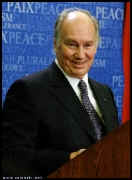 Imami Ismaili Muslims on July 11, 1957 at the age of 20,
succeeding his grandfather, Sir Sultan Mahomed Shah
Aga Khan.
Imami Ismaili Muslims on July 11, 1957 at the age of 20,
succeeding his grandfather, Sir Sultan Mahomed Shah
Aga Khan.
He is the 49th
hereditary Imam of the Shia Imami
Ismaili Muslims
and a direct descendant
of the Prophet Muhammad (peace be upon him) through
his cousin and son-in-law, Ali, the first Imam, and
his wife Fatima, the Prophet's daughter.
1957
19 x
1
&
19 x
3
19_5_7
`Alayhā[1]/Above HER/it
19-nineteen
-
and We have given thee
-
seven of the
oft-repeated
49th -
IMAM
7 x 7
11
July 2007
Inaugural
Ceremony Video
His
Highness the Aga Khan, spiritual leader of the Shia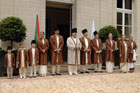 Ismaili Muslims committed
himself to support democratic processes, to find
means to help the ultra-poor, and to address
political and theological tensions through consensus
amongst all Muslims.
Ismaili Muslims committed
himself to support democratic processes, to find
means to help the ultra-poor, and to address
political and theological tensions through consensus
amongst all Muslims.
-
The Aga
Khan was speaking at a ceremony that marked the
50th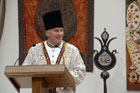 anniversary of his accession to the Ismaili
Imamat. He succeeded his
grandfather, Sir Sultan Mahomed Shah Aga Khan
as the 49th hereditary Imam on 11 July 1957.
The colourful ceremony was attended by over
250 leaders from the Ismaili Muslim community
from some 25 countries.
anniversary of his accession to the Ismaili
Imamat. He succeeded his
grandfather, Sir Sultan Mahomed Shah Aga Khan
as the 49th hereditary Imam on 11 July 1957.
The colourful ceremony was attended by over
250 leaders from the Ismaili Muslim community
from some 25 countries.
Prince
Amyn Aga Khan addressing guests, including
leaders of the Ismaili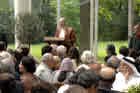 Muslim community and senior AKDN personnel of
the last 50 years, at a luncheon hosted by His
Highness the Aga Khan on the occasion of his
Golden Jubilee.
Muslim community and senior AKDN personnel of
the last 50 years, at a luncheon hosted by His
Highness the Aga Khan on the occasion of his
Golden Jubilee.
>
View Pictures from the Inauguration Ceremony
>
Back to top
compare
(Leviticus
25:8 KJV) And thou shalt number SEVEN sabbaths of
years unto thee, SEVEN times SEVEN years; and the
space of the SEVEN sabbaths of
years shall be unto thee FORTY
AND NINE years. [LEVITICUS
-- Imamat]
[7
x 1]
(Leviticus
25:9 KJV) Then shalt thou cause the trumpet of the
JUBILE
to sound on the
TENTH DAY OF THE SEVENTH
MONTH, in the day of atonement shall
ye make the trumpet sound throughout all your
land. [LEVITICUS
-- Imamat]
(Leviticus
25:10 KJV) And ye shall hallow the FIFTIETH YEAR, and
proclaim liberty throughout all the land unto all
the inhabitants thereof: it shall be a
JUBILE unto you;
and ye shall return every man unto
his possession, and ye shall return
every man unto his family. [LEVITICUS
-- Imamat]
[7
x 1] & [5 x 2]
the
7-SEVEN
days in the bible
|
(Genesis
1:5
KJV)
And God called the light Day, and the
darkness he called Night. And the evening
and the morning were the
first day.
|
|
(Genesis
1:8 KJV)
And God called the firmament Heaven. And the evening
and the morning were the
second day.
|
|
(Genesis
1:13
KJV) And
the evening and the morning were the
third day.
|
|
(Genesis
1:19
KJV) And
the evening and the morning were the
fourth day.
|
|
(Genesis
1:23
KJV) And the evening and the morning
were the
fifth day.
fifth day.
fifth day.
|
|
(Genesis
1:31
KJV) And God saw every thing that he
had made, and, behold, it
was very
good.
|
|
(Genesis
2:2 KJV)
And on the
seventh day
God
ended
his work which he had made;
and he rested
on the
7-SEVENth day
from all his work which he had
made.
|
|
QUESTION
RESTED
FROM WHAT??? |
|
CONTRADICTION
the
everlastingH5769
GodH430, the
LORDH3068', the CreatorH1254
H5769
עלם
עולם ‛ôlâm
‛ôlâm o-lawm', o-lawm'
H430
אלהים 'ĕlôhîym
el-o-heem'
H3068
יהוה yehôvâh
yeh-ho-vaw'
H1254
בּרא bârâ' baw-raw'
(Isaiah
40:28 KJV)
-
Hast thou not
known?
-
hast thou not
heard,
-
that the
everlastingH5769
GodH430,
-
the
LORDH3068', the CreatorH1254
-
of the ends of the earth,
-
fainteth
not,
-
neither is weary?
-
there
is no searching of his understanding.
-
[40:28
==> 5
x 8 & 7
x 4]
|
compare
2)
Sūrat Al-Baqarah
-
Allāhu
Lā 'Ilāha 'Illā Huu Al-Ĥayyul
- Qayyūm
-
Lā
Ta'khudhuhu Sinatun Wa Lā Nawm
-
Lahuu
Mā Fīs-Samāwāti Wa Mā Fīl-'Arđi
-
Man
Dhāl-Ladhī Yashfa`u `Indahu 'Illā
Bi'idhnihi
-
Ya`lamu
Mā
Bayna 'Aydīhim Wa
Mā
Khalfahum
-
Wa
Lā Yuĥīţūna Bishay'im
Min `Ilmihi 'Illā Bimā Shā'a
-
Wasi`a
Kursīyuhu
As-Samāwāti Wa
Al-'Arđa
-
Wa
Lā Ya'ūduhu Ĥifžuhumā
-
Wa Huwal-`Alīyyul-`Ažīm
(255).
|
-
Allah!
is no God save Him, the
LIVING, the Eternal.
-
Neither
slumber nor sleep overtaketh Him.
-
Unto
Him belongeth whatsoever is in the heavens
and whatsoever is in the earth.
-
Who
is he that intercedeth with Him save by
His leave ?
-
He
knoweth Mā--HE
WHO/that which is in
front of them
Wa
Mā--AND
HE
WHO/and
that which is behind them,
-
while
they encompass nothing of His knowledge
save what He will.
-
His
throne includeth
the heavens and the earth,
-
and
He is never weary of preserving them.
-
Wa Huwal-`Alīyyul-`Ažīm
AND He is the Sublime, the Tremendous.
|
46)
Sūrat Al-'Aĥqāf
-
'Awalam
Yaraw 'Annallāhal-Ladhī
Khalaqa As-Samāwāti Wa Al-'Arđa
-
Wa
Lam Ya`ya Bikhalqihinna
-
Biqādirin
`Alaá 'An Yuĥyiyal-Mawtaá
-
Balaá
'Innahu `Alaá Kulli Shay'in
Qadīr
(33).
|
-
Have
they not seen that
Allah, Who created
the heavens and the earth;
-
and
was not wearied by their
creation,
-
is able to give life to the dead?
Aye,
He verily is ABOVE all things
POWERFUL.
|
50)
Sūrat Qāf
-
'Afa`ayīnā
Bil-Khalqi Al-'Awwali
-
Bal
Hum Fī Labsin Min Khalqin Jadīdin
(50:15).
|
-
Were
We then worn out by the first creation
?
-
Yet
they are in doubt about a new
creation.
|
-
Wa
Laqad Khalaqnā Al-'Insāna
-
Wa
Na`lamu Mā Tuwaswisu Bihi Nafsuhu
-
Wa
Naĥnu 'Aqrabu 'Ilayhi Min Ĥabli
Al-Warīdi (50:16).
|
-
We
verily created man
-
and
We know what his soul whispereth to
him,
-
and
We are nearer to him than his jugular
vein.
|
compare
-
'Innallāha Ya'murukum 'An Tu'uaddū
Al-'Amānāti 'Ilaá 'Ahlihā Wa 'Idhā
Ĥakamtum Bayna An-Nāsi 'An Taĥkumū
Bil-`Adli
-
'Innallāha Ni`immā
Ya`ižukum Bihi
-
'Innallāha Kāna Samī`āan
Başīrāa (4:58).
|
-
'Innallāha
-Lo! Allah commandeth you that ye
restore deposits to their owners,
and, if ye judge between mankind, that ye judge
justly.
-
'Innallāha
-Lo! comely is this which
Allah admonisheth you.
-
'Innallāha Kāna Samī`āan Başīrāa -
Lo! Allah is ever Hearer,
Seer.
|
|
Yā
'Ayyuhāl-Ladhīna
-
'Āmanū
'Aţī`ūllāha;
-
Wa
'Aţī`ūr-Rasūla
-
Wa
'Ūlīl-'Amri Minkum
-
Fa'in
Tanāza`tum
-
Fī Shay'in
-
Faruddūhu 'Ilaá Allāhi
Wa Ar-Rasūli 'In Kuntum
Tu'uminūna
-
Billāhi
Wal-Yawmil-
'Ākhir
-
Dhālika Khayrun Wa
'Aĥsanu
Ta'wīlāa (4:59).
|
O
ye who believe!
-
Obey
Allah,
-
and
obey the messenger
-
and
those WHO ARE in authority AMONG
YOU;
-
and if ye have a
dispute
-
IN
ANY THING,
-
refer it to Allah and
the messenger if ye are believers
in
-
Allah
and the Last Day.
-
That is better
and
more seemly in the end.
Pickthal's Quran
Translation | | |
THE
EXILE OF JESUS TO DAMASCUS
IN
THE MEDIEVAL GOSPEL OF BARNABAS
Rod Blackhirst
Chapters
127 - 162
The
Miracle of the Harvest
Chapter
138
At
length Jesus
persuades them to fast for 19-NINETEEN
days,
1 L.
Ragg (trans), The Gospel of Barnabas, Clarendon
Press, Oxford, 1909.
atheistalliance.org/jhc/articles/BlackhirstDamascus.pdf
my
2nd email:
JACK VAN IMPE -
[email protected];
E-mail:
[email protected]
;
[email protected]
;
[email protected];
AN UNANSWERED CHALLENGE
SINCE
MARCH 27, 2007[2]
just like
the rest of the christian intellects before him, Dr. Jack Van
Impe - [email protected]
also FAILED
consistently to either answer my bible based questions
and/or reply my
bible based correspondence, since i first challenged
him 3/27/07.
PERSONAL CORRESPONDENCE
DEPARTMENT
From: ali kenadian
[mailto:[email protected]]
Sent: Friday, April 06,
2007[3]
11:16 AM
To: Personal
Correspondence
Subject: "the V_E_R_B_A_L
inspiration of the Bible''
- Hide quoted text
-
"Personal Correspondence Dept ."
<[email protected]>
NEED YOUR HELP. COULD YOU PLEASE
CONFIRM THE FOLLOWING?
''WE BELIEVE IN the V_E_R_B_A_L
inspiration of the Bible''
FAILED

Pope[2]
Benedict XVI
Sunday
,
April 8, 2007
among
the pontiff's daily concerns ...
AND
RISE OF ISLAM -
in Europe
EROSION
OF THE Catholic faith.
Pope
Benedict XVI
^^^^^^^^^^
E-mail:
[email protected] ;
[email protected] ;
[email protected];
challenging
the very
foundation
of the pauline
christianity
vis-à-vis
the trinitarian
christianity;
their unfathomable
doctrines ;
cruci_FICTion &
christology
και
θεος
ην ο λογος[3]
and
God
was the Logos
| Scrivener Textus Receptus
(Joh 1:1 GNT -
TR)
- εν αρχη ην ο λογος
[1]
- και ο λογος[2] ην προς τον
θεον
- και θεος ην ο
λογος[3]
(Joh 1:2
GNT-TR) ουτος ην
εν αρχη προς τον
θεον |
HebGrk Eng (John 1)
John 1:1
- en arch hn o logo[1]V
- kai o logo[2]V hn proV ton
qeon
- kai qeoV hn o logo[3]V
Joh
1:2
outoV hn en arch proV
ton qeon
|
German Luther (John
1)
Joh
1:1
Im Anfang war das Wort[1],
und das Wort[1] war bei
Gott,
und Gott war das
Wort[3].
Joh
1:2
Dasselbe war im Anfang
bei
Gott. |
John
1: 1 - 3
-
In the
beginning was the word,
-
and the word
was toward
God,
-
and God was
the word.
-
This was in the
beginning toward
God.
Concordant
Literal New Testament
John 1:1 The Word was
God.

deedat
In the
beginning was the Word, and the Word was with God, and the Word was God ... and the Word became flesh and dwelt among
us . John
1:1&14 and the Word was with God, and the Word was God ... and the Word became flesh and dwelt among
us . John
1:1&14
Answering
Islam
[was
this the latest edition/revision?, ali
kenadian]
question
-
what did the above
DISJOINTED 3-part statement and/or 3-three statements IN ONE
viz., john 1:1 depict?
-
was it depiction of
the strict monotheism, as commanded by god and taught and
practiced by both moses and jesus,
respectively?
-
and/or, was it
flagrant violation of MONOTHEISM in every sense of the
term?
(John 4:23 MKJV) But the hour
is coming, and now is, when the true worshipers shall worship the Father in spirit and
truth, for the Father seeks such to worship
Him.
(John 4:24 MKJV) God is a spirit, and they who worship Him must worship in
spirit and in
truth.
OUR
GOD
(Deuteronomy 6:4 KJV)
Hear, O Israel: The LORD OUR
GOD is one LORD:
Deu 6:4 -
These
words form the beginning of what is termed the “Shema” (“Hear”) in the Jewish Services, and belong to
the daily morning and evening office. They may be called
“the creed of the
Jews.”
This
weighty text contains far more than a mere declaration of
the unity of God as against polytheism; or of the sole
authority of the revelation that He had made to Israel
as against other pretended
manifestations of His will and
attributes. It
asserts that the Lord God of Israel is absolutely God,
and none other. He, and He
alone, is Jehovah
(Yahweh) the absolute, uncaused God; the One who had, by His election of
them, made Himself known to
Israel.
(Mark 12:29 KJV) And
Jesus answered him, The first of all
the commandments is, Hear, O Israel; The Lord OUR
GOD is
one Lord:
(1 Timothy 2:5 KJV) For
there is ONE
GOD, and one mediator between God and men, THE MAN
Christ Jesus;
<partial evidence
only>
question
WHY was there that profound and stupendous USE of the
phrase ===> 'OUR GOD' in the
“Shema” (“Hear”),
instead of the following?
please note the immediate
change.
(Deuteronomy 6:5 KJV) And thou shalt love the
Lord THY
God with all thine heart, and with all
thy soul, and with all thy
might.
(Deuteronomy 11:1 KJV)
(Matthew 22:37 KJV)
Jesus said unto him, Thou shalt love the Lord THY God with all thy heart, and with
all thy soul, and with all thy mind.
(Mark 12:30 KJV) And
thou shalt love the Lord THY God with all thy heart, and with
all thy soul, and with all thy mind, and with all thy
strength: this is the first
commandment.
(Luke 10:27 KJV) And
he answering said, Thou shalt love the Lord THY God with all thy heart, and with
all thy soul, and with all thy strength, and with all thy
mind; and thy neighbour as
thyself.
again: WHY was
there that profound and stupendous USE of the phrase
===> 'OUR GOD' in the “Shema” (“Hear”),
instead?
what
was the main object and significance behind ITS USE IN
(Deuteronomy 6:4 KJV) & (Mark 12:29 KJV), etc., cited
above?
This
weighty text contains far more than a mere declaration of
the unity of God as against polytheism; or of the sole
authority of the revelation that He had made to Israel
as against other pretended
manifestations of His will and
attributes.
continued
stipulation by jesus
christ
HAND &
GLOVE
monotheism and the kingdom of
god
(Mark 12:32 KJV)
And the scribe said unto him, Well, Master, thou hast said the
truth:
- for
there is ONE
GOD;
- and
there is NONE
OTHER ;
- BUT
HE:
(Mark 12:33 KJV)
And to love him with all the heart, and with all the
understanding, and with all the soul, and with all the
strength, and to love his neighbour as himself, IS MORE THAN ALL
whole burnt offerings AND
SACRIFICES.
would the above
verse, (Mark 12:33 KJV) also include jesus christ's blood
SACRIFICE?
well, jesus christ
seemed to concur ONCE AND FOR ALL.
conclusion of the ABOVE
stipulation by jesus christ
please note that A
STUPENDOUS REWARD will be granted to the believer and
practitioner of the strict monotheism
ONLY.
(Mark 12:34
KJV) And when Jesus saw that he answered discreetly/INTELLIGENTLY, he said
unto him, Thou art not far from the kingdom of
God. And no man after that durst ask him any
question.
(MKJV)
And seeing that he had answered INTELLIGENTLY,
Jesus said to him, You
are not far from the kingdom of God. And no
one dared to question Him any more.
===> note again: Thou art not far
from the kingdom of
God.
'And no man
after that durst ask him any question'
'And no one dared to
question Him any more.'
if so, WHY
should anyone else ask jesus christ that question today and/or
even, question his monotheistic
teachings?
SACRIFICES
This entirely agrees with the sense of the
passage in Hos_6:6. "For I
desired mercy and, NOT
SACRIFICE";
is more than all whole
burnt offerings AND
SACRIFICES;
that is, more excellent in their nature, more acceptable to
God, and more useful among men, than all the rituals of the
ceremonial law, than any SACRIFICE
whatever: for the two words here used, "burnt
offerings AND
SACRIFICES.",
would
it also include jesus christ's blood SACRIFICE?
(Psalms 40:6
KJV)
- and offering thou didst NOT desire;
- mine ears hast thou
opened:
- burnt offering
- and sin offering
- hast thou NOT required.
(Hosea 6:6 KJV) For I desired
mercy, and
NOT SACRIFICE; AND THE KNOWLEDGE OF
GOD more than burnt offerings.
- offer the SACRIFICE of praise to
God
- for with such SACRIFICEs God is well
pleased
- Obey them that have the
rule over you
(Hebrews 13:15 KJV) By him therefore let
us offer the SACRIFICE of praise to
God continually, that is, the fruit
of our lips giving thanks to his
name. [[
7 x 4]
(Hebrews 13:16 KJV) But to
do good and to communicate forget not: for
with such SACRIFICEs God
is well pleased.
(Hebrews 13:17 KJV) Obey
them that have the rule over you, and submit
yourselves: for they
watch for your souls, as they that must give
account, that they may do it with joy, and not with grief:
for that is unprofitable for
you.
IF it did not, then explain jesus' own affirmation of the
above.
(Matthew 9:13 KJV) But go ye and learn what that
meaneth, I will have mercy, and
NOT SACRIFICE: for I am not come
to call the righteous, but sinners to
repentance.
(Matthew 12:7 KJV) But if ye had known what this
meaneth, I will have mercy, and
NOT SACRIFICE, ye would not have
condemned the guiltless.
[call]
'but sinners to repentance,' WAS NOT the same as calling those
very sinners and others to his blood
sacrifice.
(Acts 5:31 KJV) Him hath God
exalted with his right hand to be
a Prince and a Saviour ,
for
to give repentance
TO
ISRAEL,
AND
forgiveness of
sins.
HOW, WHEN AND WHERE WAS
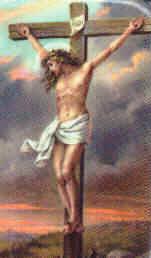
JESUS PUT
TO
[i]. DEATH
 AND AND
[ii].
HANGED
IN ACCORDANCE WITH THE
GOD'S PRECISE
COMMAND?
Deuteronomy 21:22 (KJVSL)
....
and he be to be put to
[i]. DEATH <muwth>,
_A_N_D_
thou
[ii]. HANGED <talah>
<8518>
him on a tree
<`ets>:
Deuteronomy 21:23 (KJVSL) ...
(for he that is [ii]. HANGEDED
<talah> <8518> is accursed <q@lalah> of God
<'elohiym>;)
2-two
separate acts of punishment were REQUIRED
to
follow
one AFTER the
other:
first slaying
him i.e., punishment for the
living ;
and then suspending
him i.e., ignominy for the dead ;
warning
(2 Peter 1:20
KJV)
VIOLATION
on the other hand,
if the miscreants had succeeded in
crucifying jesus, it would in turn only violate jesus christ's
own teachings.
jesus christ's blood SACRIFICE QUESTIONED by his own
teachings to the contrary
(Matthew 9:13 KJV) But go ye and
learn what that meaneth, I will have mercy, and
NOT SACRIFICE: for I am not come
to call the righteous, but sinners to
repentance.
(Matthew 12:7 KJV) But if ye had
known what this meaneth, I will have mercy, and
NOT SACRIFICE, ye would not have
condemned the guiltless.
VINDICATION 0F
THE HOLY
QUR'AN
&
ISLAM
bsw.org/project/biblica/bibl81/Comm08
CONTRADICTION
James SWETNAM
Biblica 81 (2000)
347-361
The Crux at Hebrews
5,7-8
But
this seems to contradict the obvious fact that Jesus
died
One of the classic cruces in the Epistle to the
Hebrews is the passage at Heb 5,7-8 which speaks of the petitions made by
Christ.
The Greek text of these verses, , is as follows:
.......1.
A translation would
read as follows:
7 who in the days of his flesh,
offered with a loud cry and tears prayers and
petitions
- to the one able to save
him from death,
-
- AND HAVING BEEN
HEARD
-
- because of His
reverence,
- 8 even though
Son,
-
- LEARNED
-
- from the things
He
-
- SUFFERED
-
- OBEDIENCE,
There are
a number of
problems
associated with these verses, but one problem is
crucial:
- Jesus seems to be
pictured as begging;
- TO BE SAVED FROM
DEATH;
- and as having been heard.
- But this seems to contradict
- the obvious fact that Jesus died
- The problem
centers on the words kai_ ei)sakousqei_j a)po_ th=j
eu)labei/aj, kai/per w@n ui(o/j (‘and having been
heard
because of His reverence even though Son’)2.
[emphasis
added, ali kenadian]
paul's BOMBASTIC testimony AFTER the heavenly vision, also
lends MORE credence. check it out.
repent and turn to God,
and do works meet for repentance
- Damascus;
- Jerusalem;
- coasts of Judaea;
- the Gentiles;
- repent;
- repentance
(Acts 26:19 KJV) Whereupon, O king Agrippa, I
was not disobedient unto the heavenly vision:
(Acts 26:20 KJV) But shewed first unto them of
Damascus, and at Jerusalem, and throughout all the coasts of
Judaea, and then to the Gentiles, that they should repent and turn to God, and do
works meet for
repentance.
how and WHEN did that
change come about?
however, jesus himself
called the sinners to
repentance and, NOT
TO HIS BLOOD SACRIFICE.
<partial evidence
only>
the scriptural
climax
and a powerful death blow
Art
thou he that should come?
or look we for another?
CONTRADICTING
the new testament
did they CRUCIFY the spiritual
rock?
רוּח rûach, “breath,
wind, soul, spirit”
the new testament
also
asserts,
'the Lord2962 is that Spirit'
who was jesus?
and where did he come from?
was he misunderstood?
was his teachings misunderstood as
well?
'the Lord2962[19] is that Spirit'
what is a spirit? it
is:
רוּח rûach,
“breath, wind, soul, spirit”
G4151
πνεῦμα
pneuma
pnyoo'-mah
From
G4154; a current of air, that is, breath
(blast) or a breeze;
THAT WAS THE
TRUE LIGHT
He was in the world
jesus christ,
the word and god made flesh
(John
1:6 KJV) There was a man sent from God, whose name was
John.
(John
1:7 KJV) The same came for a witness, to
bear witness of the Light, that all men
through him might believe.
(John
1:8 KJV) He was not that Light, but was
sent to bear witness of that
Light.
(John
1:9 KJV) That
was the true Light, which lighteth every man
that cometh into the world.
(John
1:10 KJV) He
was in the world, and the world was made by him,
and
the world knew him not.
I AM NOT OF
THIS WORLD
'KJV'
the 'cosmic
jesus christ' ;
or a phantom
;
'his
reality or illusion'
'i am from above
i
am not of this world - κόσμος kosmos
(kos'-mos)' -
<G2889>
G2889
κόσμος
kosmos
kos'-mos
'And now I am
no more in the world'
*
and
I come to thee
*
'While
I was with them in the
world'
*
And
now come I to thee
*
'and
these things I speak in the
world'
(John
8:23 KJV)
And he said unto
them,
Ye are from beneath;
I
AM FROM ABOVE:
ye are of this
world;
I AM NOT OF THIS
WORLD.
(John
3:31 KJV)
HE THAT COMETH
FROM ABOVE IS ABOVE ALL:
he that is of the earth is
earthly,
and speaketh of the earth:
HE THAT COMETH FROM
HEAVEN IS ABOVE ALL.
John 17:1 (KJV) These words spake
Jesus,
John 17:11 (KJV) And NOW
I AM NO MORE in the WORLD - kovsmoß Kosmos (kos'-mos);
<2889>,
AND I COME TO THEE.
John 17:12 (KJV) WHILE I WAS WITH them in the WORLD
- kovsmoß Kosmos
(kos'-mos); <2889> John 17:13 (KJV) AND NOW COME I TO THEE; and
these things I SPEAK IN THE
WORLD - kovsmoß
Kosmos (kos'-mos);
<2889>...
John 17:14 (KJV) .... EVEN AS I AM NOT OF THE WORLD -
kovsmoß Kosmos
(kos'-mos);
<2889>.
(John
18:36 KJV)
- Jesus
answered,
- My
kingdom is not of this world:
- if my kingdom were of this world,
......
- but
now is my kingdom not from hence.
THE MEDIEVAL GOSPEL OF
BARNABAS:
MAIN INDEX
Chapters 200 - 222
207. 1. Jesus answered: 'As God
lives, I have not the devil at my back, but I seek to cast out
the devil. Wherefore, for this cause the devil stirs up the
world against me, because I am not of this world, but I seek that God may be glorified,
who has sent me into the world.
©Copyright R.
Blackhirst,
1999-2005.
Comments and discussion
are invited. Email at:
mailto:[email protected].
The Gnostic Gospels, by
Elaine Pagels
[under,
'The Passion of Christ,' pp. 72,73] 
One gnostic text from
Nag Hammadi, the Apocalypse of
Peter, relates a radically different version of the
crucifixion :
..... I saw him apparently being seized by
them.
The Saviour said to me,
"He whom you saw being glad and laughing is the Living
Jesus.
But he
into whose hands and feet they are driving the nails is his
fleshy part, which is the
substitute.
They
put to shame that which remained in his likeness. And look at
him,
and [look at ]
me"
The Gospel
According to Peter
[19] And one
of them said, Give him to drink gall with vinegar. And they
mixed and gave him to drink, and fulfilled all things, and
accomplished their sins against their own head. And many
went about with lamps, supposing that it was night, and fell
down. And the Lord
cried out, saying, My power, my power, you have forsaken me.
And when he had said it he was taken up. And in that
hour the veil of the temple of Jerusalem was rent in
twain.
Docetism
Do·ce·tism
(d½-s¶“t¹z”…m,
d½“s…-t¹z”…m)
n. An opinion especially associated with the Gnostics that Jesus had no human
body and only appeared to have died on the
cross. [Probably from Late Greek Dok¶tai,
espousers of Docetism, from Greek dokein, to seem.
See dek- below.]
--Do·ce“tist n.
that
spirit of antichrist
Encyclopædia
Britannica Article
(from Greek dokein, “to seem”), Christian heresy
and one of the earliest
Christian sectarian doctrines, affirming that Christ did not have a real or natural
body
during his life on earth but only an apparent or phantom one.
Though its incipient forms are alluded to in the New
Testament, such as in the Letters of John (e.g.,
1 John 4:1–3; 2
John 7),
(1 John 4:1 KJV) Beloved,
believe not every spirit, but try the spirits whether they
are of God: because many
false prophets are gone out into
the world.
(1 John 4:3 KJV) And
every spirit that confesseth not that Jesus Christ is come
in the flesh is not of God: and this is that
spirit of antichrist, whereof ye have heard that it should
come; and even now already is it in the world.
(2 John 1:7 KJV)
For many deceivers are entered into the world, who
confess not that Jesus Christ is come in the
flesh. This is a deceiver and an antichrist.
<partial evidence
only>
they slew him not
nor crucified him,
but
it appeared so unto them
4:157. And because of their
saying: We slew the Messiah, Jesus son of Mary, Allah's
messenger - they slew him not nor crucified him, but it
appeared so unto them; and lo! those who
disagree concerning it are in doubt thereof; they have no
knowledge thereof save pursuit of a conjecture; they
slew him not for certain.
4:158.
But Allah took him up unto Himself. Allah was ever Mighty,
Wise.
Pickthal's Quran
Translation
Sacrifice and offering thou didst
not desire
(Psalms
40:6 KJV)
- and offering thou didst NOT desire;
- mine ears hast thou
opened:
- burnt offering
[singular]
- and
sin offering
[singular]
- hast
thou NOT required.
(Psalms 40: 7
KJV) Then said I, Lo, I
come: in the volume of the book it is written of
me,
(Psalms 40:8 KJV)
- I
delight to
do thy will,
- O my God: yea,
- law is within my heart.
[QUR'AN]
compare
fulfillment in jesus
edition and distortion
(Hebrews 10:6 KJV)
- In burnt
offerings [distortion
- plural]
- and sacrifices for
sin [distortion
- plural]
- thou hast had
NO
pleasure.
(Hebrews 10:7 KJV)
[5
x 2] & [7
x 1]
- Then said I
[JESUS],
- Lo, I come
(in the
volume of the book it is written of me,) [parenthesis
added]
- to
do thy will, O God.
[edited and
distorted version of Psalms 40:8 KJV]
note
OTHER VERSES viz., (Hebrews
10:5,8-9 KJV) have been EXCLUDED due to apparent edition and
distortion of the above cited psalmist text.
 the supposed
historical resurrection the supposed
historical resurrection 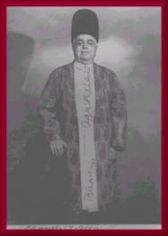
versus
'so well
authenticated by evidence'
His Royal Highness
Prince Aga Khan III
Reincarnation
or Companionship on High?
`Alayhā
Tis`ata `Ashar (74:30).
|
Above HER / it
nineteen-19.
|
15:86. Lo! Thy Lord! He is the All-Wise
Creator.
15:87. We have given thee 7-SEVEN
of
the oft-repeated and the great
Qur'an.
Pickthal's
Quran Translation
aggregation
i. [19 x
1]
ii. [74:30
==> 11 +
3 = 14
==> 7 x
2]
The spirit of the Knowledge Society is the spirit
of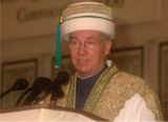 Pluralism—a readiness to accept THE OTHER, INDEED TO LEARN FROM
HIM Pluralism—a readiness to accept THE OTHER, INDEED TO LEARN FROM
HIM
[emphasis added, ali kenadian ]
|
Speech by His Highness
the Aga Khan at the
Inauguration speech
at "Splendori a Corte",
an exhibition of rare art and
manuscripts, shown at the Palazzo della Pilotta in
Parma, Italy, 30 March 2007
an exhibition of rare art and manuscripts
from the Aga Khan Museum collection, being
shown until June 3rd, 2007
at the Palazzo della Pilotta in
Parma, Italy, 30 March 2007
Let me begin
by thanking Mrs. Fornari, Mayor Ubaldi and Senator Lunardi
for their kind words of welcome to representatives of the
Aga Khan Trust for Culture, our guests and me here at
Parma.
As Presidente
Onarario Fondazione Parma Capitale della Musica, and
Chairman of the Board of the Aga Khan Trust for Culture it
is an honour for me to be here tonight at this, the first
preview of masterpieces of Islamic Art in the Collections
of the Aga Khan Museum entitled Splendori a
Corte and the performance of Sacred and Festive Music
Traditions from Central Asia.
The past has
privileged me with the friendship of Senator Lunardi and
Ing. Baiocchi, as well as the happy
occasion to have visited Parma in a private capacity and
to have been welcomed by Mayor Ubaldi.
History and Culture were
common areas of engagement, and it was a particularly
exciting moment for me, when I realised we could bring
them together in a shared platform of activities. That
would, of course, not have been possible, unless those
responsible for sustaining and enhancing the cultural
life of this city had been willing to look outside the
limits of the city, outside the frontiers
of Italy and Europe, and
espouse the concept that culture from
whatever part of the world and from whatever background,
should be part of the new region of Parma as the
Capitale della Musica.
In our world, where
major cultures and faiths are ignorant of each other, new
dialogues are critical. And
Parma has opened
the door to this important and challenging prospect. The
Aga Khan Trust for Culture and I are honoured that the
first initiative of the young Foundation Parma Capitale
della Musica to embrace the global world around us, has
been to welcome the cultural representations of various
parts of the Muslim world.
The developing
political crises of the last few years, and the large
numbers of Muslims emigrating to the West, have revealed –
often dramatically – the
considerable lack of knowledge of the Muslim
world in many Western societies. This ignorance spans all aspects of
the peoples of Islam: their
pluralism, the diversity
of their interpretations of the Qur’anic
faith, the chronological and geographical
extent of their history and culture, as well as their
ethnic, linguistic and social diversity.
The Aga Khan
Trust for Culture, the cultural agency of the Aga Khan
Development Network, works to expand this
knowledge.
In Muslim societies culture matters a
great deal, for it is
intimately intertwined with matters of faith.
Authentic symbols of pride and
identity seem to be disappearing leading
to a sense of exclusion, alienation or even challenge to
inherited identity.
The need for better understanding
across cultures has never been greater - nor more
pressing. We must do our utmost to value and protect
what is greatest in our common heritage. It
is important that the diversity of cultures, the pluralism
that characterises many societies today, is recognised as
a vital asset and prerequisite for progress and
development.
I
warmly thank the Foundation Parma Capitale della
Musica for giving the
Aga Khan Trust for Culture the
opportunity
to share with you, in this great city and this great
country of unique cultural wealth,
A
SMALL SAMPLE OF THE
CULTURAL ASSETS
OF THE ISLAMIC WORLD, AND TO TRY TO BUILD
NEW
FORCES
OF PRIDE AND RESPECT
FOR
THE
CULTURAL MANIFESTATIONS
OF THE ISLAMIC WORLD AT
A GLOBAL LEVEL
and
thereby contributing to the reduction of the damage
that has been made in recent times by questionable
decisions in the field of international politics.
|
context
==>
connotation
==>
MAKE THE
CONNECTION
THE CULTURAL
MANIFESTATIONS OF THE
ISLAMIC
WORLD
Speech by His Highness the Aga
Khan
Inauguration speech at "Splendori a
Corte",
an exhibition of rare art and
manuscripts from the Aga Khan Museum
collection, being shown until June 3rd,
2007 at the Palazzo della Pilotta in
Parma
March 30,
2007
Let me begin
by thanking Mrs. Fornari, Mayor Ubaldi and Senator
Lunardi for their kind words of welcome to
representatives of the Aga Khan Trust for Culture, our
guests and me here at Parma.
I warmly thank the Foundation Parma Capitale
della Musica for giving the Aga Khan Trust for Culture
the opportunity to share with you, in
this great city and this great country of unique
cultural wealth,
[emphasis
added, ali kenadian
] |
context
==>
connotation
==>
MAKE
THE CONNECTION
Hebrews
<=NT= <13
:
17> =HQ=> CHILDREN OF ISRAEL
CHILDREN
OF ISRAEL 17:71.
One day We shall
call
together all
human beings with their Imams -- imāmihim:
those who are given their record in their right hand will
read it (with pleasure), and they will not be dealt with
unjustly in the least Yusuf
Ali's Quran Translation 17:72.
And whoever is blind
in this, he shall (also) be blind in the
hereafter; and
more erring from the way.
Shakir's Quran
Translation
[AL-ISRA (ISRA', THE NIGHT
JOURNEY, CHILDREN OF ISRAEL)]
[17:71
==> 8 + 8 = 16 ==> 7]
Hebrews
<=NT= <13:
17> =HQ=> CHILDREN OF
ISRAEL
(Hebrews
13:17
KJV) Obey
them that have the
rule
over you, and submit
yourselves: for they watch for your
souls, as they that must give account, that
they may do it with joy, and not with grief: for that is
unprofitable for you.
excerpt
& interpretation
-
in
this great city
-
and this great country
-
of unique cultural
wealth;
Prince
Aly Salomone Khan was born
at Turin in Italy on June
13, 1911. [June 13
==> 19]
Aga
Khan
Born:
Dec. 13, 1936 ... Resident: Aiglemont, at Gouvieux, Chantilly,
France. He also has homes in England and Italy
(Sardinia, where he has developed a holiday
center) ... He holds a British passport ... Family: two sons, Princes Rahim
and Hussain, and one daughter, Princess Zahra, from his first
marriage ...
aggregation
Dec. 13, 1936 [and Italy[1]
(Sardinia]
-
[12 + 13 =
25]
-
25: ==>
5 x
5]
-
2+5: ==> 7
x 1
-
1+9+3+6 ==> 19 X
1]
COMPARE
(Hebrews 13:25 KJV) - Italy[2]
Grace be with you all. Amen.
<Written to the
Hebrews from Italy[2], by
Timothy[2].>
aggregation
[13:25
==> 38 ==> 19
x 2]
[13+25
==> 38
==>
19
x 2
25:
==> 5
x 5]
2+5:
==> 7
x 1
(Hebrews 13:15 KJV) By him therefore let us
offer the sacrifice[1], of praise
to God continually, that is, the fruit
of our lips giving thanks to his name. [ 13:15
==> 28 ==> 7 x 4]
(Hebrews 13:16 KJV) But to
do good and to communicate forget not: for with such
sacrifices[2]
God is well pleased.
(Hebrews 13:7 KJV)
- Remember
them which have the rule[1]
over you,
- who have
spoken unto you the word of God:
- whose
faith follow,
- considering the end of their
conversation. [7 x
1]
(Hebrews 13:17 KJV)
- Obey
them that have the rule[2] over
you,
- and
submit yourselves:
- for they
watch for your souls,
- as they that must give
account,
- that they may do it with
joy,
- and not with grief: for that is
unprofitable for you.
(Hebrews 13:20 KJV)
- Now the God
of peace, ..... shâlôm [pēs (שׁלום,
shālōm; εἰρήνη,
eirḗne)] islam
(Hebrews 13:22 KJV)
- And I beseech you, brethren,
- suffer the word of
exhortationG3874
παράκλησις
paraklēsis:
- for I have written a letter unto you in
few words. [ 13:22 + 35 ==> 7 x
5]
|
G3874
παράκλησις
paraklēsis
par-ak'-lay-sis
From G3870;
imploration, hortation, solace: -
comfort, consolation, exhortation,
intreaty.
|
compare
Comforter,3875
G3875
παράκλητος
paraklētos
par-ak'-lay-tos
An intercessor,
consoler: - advocate,
comforter. |
the
mystery CONCEPT of 2--TWO
[1]
& [2]
(Hebrews 13:23
KJV) Know ye that our brother Timothy[1],
is set at liberty; with whom, if he come shortly, I will see
you.
(Hebrews 13:24
KJV) Salute[1],
all
them that have the rule over you, and all the
saints. They of Italy[1]
salute[2],
you.
(Hebrews 13:25
KJV) Grace be with you all. Amen. <Written
to the Hebrews from Italy[2],
by Timothy[2].>
[ 13:25
==> 38 ==> 19
x 2]
Sacred Art
and Music of the Muslim World in Parma, Italy
30
March 2007
|
an exhibition
of
rare art and manuscripts from
the
Aga Khan Museum
collections |
| |
|
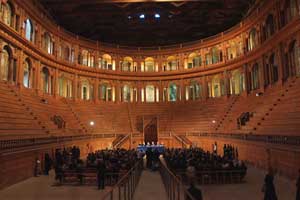 |
His Highness
the Aga Khan and Mr. Elvio Ubaldi, Mayor of Parma, inaugurated
“Splendori a Corte”, an exhibition of rare art and manuscripts from the Aga Khan
Museum collections being shown at the Palazzo
della Pilotta in Parma.
Photo credit:
Roberto Ricci
Click on thumbnail for larger
image.
|
| |
|
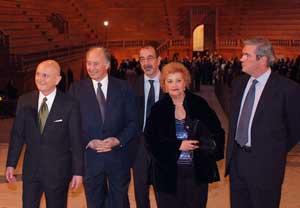 |
Mr. Elvio
Ubaldi, Mayor of Parma; His Highness
the Aga Khan; Mr. Meli, Sovraintendente Teatro Regio, Mrs.
Lucia Fornari, Sovraintendente alle Belle Arti; and Senatore Pietro Lunardi at
the inauguration of the"Splendori a Corte" exhibition at
the Palazzo della Pilotta in
Parma.
Photo credit:
Roberto Ricci
Click on thumbnail for larger
image. |
| |
|
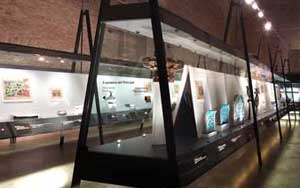
and a copy of
Ibn Sina's Canon of Medicine, which was
the medical reference book in Europe for 500
years. |
“Splendori a
Corte”, an exhibition of rare art and manuscripts from the Aga Khan
Museum collections being shown at the
Palazzo della Pilotta in Parma, contains some of the
rarest pieces of Muslim art, including Fatimid pottery and
and a copy of
Ibn Sina's Canon of Medicine, which was the
medical reference book in Europe for 500
years.
Photo credit:
Roberto Ricci
Click on thumbnail for larger
image. |
For more information, please see "Splendori a Corte" (in
Italian)
In the case of Islam,
there are
two
touchstones
excerpts
Receiving
the
"Tolerance" Award, 20 May 2006
Speech by His Highness the Aga
Khan
Address by His
Highness the Aga Khan
to the Tutzing Evangelical Academy Upon
Receiving the
"Tolerance" Award, 20 May
2006
Bismillah-ir-Rahman-ir-Rahim
Our spiritual
understandings, like those of your Academy, are rooted, of
course, in
ancient teachings.
In the case
of Islam, there are two touchstones
which I have long treasured and sought to
apply.
These Islamic ideals,
of course, have also been emphasized by
other great religions. Despite the long history of religious
conflict, there is a long counter-history of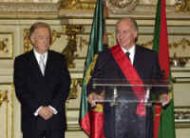 religious focus on
tolerance as a central virtue -- on welcoming the stranger and
loving one's neighbour. religious focus on
tolerance as a central virtue -- on welcoming the stranger and
loving one's neighbour.
“Who is my
Neighbor?” - one of the central Christian narratives
asks. Jesus responds by
telling the story of the Good
Samaritan -- a foreigner,
,
who reaches out sympathetically, across ethnic and cultural
divides, to show mercy to
the fallen
stranger at the side of the
road.
[emphasis added, ali
kenadian]
Salāmul--Peace
-
Hu
wallāhul-Ladhī
-
Lā
'Ilāha 'Illā
-
Huwal-
-
Malikul-Quddūsus-
-
Salāmul-Mu'uminu
-
al-Muhayminul -`Azīzul-Jabbārul
-
-Mutakabbiru
-
Subĥānallāhi
-
`Ammā Yushrikūna (59:23).
[5+9+2+3 = 19] |
-
He is Allah, than
Whom
-
no other God except
-
HE
IS,
-
the Sovereign Lord, the Holy
One,
-
Peace,
faithful,
-
the
Guardian, the Majestic, the
Compeller,
-
the
Superb.
-
Subĥānallāhi
/HOLY IS ALLAH/
Glorified be
Allah
-
from all that
they ascribe as partner (unto Him).
|
the
mystery concept of 2--two
[1] &
[2]
יהוה שלום
yehôvâh shâlôm
yehôvâh
PEACE
life and peace
don't be afraid:
you shall not
die
islam - salam -
peace
(Judges 6:23 MKJV) And Jehovah
said to him, Peace-Shalom[1][pēs (שׁלום,
shālōm; εἰρήνη,
eirḗne)] to you. Do not fear. You shall not
die.
(Judges 6:24 MKJV) Then Gideon
built an altar there to Jehovah, and called it
Jehovah-shalom[2]-יהוה שלום
yehôvâh shâlôm . It
is yet in Ophrah of the Abiezrites to this
day.
(Judges 6:23 HNV) The LORD said to him,
Shalom[1] be to you; don't be afraid: you shall not
die.
(Judges 6:24 HNV) Then Gid`on built an altar
there to the LORD, and called it the
LORD is Shalom[2]: to this day it is
still in Ofrat of the Abiezrites.
and all her paths are
peace -
shâlôm
(Proverbs 3:13 KJV)
Happy is the man that
findeth WISDOM,
and the man that getteth
understanding.
(Proverbs 3:17 KJV)
Her ways are ways of
pleasantness, and
all her paths are peace -
shâlôm.
(Proverbs 3:18 KJV)
She
is a tree of life to them that lay hold
upon her: and happy is every one
that retaineth her.
(Proverbs 3:19 KJV)
The
LORD by wisdom hath founded the earth; by
understanding hath he established the heavens.
Peace
pēs (שׁלום,
shālōm; εἰρήνη,
eirḗne):
H3073
יהוה שׁלום
yehôvâh
shâlôm
yeh-ho-vaw'
shaw-lome'
From H3068 and H7965; Jehovah (is)
peace; Jehovah-Shalom, a symbolical name of an
altar in Palestine
: -
Jehovah-shalom.
|