TOURIST GUIDE
Sceneries and basic information about Northern Areas of Pakistan
 The green portion
in map of Pakistan comprised of Northern Areas which includes:-
The green portion
in map of Pakistan comprised of Northern Areas which includes:-
Gilgit, Hunza, Sakardu, Swat Valley, Karakurum Highway, Baltistan etc. These areas includes World's second highest peak K-2 and other peaks including Nanga Parbat.
Click on thumbnails and enlarge wonderful sights of Northern areas of Pakistan:-
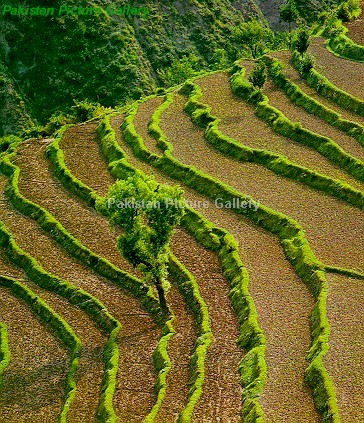
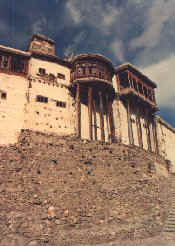

Balakot Baltit Fort A view of Gilgit
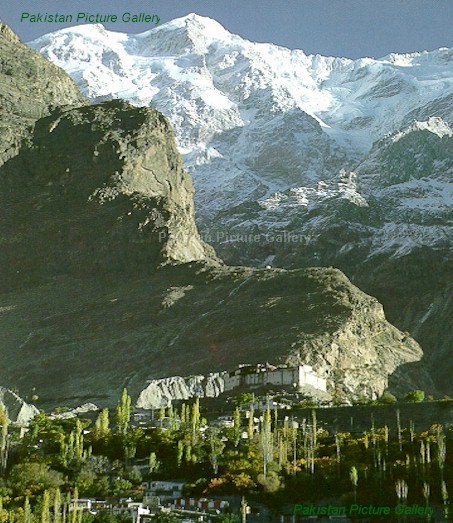
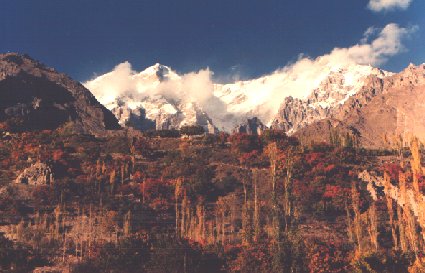
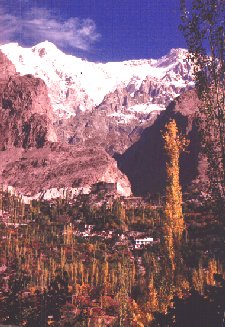
Hunza Valley Hunza Valley Hunza Valley
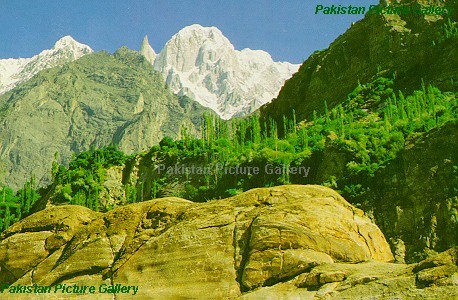
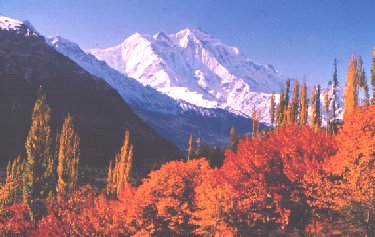
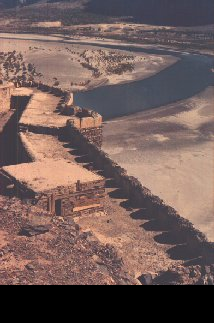
Hunza Valley Hunza Valley Karakurum Highway
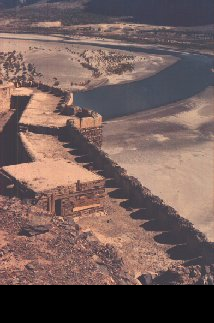
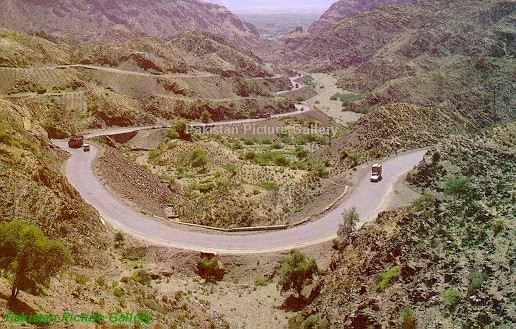
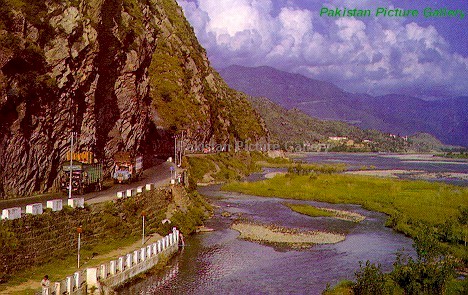
Kharfocho Fort Khyber Pass Mangorah
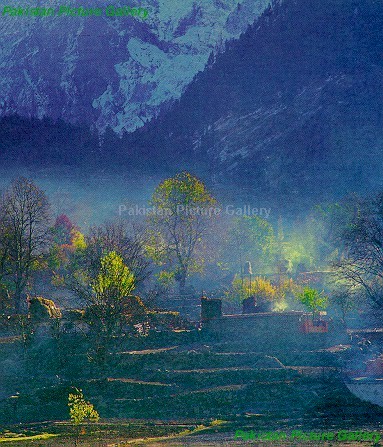
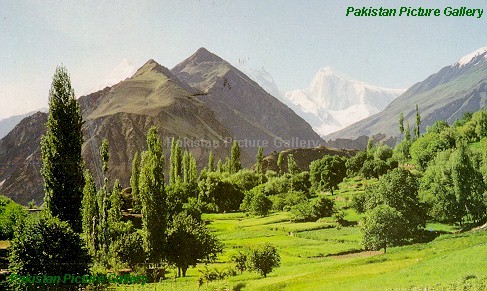
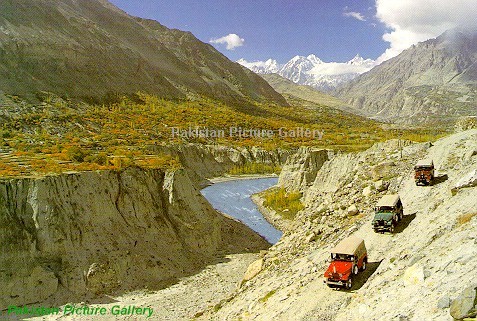
Matiltan Nager Nager Valley
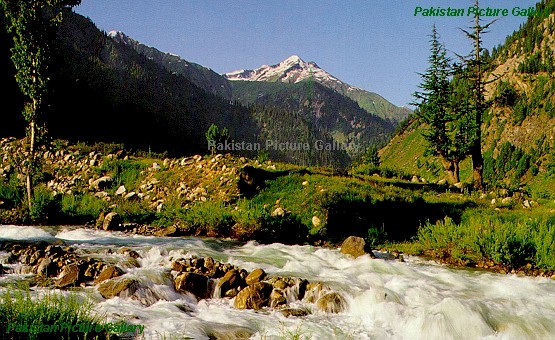

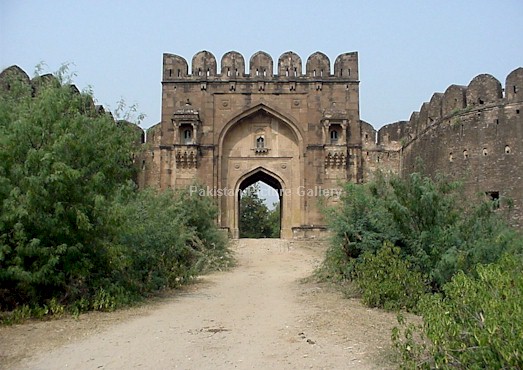
Naran Rakaposh Nager Rohtas Fort
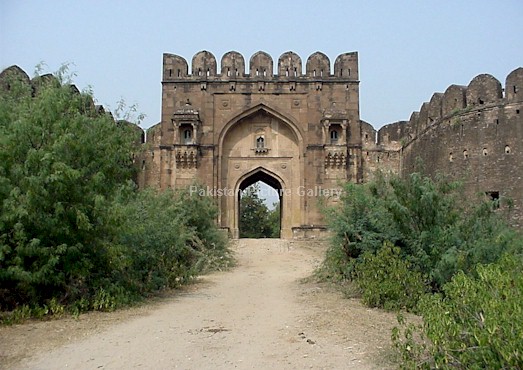

Rohtas Fort Sakardu Sakardu
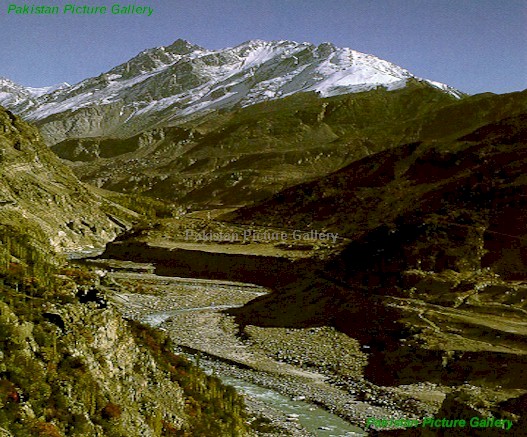
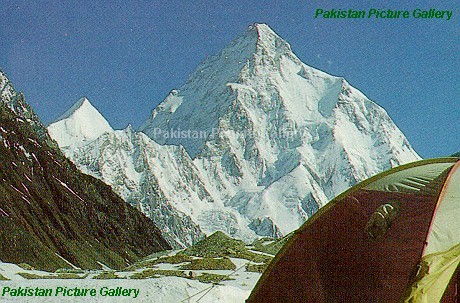
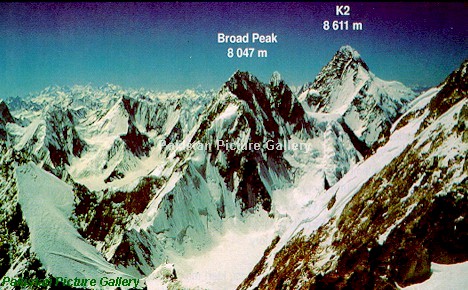
K-2 K-2 K-2
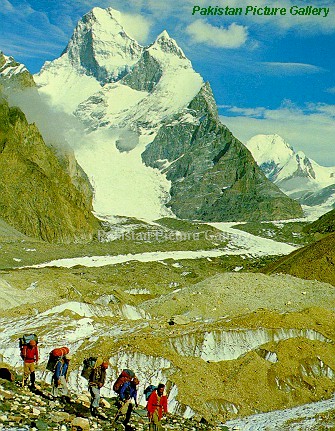
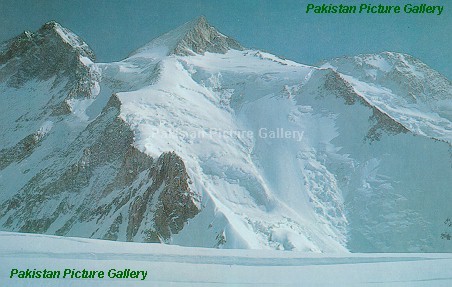
Baltoro Glacier Gasherbru II Ghoglisa Peak
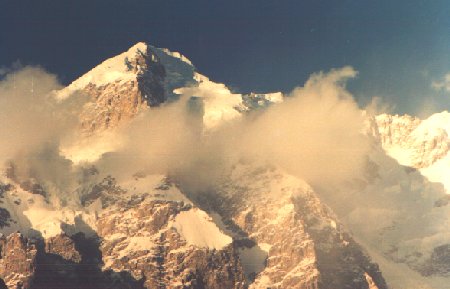
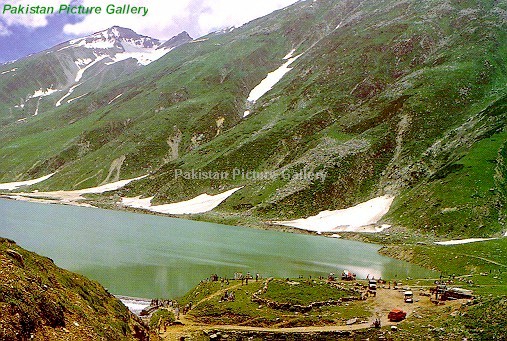
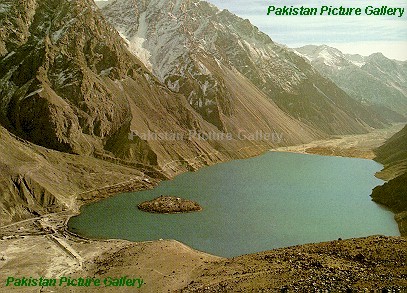
Ultar Peak Lake Saif al Maluk Lake Satpara
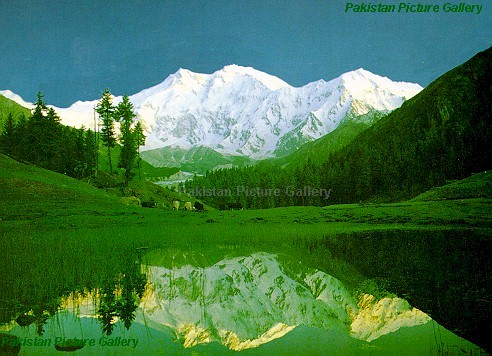

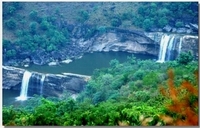
Nanga Parbat Water Fall Water Fall
Here is a brief introduction of these areas with some pictures:-
Hunza
Hunza has been ruled by the same family known as Mirs of Hunza for 960 years.
Hunzakuts are believed to be the descendents of five wandering soldiers of
Alexander the Great. The people of Hunza speak Brushuski, an aboriginal
language. This princely state retained its isolated independence for a long
time in the remote part of the areas which now from the Northern Areas of
Pakistan adjoining the Xinkiang Autonomous Region of China. During early
nineteenth century, Hunza resented Kashmir's attempts to gain control and its
rulers periodically expelled Kashmir garrisons, threatened Gilgit, and
politicked with the rulers of Kashgar to the north where the Russians were
gaining influence.
Fearing Russians infiltration into their northern frontiers, the British took
over direct political control at Gilgit in 1889. Incessant fratricidal intrigues
in Hunza and Nagar made the areas doubly insecure. This, coupled with the Mir of
Hunza's consistent intransigence induced the British to march on Hunza in
December 1891, where they fought a decisive battle at Nilit, 60 km beyond
Diaynor Bridge. After this the British garrisoned Aliabad until 1897 when Hunza
became a princely state protected by the Government of British India. After
Pakistan was created in 1947, the people of Hunza also gained liberation and the
princely state was merged in Pakistan.
Some Pictures of Hunza. Click on thumbnails to enlarge:-
GILGIT
At an elevation of 1453.90 meter lies the Gilgit valley, offers spectacular scenic beauty. It is surrounded by lakes, rivers, glaciers and high mountains ranges. Some of them world's largest peaks, such as Nanga Parbat, 8125 meter and Raka Poshi, 7788 meter are located here.
The best season to visit is from May to mid October. The local dialect is
Shina, however, Urdu and English are also spoken and understood.
Places of Interest
Buddhist Rock Carvings carved out of the mountain side are worth paying a visit. It is about 10 kms away from Gilgit and the distance is covered in about 20 minutes in a jeep.
The Victory Monument of Taj Mughal was built about 700 years ago and lies at a distance of 11 kms from Gilgit and it takes about 25 minutes by jeep to get there.
Enlarge picture of Gilgit
The Karakoram Highway
The Karakoram Highway, or KKH, is the greatest wonder of modern Pakistan and one of the most spectacular roads in the world. Connecting Pakistan to China, it twists through three great mountain ranges - the Himalaya, Karakoram and Pamir - following one of the ancient silk routes along the valleys of the Indus, Gilgit and Hunza rivers to the Chinese border at the Khunjerab Pass. It then crosses the high Central Asian plateau before winding down through the Pamirs to Kashgar, at the western edge of the Taklamakan Desert. By this route, Chinese silks, ceramics, lacquer-work, bronze, iron, furs and spices traveled West, while the wool, linen, ivory, gold, silver, precious and semi-precious stones, asbestos and glass of South Asia and the West traveled East.
For much of its 1,284 kms (905 miles), the Karakoram Highway is overshadowed by towering, barren mountains, a high altitude desert enjoying less than 100 millimeters (four inches) of rain a year. In many of the gorges through which it passes, it rides a shelf cut into a sheer cliff face as high as 500 meters (1,600 feet) above the river. The KKH has opened up remote villages where little has changed in hundreds of years, where farmers irrigate tiny terraces to grow small patches of wheat, barely or maize that stand out like emeralds against the gray, stony mountains. The highway is an incredible feat of engineering and an enduring monuments to the 810 Pakistanis and 82 Chinese who died forcing it through what is probably the world's most difficult and unstable terrain. (The unofficial death toll is somewhat higher, coming to nearly one life for each kilometer of road).
The Karakoram and the Himalaya, the newest mountain ranges in the world, began to form some 5 million years ago when the Indian sub-continent drifted northwards and rammed into the Asian land mass. By this time the dinosaurs were already extinct. India is still trundling northwards at the geologically reckless rate of five centimeters (two inches) a year, and the mountains are still growing by about seven millimeters (1/4 of an inch), annually. the KKH runs through the middle of this collision belt, where there is an earth tremor, on average, every three minutes.
Karakoram is Turkish for 'crumbling rock', an apt description for the giant, gray, snow-capped slag heaps that tower above the gorges cut between them.
The Indus River flows northwest, dividing the Himalaya from the Karakoram,
before being knocked south by the Hindu Kush. the KKH hugs the banks of the
Indus for 310 kilometers of its climb north, winding around the foot of Nanga Parbat, the ninth highest mountain in the world and the western anchor of the
Himalaya. The highway then leaves the Indus for the Gilgit, Hunza and Khunjerab
rivers to take on the Karakoram Range, which boat 12 of the 30 highest mountains
in the world. By the time the road reaches the 4,733 mere (15,528 foot).
Khunjerab Pass, it has earned the name of the highest medalled border crossing
in the world.
Click on thumbnails to enlarge KK. highway:
| The Baltit Fort is a kilometer away from Karimabad. It was built 700 years ago by 300 labourers brought to Hunza in the dowry of the Princess of Baltistan when she married Mir of Hunza. | |
The area is named Baltit after those labourers. Over the centuries it has been inhabited by the ruling family of the Hunza State |
Kharfocho Fort
| The construction of Kharfocho fort of the King of forts at Skardu has been attributed to the famous ruler of Skardu - Maqpon Bugha (1490 - 1515 AD), the great grand father of Ali Sher Khan Anchan (1560 - 1625 AD) by Hishatullah. But Moghal historians are of the view that the great fort was built by Ali Sher Khan Anchan himself. This view is upheld by European writers such as Cunningham, Foso Marine, G.T. Vagne etc. Some observations about this fort have been made in the Imperial Gazetteer of British India. It states that one of the most famous of the Gralpos (Monarchs of Skardu), Ali Sher Khan, who ruled till the end of the 16th century, conquered Ladakh and built a fort at Skardu. |
Kharfocho Fort
Baltistan
Baltistan, 26,000 square kilometers in area is right below the serrated, jagged and glaciated ramparts of the Karakorams. Once part of Ladkah, it was known as Tibet-i-Khurd - Little Tibet.
Archaeological exploration has proven that it was encompassed by the Silk
Trade Route. Rock carvings have been discovered along the road between Gol and
Khapulu, and Skardu and Satpara Lake. the trade routes here split in Skardu with
one leading to Satpara over the Deosai and Burzil Pass (5000 meters high) into
Kashmir and another leading to Gol. At Gol it forks again with one trail leading
to Khapulu, the other to Kharmang into Leh.
From Sost to Tashkurgan
PTDC and NATCO run daily buses from Sost to Tashkurgan, for Rs. (about US $ 23).
For the first 30 kilometers (19 miles) from Sost, the valley is narrow and barren, the cliff-face shattered into huge cubes and slabs that peel off and tumble down to the road, where they lie like forgotten building blocks belonging to giant children. The road leaves the Hunza for the Khunjerab River, and there is more of the same, with alluvial fans flowing down every gully, frequently blocking the way.
Khunjerab National Park begins 30 kilometers (19 miles) from Sost. The hills move back from the road, the valley opens out and the Khunjerab River dwindles to a tiny mountain stream with the odd tuft of grass, willow or birch along its banks.
The check-post at Dih consists of six lonely stone houses. The last 30 kilometers (19 miles) to the top of the pass are easier driving, as there is less mountain above and the slopes are gentler. The road follows the banks of the stream before winding up round 12 wide, well-engineered hairpin bends to the top.
The Khunjerab Pass, at 4,733 meters (15,528 feet), is reputedly the highest medalled border crossing in the world. A red sign announces 'China drive right', and a rival green sign says 'Pakistan drive left'. A monument declares that the highway was opened in 1982 and indulges in a bit of hyperbole by saying that the pass is 16,000 feet (4,875 meters). The Khunjerab is on a continental watershed. All weather on the Pakistani side flows down to the Indian Ocean, while that on the Chinese side is swallowed by the Taklamakan Desert, the name of which means, if you go in, you don't come out'.
It is 32 kilometers (20 miles) from the top of the pass to the abandoned Chinese border post at Pirali. The scenery is remarkably different on the two sides of the pass. The Pakistani side is vertical world of desert gorges devoid of any sign of human life for the last 30 kilometers (19 miles), except for the road itself. the Chinese side is wide, open and grassy high-altitude plateau with grazing herds of yaks, sheep and goats tended by Tajik herders. Children and dogs romp among round felt tents called yurts. The Tajiks are a smiling and friendly lot, and the women are as happy to be photographed as the men. Even the camels are altogether different animals. Pakistani camels are tall, short-haired, one-humped Bactrains that appear to wear hairy, knee-length shorts.
Nagar
Nagar, the large kingdom across the river from Hunza, was possibly first settled by people from Baltistan who arrived over the mountains by walking along the Biafo and Hispar glaciers. It was settled again in about the 14th century by Hunzakuts who crossed the river. A man called Borosh from Hunza supposedly founded the first village of Boroshal, and married a Balti girl he found there. The legend says the girl and her grandmother were the sole survivors of a landslide that killed all the early Balti settlers.
Nagar is entered by the jeep road that leaves the KKH just beyond the Ganesh bridge across the Hunza River. The first five kilometers (three miles) of this road are dry and barren, then the road divides. Once branch of crosses the Hispar River on a bridge and climbs up into the fertile villages of central Nagar, where many kilometers of irrigation channels provide pleasant walks through fields and villages right up to the last village of Hoper. You can get here by public transport from Aliabad in Hunza, which leaves most days for Nagar, and occasionally continues to Hopar.
The Ruby Mines
The Ruby Mines of Hunza are also nearby. A sales center is located at Aliabad who sale precious and semi-precious stones and jeweler.
The KKH Beyond Karimabad
The KKH is at its most spectacular between Ganesh and Gulmit. The road rides high on the eastern side of the river, twisting and turning round the barren foot of the Hispar Range, which boasts six peaks over 7,000 meters (23,000 feet). On the opposite bank, villages cling implausibly to the side of the 7,388 meter (24,240 foot) Ultar Mountain. Between the villages, gray screen slithers down to the river, looking in the distance like piles of find cigarette ash. Above, the jagged teeth along the ridge hide the highest snow-covered peaks from view.
The KKH crosses back to the west bank at Shishkot Bridge, from which the view upstream of the serrated ridge of mountains above the river is one of the most photogenic prospects of the entire drive. From here to Tashkurgan in China the people speak Wakhi.
Gulmit
Eight kms (five miles) past the bridge, is a fertile plateau 2,500 meters (8,200 feet) high, with irrigated fields on either side of the road. This is a good place to spend a night or two, marking the halfway point between Gilgit and the Khunjerab Pass. The small museum here belongs to the prince, Raja Bahadur Khan, and is full of interesting ethnic artifacts. And two of the hotels here belong to Mirzada Shah Khan, hero of the 1947 mutiny.
The rock and gravel covered Ghilkin Glacier comes right down to the road about one kilometer (just over half a mile) past Gulmit. The road crosses the snout of the glacier at the very edge of the river, then climbs up on to the lateral moraine - a great, gray slag heap. About five kilometers (three miles) further on, you round a corner to find Passu Glacier straight ahead. It is shining white and deeply crevassed - just as you would expect a glacier to look. Above the glacier to the left is the jagged line of the Passu and Batua peaks, seven of which are over 7,500 meters (25,000 feet). On the opposite side of the river, which you can cross over a terrifying footbridge, the valley is hemmed in by a half-circle of saw-toothed summits, down the flanks of which slide gray alluvial fans.
Passu is a village of farmers and mountain guides 15 kilometers (nine miles) beyond Gulmit. This is the setting-off point for climbing expeditions up the Batura, Passu, Kurk and Lupgar groups of peaks, and for trekking trips up the Shimshal Valley and Batura Glacier. The Passu Inn, right beside the road, is the meeting place for mountaineers and guides.
The KKH passes through four more villages before reaching the immigration and customs post at Sost, 33 kilometers (21 miles) from Passu. Outgoing traffic must pass through Sost before 11 am. It is a four-or-five hour drive from here to Tashkurgan, and you must allow time for clearing Chinese customs and immigration to kilometers before Tashkurgan (moved down from Pirali). The time difference between China and Pakistan is three hours, so it will be around 7 to 8 pm Chinese time before you arrive in Tashkurgan. Incoming traffic is processed until 4 pm Pakistani time, 7 pm Chinese time.
Mindoq Khar
This palace was built by Gul Khatoon or Mindoq Gialmo on the hill where now stands the Kharfocho fort only. The palace was named after the queen as 'Mindoq Khar' meaning the 'Flower Palace'. The Palace was destroyed by the troops of the Sikh ruler of Kashmir, Maharaja Gulab Singh, when he invaded Skardu in 1840 AD.
Hilal Bagh and Chahar Bagh
Just below the Mindoq Khar or Flower Palace, there was a terraced garden with fountains built in marble. This royal garden covered the areas from Mindoq Khan to the present bazaar at Skardu where the newly constructed road crosses the channel. A palace built in marble with towers also stood in the middle of the garden, above the Polo Ground which is called Ghudi Changra. The palace was destroyed during the great floods in the area after the death of Ali Sher Khan Anchan and a marble Baradari was later constructed at this palace. This royal garden was named Hilal Bagh (Crescent Garden). Another garden was also laid which was named Chhar Bagh on the site where a Girls College stands now. The said garden was laid on the orders of the Queen while her husband was away to Gilgit and then to Chitral. As the mother tongue of the Queen was Persian, she gave Persian name to these gardens.
Buddhist Rock
There is only one surviving Buddhist Rock with rock carvings in the Skardu Valley located on Satpara road. Probably the rock carvings and images of Buddha date back to the period of Great Tibetan Empire. When the Buddhist people of Gandhara migrated and passed through the present northern areas of Pakistan, they settled at some places temporarily and carved drawings of Stupas, scenes of their experiences and images of Buddha with texts in Kharoshti language. There were a number of such Buddhist rock carvings in the Skardu Valley. Probably those rocks were used either by Ali Sher Khan Anchan as building material or submerged in the Satpara lake. Scholars and researchers like Dr. A.H. Dani from Pakistan and some from other countries have done lot of research work on these rock carvings and have since deciphered the text of the carvings in Kharoshti language.
Satpara Lake
8 km (5 miles) south of Skardu, 20 minutes by jeep, lies the Satpara Lake. Surrounded by high glacial mountains, this lake has an island in the middle of its clear waters, which can be reached by boat. The lake is considered ideal for fishing.
Kachura Lake
About 32 kms (20 miles) from Skardu, 2 hours by jeep, lie the shimmering waters of the Kachura Lake. In the springtime its banks are adorned by a multitude of colourful flowers, while the trees are laden with peach, apricot and apple blossoms. The lake offers great opportunities for trout fishing.
Shigar Valley
The Shigar Valley, 32 kms (20 miles) from Skardu and 2 hours by jeep, is watered by the Shigar River. It forms the gateway to the great mountain peaks of the Karakoram, including Mount K-2. The valley has an extremely picturesque landscape, and abounds in fruit such as grapes, perches, pears, walnuts and apricots.
Khaplu Valley
This beautiful valley of the Shyok River is 103 kms (64 miles) from Skardu and 6 hours by jeep. There is a sprawling village perched on the slopes of the steep mountains that hem in the river. Many famous mountains, such as Masherbrum, K-6, K-7, Sherpi Kangh, Sia Kangri, Saltoro Kangri etc. are located here.
Source: Pakistan Tourism Development Corporation. http://
KARSAZ Trust, in Northern Areas of Pakistan