
Microscopic examination

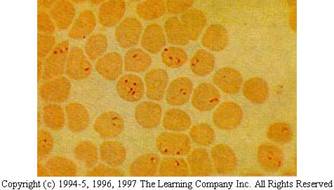
Malaria Positive slide
Diagnosis of fever means diagnosis of infection causing it.
 |
Investigations are guided by clinical examination and duration of fever. |
|
|
They may include examination of blood, urine, sputum, stool, cultures, serological tests, x ray, ultrasound etc. |
Blood examination.
-
Complete blood counts including Hb, TLC, DLC, ESR-can give vital information including type and severity of infection .
-
Peripheral smear examination for Malaria, Filaria etc.
-
Platelet count can predict chances of haemorrhage in patients of dengue fever, complicated typhoid and malaria.
Sputum examination in case of pneumonia , bronchitis can isolate organism causing chest infection.
Urine examination including microscopic and culture for diagnosis of UTI (Urinary tract infection).
Stool examination for diagnosis of dysentery, cholera etc.
Serological tests can detect antibodies to organism causing infection and gives indirect evidence of infection. Typhoid ( Widal test), Malaria, tuberculosis, dengue fever can all be diagnosed with these tests.
Cultures if positive give confirmatory evidence of infection by a particular organism and also provide a list of antibiotics which will be most effective against the causative agent. Cultures of blood, sputum, throat swab, pus, urine , stool can be done.
X ray can diagnose chest infection, sinusitis, tuberculosis, bone infection.