Bath & Sponging
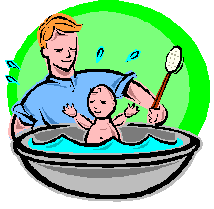
Tap water bath, Sponging always safe & desirable
-
Safest way to bring down high temperature.
-
No side effects other than shivering momentarily.
-
Quickest way to decrease fever and is especially indicated in case of heat stroke, delirium, febrile convulsions.
-
This can cause pneumonia is a myth. Even high temperature in a patient of pneumonia can be brought down by these means.
Anti pyretic medication
-
These are meant to decrease the fever without actually treating the cause of fever.
-
They are not a substitute, for definitive treatment of main cause of fever like typhoid, malaria etc.
-
They have to be used with caution and under medical supervision.
-
In certain fevers and certain individuals they can cause severe side effects which can even be fatal.
-
Dosage and frequency of administration depends upon degree of fever, age, coexisting disease.
Side effects and cautions.
-
These drugs can interact with medication for other diseases like diabetes, epilepsy and can either increase or decrease their effect. They can also increase side effects of other medicines.
-
They can cause severe gastritis in patients prone to it.
-
Can cause intestinal bleeding in patients of peptic ulcers.
-
Can precipitate an attack of asthma in patients of asthma.
-
Can cause hypoglycemia in patients of diabetes on medication.
-
Can cause rashes with hemorrhage, and bleeding tendencies from all sites including brain, in cases of Dengue fever, complicated typhoid, algid malaria.
-
Can cause severe and fatal liver damage (rye syndrome) especially in kids less than 3 years of age.
 |
Paracetamol is the most frequently used antipyretic and is mostly safe if used in right dosage. |
|
|
Other anti inflammatory drugs with anti-pyretic properties like nimuleside are to be used with caution and under medical supervision because of above mentioned side effects. |
Managing a fever
Rest and plenty of liquids are needed when someone is running a fever. Encourage the person to drink water and juice to prevent dehydration. Try to make the person as comfortable as possible--extra covers during the chill stage, and sponging with a cool wet cloth when the person feels hot. Keep the room air cool or use a fan.
Infants and children.
 |
Children can run a fever very suddenly. A feverish child's temperature should be taken every hour. |
|
|
Never give children aspirin unless your doctor says it is okay because giving aspirin with some viral infections may cause a serious complication called Reye's syndrome. |
|
|
Your doctor may suggest an aspirin substitute, such as acetaminophen (Tylenol). |
Call the doctor immediately if the child's temperature reaches 102o F or over. High fevers can lead to convulsions very quickly, especially in children under 5 years.
Teenagers and adults.
 |
A moderate amount of fever is actually beneficial, so unless the fever is high (above 100.4o F) or headache or other pain is present, it is not necessary to take aspirin or an aspirin substitute to bring down fever. |
|
|
However, you should call the doctor if the temperature exceeds 102o F or lasts longer than 24 hours. |
Fever treatment
 |
This includes care of a patient with a high temperature. |
|
|
The patient is observed for rapid heart beat; a full, bounding pulse or a weak, thready pulse; rapid breathing; hot, dry skin; chills; headache; sweating; confusion; dehydration; tremors; convulsions; and coma. |
|
|
Treatment may include giving antibiotic, antifever, and sedative drugs. |
|
|
If the temperature is extremely high, an alcohol sponge bath, cooling tub bath, a cold wet sheet, or ice packs may be helpful. |
|
|
The patient's temperature is checked every 2 to 4 hours. |
|
|
The room temperature may be reduced, and air currents increased by a fan. |
|
|
Increased amounts of fluids are given, physical activity is reduced, and the skin is exposed to air. |