|
“I don’t think I’m a politician” By Joy
Magdayao
Celso Lobregat’s work habits
extend to the evenings. At past five in the afternoon, after
an array of meetings and activities, just when all rank and
file employees have punched out, he reports to his office to
deal with more work.
On our scheduled interview, he
looked peaked; the day had definitely taken its toll on him.
But he afforded us a smile, ready to answer questions. His
personal assistant, Pia, said he had another engagement after
this interview.
Emerging from the shadows of his much loved mother, the late
Mayor Maria Clara Lobregat, Zamboanga City’s newest alcalde
Celso Lobregat is beginning to create his own brand of
leadership. Straightforward, unafraid of criticism, economic
engineer.
Because
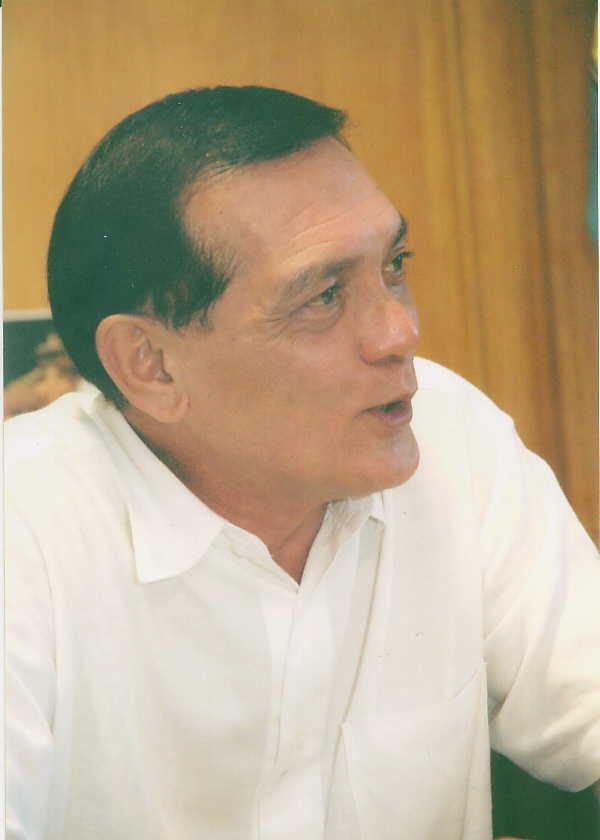
of these personal traits, he claims he is no politician. I
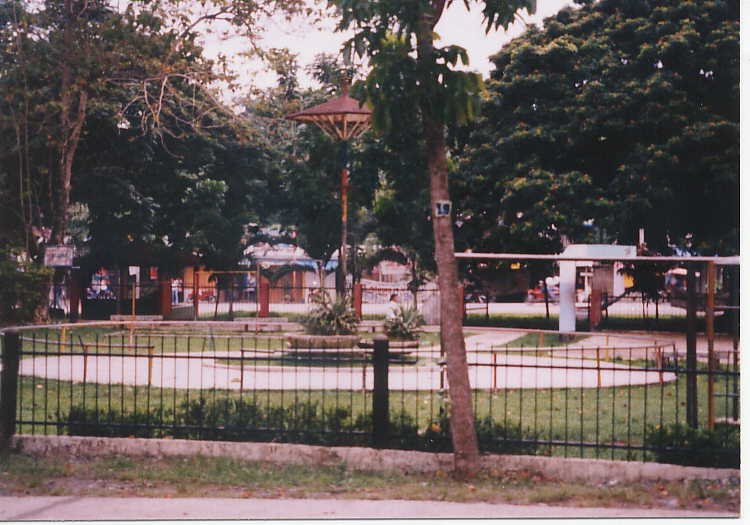
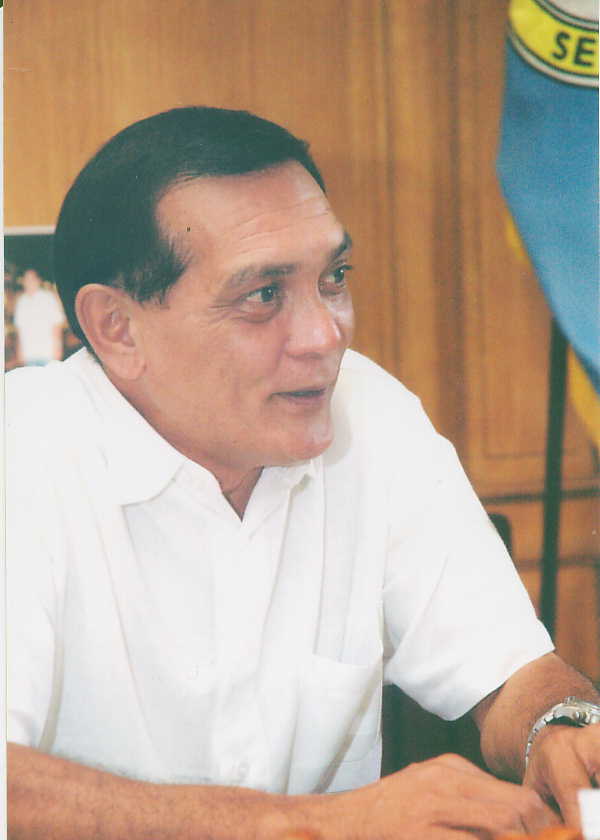
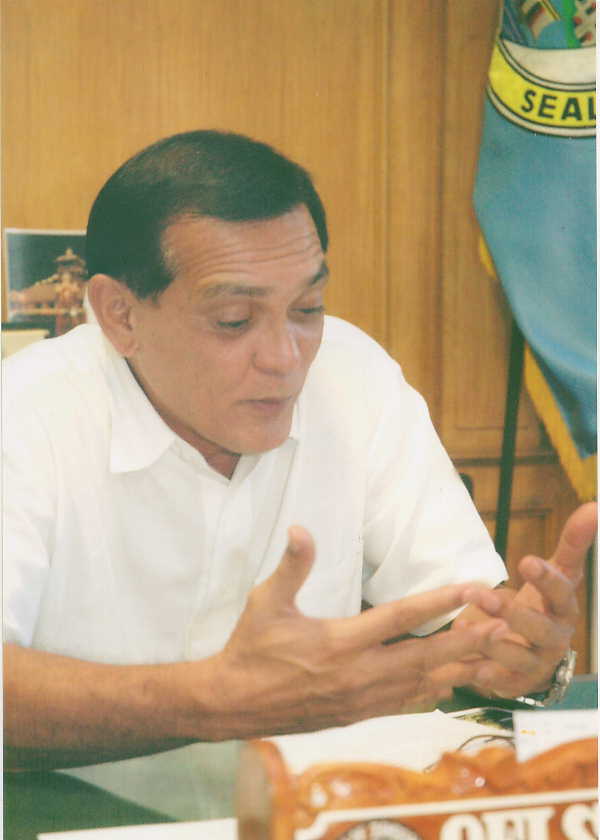
briefly saw him in action when he graciously accommodated our
request for a pictorial right in front of the beautiful and
historic city hall. While Keitht Lorenzo fiddled with his
digital camera (it takes special skills to get the right
effects at night) Celso quietly waits on the side, genially
returning the greetings of passersby who recognize him. It is
true then that he’s not the shake-the-hands-slap-in-the-back
type. His style is more of a smile and a nod of recognition.
But for
what he lacks in the tradpol image (thank goodness!) he makes
up with zeal and plain hard work. He is very visible,
attending functions on the side while focusing on the really
pressing problems. Celso, for example, has been doing the
round of barangays, explaining how to raise revenue to create
a new Zamboanga City.
Join
us then for a late afternoon talk, with a very determined
mayor who speaks his mind on things closest to his heart.
You
were born with the proverbial silver spoon in your mouth. Is
there any disadvantage to being the son of the rich and the
famous?
There are advantages and disadvantages.
The disadvantage is that they always tend to compare me with
my mother. You know my mother has many good qualities and at
least I should try to emulate them.
How do you deal with the comparison?
I live with it. It’s a reality. My
mother and I are the same in some respects and different in
others. Like I always tell people, I cannot wear her saya and
her sapatilla.
My mother belongs to a different
generation. I belong to the middle generation…or the confused
generation because when I was brought up, the norm then was
your parents will have the last say. You do what your parents
wish you to do, with very little questioning.
In my case, with my children, it’s just
the opposite (laughter). They’re doing what they think they
should do, and as a parent I want to respect them.
Do you remember how it was growing up
in Zamboanga City?
A lot of my youth days were spent not in
Zamboanga but in Lanao because my mother and father were
running the family coconut and cassava plantation in Balabagan.
I studied in Manila.
But we vacationed here. I remember that
when there was an inauguration of the Pablo Lorenzo Street,
the whole family traveled, starting from Lanao, all of
Mindanao, picking up friends and relatives along the way. In
Davao, we had a cousin there. In Misamis, we had relatives by
affinity. So we traveled from Lanao to Cotabato, to Butuan,
toCagayan, towards Zamboanga.
What were your earlier dreams? Did
you consciously plan this path?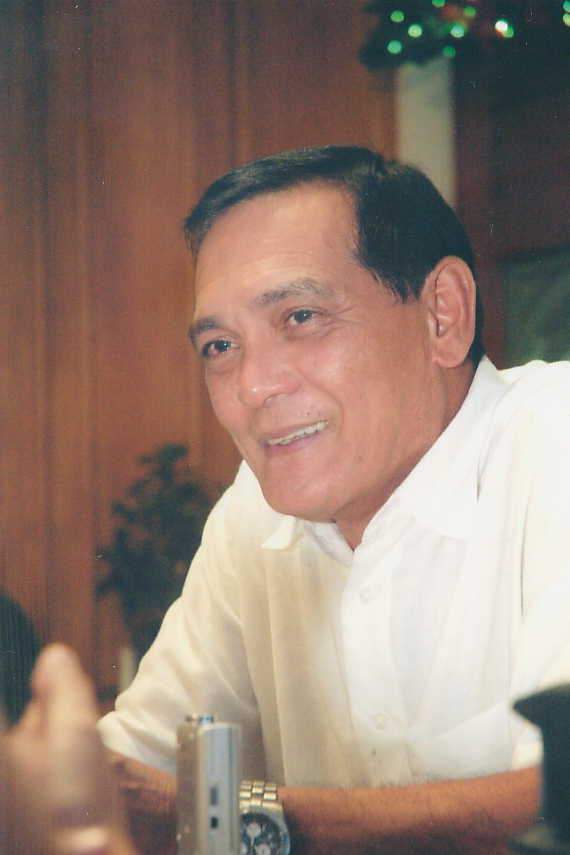
No. I never thought of entering
politics. It was the farthest thing in my mind. When my
grandfather was in public service, none of his children were
actively involved in any political position. My mother only
entered politics when my grandfather died. That was in the
late 60s and early 70s. When my mother was in public service,
none of her children had political ambitions. Things changed
in 1996 when I started getting more involved with the SPCPD
issue. I was the one who worked on the primer on the anti
SPCPD movement in Zamboanga.
Before that I was also involved in my
mother’s campaign. After the campaign, I went back to private
life.
What then was the major turning point
in your political life?
In 1995 and 1996, there was the SPCPD
issue where I did a lot of spade work.
There was also that issue of a former
mayor who wanted to use city funds to make a national road
when there was already funding from the national government.
Nearing the elections of 1998, my
mother’s term as congresswoman was ending and she was going to
run for mayor, and the former mayor was going to run for
congress. The political situation then was that they had
different programs and agenda. For so long, there was a
conflict. People were asking me to run in the 1998 elections
as congressman.
I can tell you my mother was very
lukewarm to the idea. We’ve always followed the rule – one
family in politics is enough.
But there were surveys made and
surprisingly, it showed I was faring very well. We did not
believe that survey so we had another survey ran by another
group. The results were the same.
Also…I guess you reach a point in your
life when you just can’t sit on the fence and just criticize
and not get involved. So that’s how it started.
What do people NOT know about Celso
Lobregat?
I don’t know what they don’t know
(laughter).
Well, we do know that you work hard.
Your staff says you stay in the office till late at night.
But when it’s Sunday, Celso Lobregat is…
Well, actually since I had been mayor,
practically there had been no Sundays. No Saturdays, no
Sundays. There’s a lot of work to be done. Of course, you
immerse yourself in the first six months or so. Coming from
Congress is very different from being mayor… and there is a
learning curve you try to brisk through. So lately, there have
been no Sundays, no holidays.
How long do you think this is going to
continue?
I was hoping the first six months things
would stabilize. But it seems that it will take more than six
months. There are many things that need to be done, like…one
is the realty tax issue. The realty tax has not been
increased for so many years.
That’s what you’ve been talking about
in your round of the barangays…
Well, I’ve been trying to explain, trying
to simplify the implementation of ordinances and other laws.
We need strict implementation of
ordinances…like the building code, and other major issues like
jumpstarting flagship projects like the bus terminal…like the
putting up of extension offices of the city hall.
How do you make decisions?
First before making decisions, I gather
the relevant issues and the facts. Of course, I consult.
You try to get a consensus?
Sometimes, you get a consensus. But, you
know, the decision of the mayor may not please everybody. If
I try to please everybody that is a sure formula for failure,
because the issue has to be confronted.
Like when you touch on specific issues in
the traffic problem…like no parking on the highway. Then
certain sectors start reacting. What can you do? As long as
it is beneficial for the majority of the constituents - that’s
the guiding principle.
So how do you deal with the
opposition?
Well, there will always be an opposition.
That is democracy. I face the problems squarely. I have met
with the opposition several times to explain the issue to
them.
What makes Celso angry?
I guess I exact good working habits. I
don’t want things done just for the sake of doing it. If
anything has to be done, I want it done well. So when I know
people have the potential to do something well, and they don’t
do it, it’s very frustrating.
And well…you know the government
structure, many times it’s very bureaucratic and you end up
getting frustrated. Things are not fast enough because of all
the bureaucratic requirements.
How do you plan to re-image Zamboaga
City, other than getting media cooperation?
It takes the cooperation of everybody.
Just like in the cleanliness campaign, it is not just putting
the people on the streets to sweep. As long as there are
garbage generators, there will always be garbage. And so you
try to instill in the people the importance (of cleanliness).
We have the education phase, the advocacy phase, and there is,
of course, the enforcement phase. Then even when I started, I
cannot act without their cooperation if they do not understand
what we are trying to do.
What is in the heart of the mayor?
I really want Zamboanga to be a very
peaceful, very clean, very progressive city. Now to do that,
we need resources and revenues.
When I sat down, it was the time of the
year when we had to finalize the budget. Unlike in the past
when everybody concentrated on the project and how to spend
the money, I met with all the department and different offices
and I said, “Before we talk of spending the money, we have to
talk of raising the money first.”
What do you want to change in the
Zamboangueno mentality in the next three years?
Actually, maybe not the Zamboangueno
mentality. I think it is the Filipino culture of “pwede na.”
We have to go beyond that. We should aim higher. We should
do faster. We should do more with less.
What are the next big plans for
Zamboanga City?
We are a big city in area, but our city
core really needs expanding. That is why we are concentrating
on the road network. Together with my late mother, we were
able to implement many projects that improved the
infrastructure in the city. We have to continue that. We
have to spur the outward movement. That is why we are looking
at the bus terminal to be situated somewhere in the east
coast. We have to contend with the traffic problem. We
should implement the building code; we have to put up parking
buildings; we have to make sure that traffic enforcement is
there.
The cleanliness drive…I personally led
the cleanliness drive in the market. It was not a one day
affair. It continued on for several weeks, even using heavy
equipments. Cleaning was not superficial. We actually
declogged all the drains that had not been declogged for
years. And they said the drainage system was condemned and we
have to build a new one. So I said, “It’s condemned because
nothing passes through the drain. Let’s declog the drain.”
We even got to the point of bringing bulldozers and payloaders
for desilting the river. I think we were able to get more
than 500 truckloads of silt that was there for years… I think
it really should be leadership by example. You can not expect
people to do things if you don’t lead the way.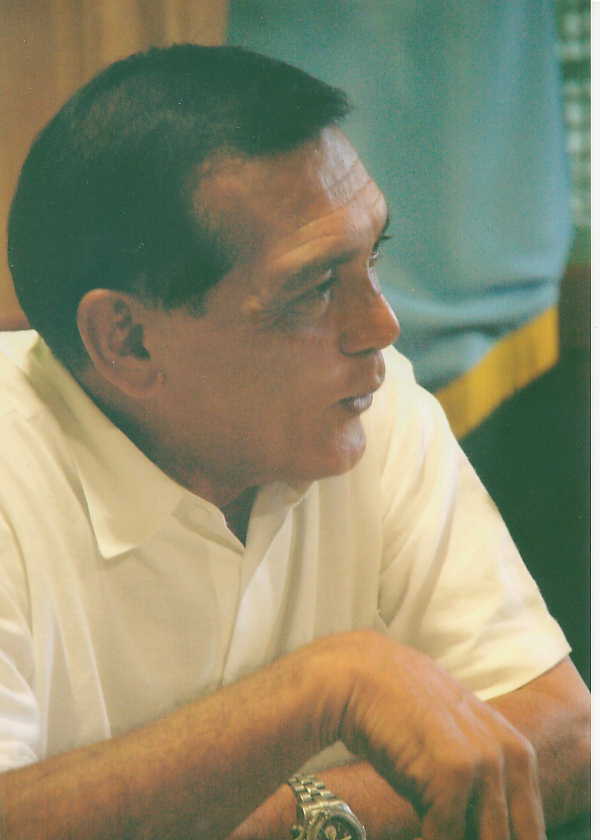
How is Mayor Celso Lobregat as a
family man?
My daughter is now in London. She’s
working for a bank.
What’s her name?
Louie. She used to work for bank in
Manila. They sent her to Indonesia for six months. When she
was in Indonesia, there was an opening for a post in London.
She got interviewed and they chose her. My son…
That famous Jackamawatan commercial
model…
My son. Yeah… (smiles). Actually he has
five names – Celso Nico Tito Marco Luis. He prefers to use
Marco. He just arrived from Spain because he was taking a
short course there, and he will be going back for his
practicum.
How do you want to be remembered by
your children?
As a father that really loves them and
cares for them very very much.
How do you want to be remembered by
the Zamboanguenos? How distinct do you want to be from your
mother?
On that issue, I never pretend that I
will be her. We have the same vision of Zamboanga, but we
have different traits and different qualities. She is
remembered as a very compassionate but yet strong leader. In
my case…and I’ve told this to many people…that I’m here not to
please everybody, I am here to do what’s good for Zamboanga…what
should be done for Zamboanga…and we have to put Zamboanga on
the right track.
When you say “no” to certain people
because it shouldn’t be done…it cannot be done, people tend to
raise their eyebrows and say.. “aahhh..” But really, I don’t
think I’m a politician.
When you say politician, you mean
somebody who has to…
...who tries to please, to compromise.
You know, I’m more of a manager and an administrator. Of
course, I serve with compassion. But I know that there are
certain times that I have to say “no.” And that’s one of the
hardest things. Many times when you say no you feel bad. In
the end, what can I do?
What are the principles you live by?
One is fairness. Because when you run
the city and when you have to make hard and tough decisions,
you have to bite the bullet. If people see that you apply the
same principle to everybody, they will say, “Hey, at least,
he’s fair.”
My other principle is to lead by example.
And hard work.
Home -->
|