|
Trouble in paradise
By Joy Magdayao
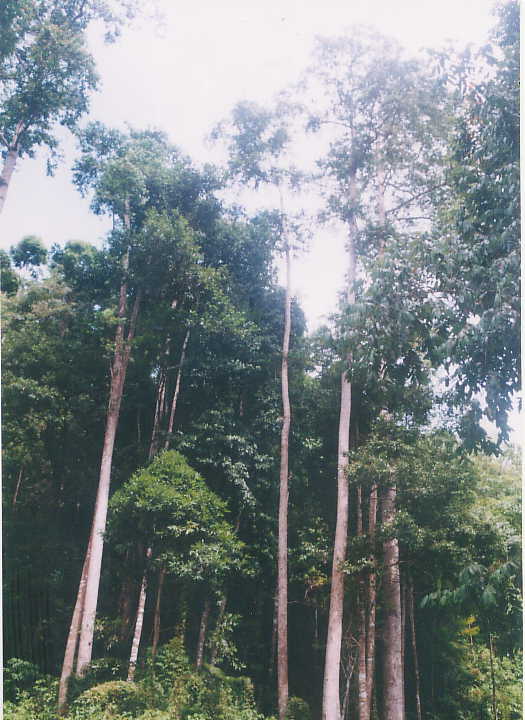
The municipality of Siocon is a flatland nestled by thickly
forested mountains. Viewed from the top, Siocon resembles a
patch of paradise surrounded by towering greeneries. The town
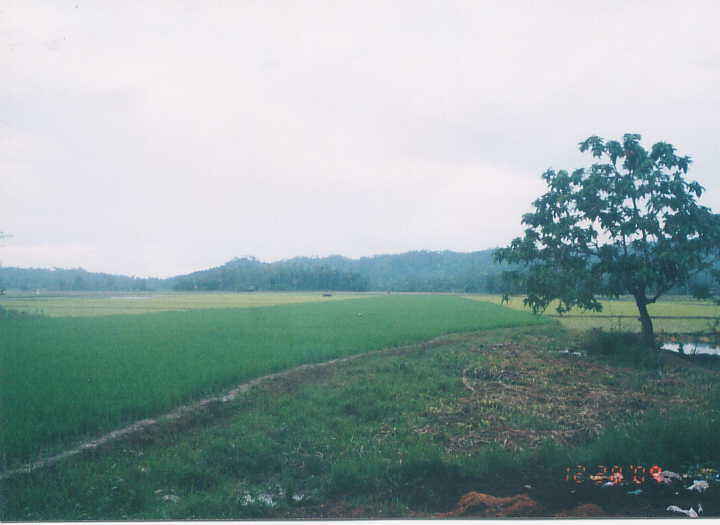
boasts of vast stretches of farmlands producing the best of
the nation’s golden grains, giving it its famous monicker -
the rice granary of Mindanao. Its coasts and its inland waters
are equally famous for its abundant fish supply. Siocon also
cradles in its bowels a load of the world’s most precious
metals – gold, silver, copper. And this is why all is not well
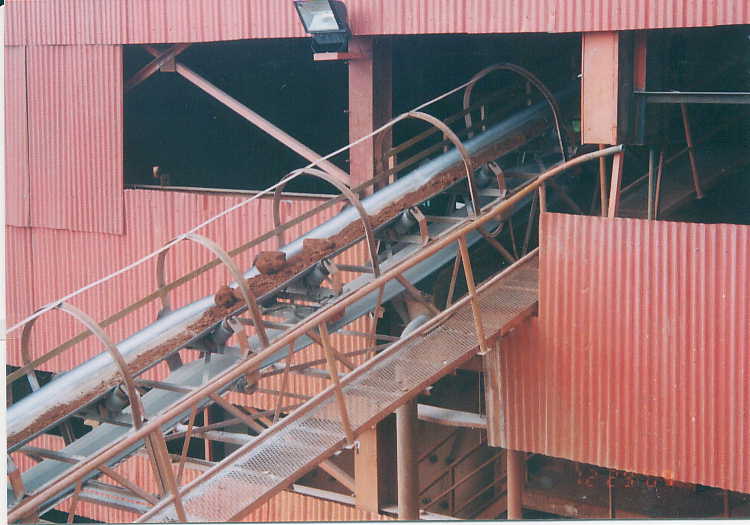
in this paradise. The entry of Toronto Ventures, Inc. (TVI), a
Canadian mining firm based in Calgary, through its subsidiary
TVI Resource Development Philippines, has resulted to
displacement of Lumads, division among tribal leaders, and
destruction of its sacred mountains. In the process of the
struggle to oust what they believe to be a foreign interloper,
the multi-cultural people of Siocon have found a common ground
for understanding – the care of their land, and the future of
their children.
Beginnings
 Like all other lands in Zamboanga Peninsula, the Subanens
are the original settlers of Siocon. Their forefathers for
many generations lived off the land using the kaingin method,
moving from one area to another in search of generous soil.
This was the same lifestyle of the Anoy family who settled in
Mount Canatuan in the early sixties, Jose Anoy, direct
descendant from a long line of tribal leaders, relates to
Zamboanga Agenda. Mt. Canatuan was home to Timuay Anoy and his
wife and six children, and many other relatives for many
years. For them, the land was their life. Their quiet lives
were disturbed by a rush of fortune seekers when pre-gold was
discovered in nearby Guinabucan in the eighties, continues
Timuay Anoy. Not long after that, small scale miners wandered
into Canatuan area in search of riches. One of the more
successful was Roman Bosque who organized the small scale
miners and applied for a Mineral Production Sharing Agreement
(MPSA) with the MGB in 1990. He later acquired sole rights
over the area, transferred it to Benguet Mining Corporation,
which later was turned over to TVI. This was how TVI acquired
heavily contested mining rights over 500 hectares of land
within 6,557 hectares of Subanen ancestral domain in Siocon. Like all other lands in Zamboanga Peninsula, the Subanens
are the original settlers of Siocon. Their forefathers for
many generations lived off the land using the kaingin method,
moving from one area to another in search of generous soil.
This was the same lifestyle of the Anoy family who settled in
Mount Canatuan in the early sixties, Jose Anoy, direct
descendant from a long line of tribal leaders, relates to
Zamboanga Agenda. Mt. Canatuan was home to Timuay Anoy and his
wife and six children, and many other relatives for many
years. For them, the land was their life. Their quiet lives
were disturbed by a rush of fortune seekers when pre-gold was
discovered in nearby Guinabucan in the eighties, continues
Timuay Anoy. Not long after that, small scale miners wandered
into Canatuan area in search of riches. One of the more
successful was Roman Bosque who organized the small scale
miners and applied for a Mineral Production Sharing Agreement
(MPSA) with the MGB in 1990. He later acquired sole rights
over the area, transferred it to Benguet Mining Corporation,
which later was turned over to TVI. This was how TVI acquired
heavily contested mining rights over 500 hectares of land
within 6,557 hectares of Subanen ancestral domain in Siocon.
Struggle
Timuay Anoy says he has been protesting the incursion of
small scale miners from the start, but his was a lonely voice.
In 1991 Timuay Anoy and other leaders organized the Siocon
Subanon Association Incorporated (SSAI), registered with the
Securities and Exchange Commission, and applied for Community
Forest Stewardship Agreement (CFSA) over Canatuan, including
the mine area, but it was only in 1998 that their claim was
recognized by the government. In 2003, Timuay Anoy received
from President Gloria Macapagal Arroyo the Certificate of
Ancestral Domain Title (CADT), a fact she reported to the
nation as part of her accomplishments. “We have lived for
generations here. We started the claim process first. We gave
the Department of Environment (DENR) notice that we were
claiming this land. Why is TVI allowed to operate here?”
Canatuan’s title holder Timuay Anoy asks. Unfortunately, the
CADT came six years after TVI had acquired rights to mine the
area, creating a situation where both settlers and foreigner
have legal documents to support their claim on Mt. Canatuan.
Thus the controvery.
Controversy
 The outcome of the current struggle between TVI and
Siocon’s IP is strategic, says Celes Tano, advocacy officer of
the DCMI, a church based NGO composed of the dioceses and
prelatures of Dipolog, Ipil, Ozamiz, Pagadian, Iligan, and
Marawi specifically to cover mining issues and its impact on
the environment. This is because TVI is the showcase of
President Arroyo’s liberalized mining law, authored by her
when she was still a senator in the belief that mining will
catapult the country towards economic development. Canadian
Ambassador to the Philippines Peter Sutherland sees TVI as the
litmus test for other foreign companies wishing to invest in
the Philippines. He calls the company “the barometer for
success of other mining companies.” In 2003, the country’s
mineral output hit 27.7 billion, due mainly to improved metal
prices, and the entry of new
industry players, TVI chief among
them. Arroyo considers TVI as “among top mining properties we
recommend to be developed” as part of the Revitalization of
the Minerals Industry Program. As TVI likes to banner around,
they are in the Philippines upon invitation of the President.
But the Lumads aren’t as welcoming as their president. They
mounted protest actions that literally drew fire from TVI. The outcome of the current struggle between TVI and
Siocon’s IP is strategic, says Celes Tano, advocacy officer of
the DCMI, a church based NGO composed of the dioceses and
prelatures of Dipolog, Ipil, Ozamiz, Pagadian, Iligan, and
Marawi specifically to cover mining issues and its impact on
the environment. This is because TVI is the showcase of
President Arroyo’s liberalized mining law, authored by her
when she was still a senator in the belief that mining will
catapult the country towards economic development. Canadian
Ambassador to the Philippines Peter Sutherland sees TVI as the
litmus test for other foreign companies wishing to invest in
the Philippines. He calls the company “the barometer for
success of other mining companies.” In 2003, the country’s
mineral output hit 27.7 billion, due mainly to improved metal
prices, and the entry of new
industry players, TVI chief among
them. Arroyo considers TVI as “among top mining properties we
recommend to be developed” as part of the Revitalization of
the Minerals Industry Program. As TVI likes to banner around,
they are in the Philippines upon invitation of the President.
But the Lumads aren’t as welcoming as their president. They
mounted protest actions that literally drew fire from TVI.
Church opposition
 Workers of the Roman Catholic Church started documenting
alleged cases of harassment and intimidation of
indigenous people’s by TVI security personnel in 1997.
The reports of threats, restriction of goods and movement of
people, physical assault, and detention of Subanens gathered
by a fact-finding team were compelling enough for Catholic
religious leaders to create DCMI. Bishop Jose Manguiran from
the Diocese of Dipolog heads DCMI. He is an outspoken critic
of mining and has openly called on the government to cancel
TVI’s mining permit in Canatuan. Workers of the Roman Catholic Church started documenting
alleged cases of harassment and intimidation of
indigenous people’s by TVI security personnel in 1997.
The reports of threats, restriction of goods and movement of
people, physical assault, and detention of Subanens gathered
by a fact-finding team were compelling enough for Catholic
religious leaders to create DCMI. Bishop Jose Manguiran from
the Diocese of Dipolog heads DCMI. He is an outspoken critic
of mining and has openly called on the government to cancel
TVI’s mining permit in Canatuan.
LGU opposition
In a dialogue with a large multi-sectoral audience held
February 26 last year, Mayor Soriano criticized DENR’s Mines
Geosciences Bureau (MGB) for granting TVI its permit for
exploration and mining without the necessary documents proving
“free and prior informed consent” (FPIC) from the community.
For its FPIC requirement, TVI had submitted to MGB a
resolution supporting mining operations not from Siocon but
from the barangay council of Kilalaban from a neighboring
municipality. In 2002, Siocon’s municipal council forwarded to
the MGB Resolution No. 22 containing the town’s strong
opposition to TVI’s mining operations as well as that of small
scale miners. “What happened to this document?” asked
Councilor Lunie Lucas, chair of committee on environment,
during the dialogue.
 The document cited reasons for the LGU’s opposition:
“exposure of the public health or the environment to toxic
substances; hazardous or organic wastes that tremendously lead
to air and water pollution; occurrence of landslides and
erosions as an aftermath of excavation and extraction of
natural resources that endangered life, health, property,
biological and socio-economic environment." Association of
Barangay Captains (ABC) President Ereberto Canama told
Zamboanga Agenda that 24 of the 26 barangays in Siocon are
opposed to TVI’s operations. “We educate our fisherfolks about
sustainable livelihood. We make policies against dynamite
fishing. How can we not try to stop TVI?” declares Canama.
Like the rest of the people of Siocon, Canama is apprehensive
of the effect of TVI’s mining on fishponds and coastal areas.
“Ours is the richest fishing ground. What will happen to our
livelihood in the future?” Canama’s concern is heightened by
his observation that for the past two summers, Litoban River
has been murky. “Ngano pirme na lang brown? Ngano ang river
dili na mo-clear? Ngano ang Gutalac River mo clear og ang ato
dili na?” he asks. “On TV, we see the impact of illegal
logging in Mindoro and recently in Quezon. The impact of
mining would be greater, much worse,” he said. The document cited reasons for the LGU’s opposition:
“exposure of the public health or the environment to toxic
substances; hazardous or organic wastes that tremendously lead
to air and water pollution; occurrence of landslides and
erosions as an aftermath of excavation and extraction of
natural resources that endangered life, health, property,
biological and socio-economic environment." Association of
Barangay Captains (ABC) President Ereberto Canama told
Zamboanga Agenda that 24 of the 26 barangays in Siocon are
opposed to TVI’s operations. “We educate our fisherfolks about
sustainable livelihood. We make policies against dynamite
fishing. How can we not try to stop TVI?” declares Canama.
Like the rest of the people of Siocon, Canama is apprehensive
of the effect of TVI’s mining on fishponds and coastal areas.
“Ours is the richest fishing ground. What will happen to our
livelihood in the future?” Canama’s concern is heightened by
his observation that for the past two summers, Litoban River
has been murky. “Ngano pirme na lang brown? Ngano ang river
dili na mo-clear? Ngano ang Gutalac River mo clear og ang ato
dili na?” he asks. “On TV, we see the impact of illegal
logging in Mindoro and recently in Quezon. The impact of
mining would be greater, much worse,” he said.
Community opposition
What was once the lonely battle of lumads became a common
war when large earth moving machineries started rolling into
Siocon. Gody Galos, president of Siocon’s farmers’ federation,
remembers the day the bulldozers rambled by his house in
Barangay Molipot on their way to Mt. Canatuan. “I was
unnerved, frightened. I suddenly realized these were
machineries of our destruction,” he reveals to Zamboanga
Agenda. The entire community watched the procession of machine
in horror and quickly joined forces. Thus in 2003, Save Siocon
Paradise Movement was born. It is composed of tri-people
representatives (Christians, Muslims, Lumads), religious
leaders, farmers, irrigators and fishpond operators. These
same groups and others who have embraced their cause staged a
month-long picket between March and April 2004 in Barangay
Pisawak to bar the machineries’ entry to the mine site. Bishop
Jose Manguiran showed up at the picket, as did other religious
leaders from other denonimations. Mayor Cesar Soriano also
frequented the barricade. Gody Galos and 9 others who were in
the picket were arrested and jailed for alleged “illegal
obstruction to permitees or
contractors.” Mindanews’ Violeta Gloria reports
Bishop’s Manguiran’s interpretation of the event: “Siocon is
like a family with a visitor who abused the house…and when the
owner of the house protested, the visitor sued the host.”
Interesting enough, Mindanews reports, TVI sued only the “poor
people” and none of the prominent religious leaders who were
also in the picket.
Mining, money and politics
 DENR’s forrester Rey Jalandoni tells Zamboanga Agenda that
the opposition to TVI is muddled by politics. “Why did they
not oppose small scale mining then? Why just TVI? And why just
now?” asks Jalandoni. Siocon’s Mayor Cesar Soriano and the
entire Sangguniang Bayan are vehemently opposed to TVI’s
operations, a fact that helped them win votes in the last May
elections. The mining issue in Siocon has played a pivotal
role DENR’s forrester Rey Jalandoni tells Zamboanga Agenda that
the opposition to TVI is muddled by politics. “Why did they
not oppose small scale mining then? Why just TVI? And why just
now?” asks Jalandoni. Siocon’s Mayor Cesar Soriano and the
entire Sangguniang Bayan are vehemently opposed to TVI’s
operations, a fact that helped them win votes in the last May
elections. The mining issue in Siocon has played a pivotal
role
 in other politicians’ fortunes as well. Zamboanga del
Norte’s former governor, -------- Amatong, lost heavily in
Siocon, his bailiwick, because of perceptions that he was pro-TVI,
says Galos. “Here in Malipot, he got just three votes,” Galos
reveals. In Siocon, all candidates who favored TVI lost in the
elections, while those who supported the struggle of the
community were voted into office, according to Galos. in other politicians’ fortunes as well. Zamboanga del
Norte’s former governor, -------- Amatong, lost heavily in
Siocon, his bailiwick, because of perceptions that he was pro-TVI,
says Galos. “Here in Malipot, he got just three votes,” Galos
reveals. In Siocon, all candidates who favored TVI lost in the
elections, while those who supported the struggle of the
community were voted into office, according to Galos.
 “That is
how strong the sentiment against TVI is here,” he said. But
Jalandoni dismisses Galos’ reading of the political situation.
“There was actually so much vote-buying,” he said. Jalandoni
also scored the lumads for their lack of unity and commitment
to their cause, “Some of these people go where the money is.
They easily change their minds when offered money. It is the
leaders and the lawyers who are benefiting from all this
trouble.” “That is
how strong the sentiment against TVI is here,” he said. But
Jalandoni dismisses Galos’ reading of the political situation.
“There was actually so much vote-buying,” he said. Jalandoni
also scored the lumads for their lack of unity and commitment
to their cause, “Some of these people go where the money is.
They easily change their minds when offered money. It is the
leaders and the lawyers who are benefiting from all this
trouble.”
A divided people
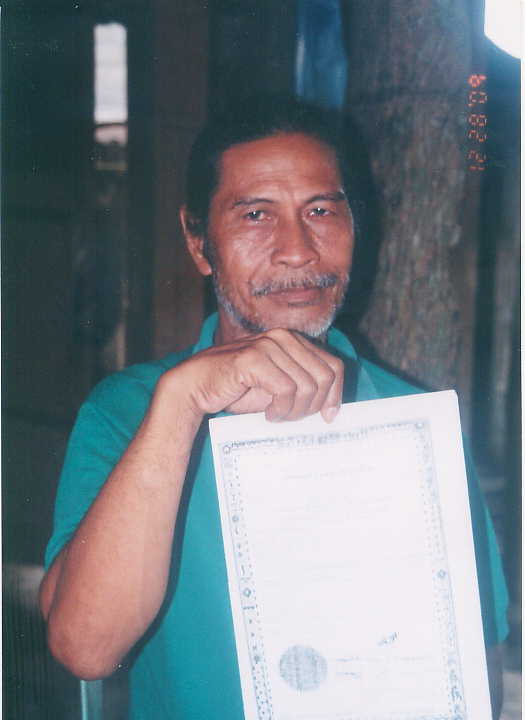 Timuay Jose Anoy is the tribal chieftain of the Subanens in
Siocon by succession. Elections of new leaders are foreign to
their culture. To Subanens, the bloodline determines
leadership. Social acceptability eluded TVI as long as Timuay
Anoy and other leaders of SSAI sustained their opposition.
According to TVI, however, it had already secured the support
of the Council of Elders, and that majority of Subanens are
actually now in favor of the company’s presence. Timuay Anoy
had earlier been replaced as SSAI head by Danilo Tumangkis in
an election peopled by newcomers to the area. But according to
Timuay Anoy, only 15% in the original list of SSAI members are
in the group now. The rest of the members are either employees
of TVI, or recipients of the company’s education and health
projects. This faction has been rejected by the Gokum (the
traditional court of Subanens), which said that “those in the
so-called Council of Elders are not of the clan and blood of
our ancestor Manglang, not even originating from Canatuan” and
therefore have “no claim to be from Siocon and therefore not
true representatives of the Canatuan people.” Timuay Jose Anoy is the tribal chieftain of the Subanens in
Siocon by succession. Elections of new leaders are foreign to
their culture. To Subanens, the bloodline determines
leadership. Social acceptability eluded TVI as long as Timuay
Anoy and other leaders of SSAI sustained their opposition.
According to TVI, however, it had already secured the support
of the Council of Elders, and that majority of Subanens are
actually now in favor of the company’s presence. Timuay Anoy
had earlier been replaced as SSAI head by Danilo Tumangkis in
an election peopled by newcomers to the area. But according to
Timuay Anoy, only 15% in the original list of SSAI members are
in the group now. The rest of the members are either employees
of TVI, or recipients of the company’s education and health
projects. This faction has been rejected by the Gokum (the
traditional court of Subanens), which said that “those in the
so-called Council of Elders are not of the clan and blood of
our ancestor Manglang, not even originating from Canatuan” and
therefore have “no claim to be from Siocon and therefore not
true representatives of the Canatuan people.”
The Gokum is composed of traditional leaders from the
peninsula who studied and testified to the genealogy of
personalities now fighting for recognition. It ruled that the
“Council of Elders of Canatuan was not a legitimate
traditional structure and that it was imposed from outside to
serve outside vested interests.” TVI disagrees. The Council of
Elders meeting was supervised by the National Commission on
Indigenous Peoples and is therefore legitimate, they say. It
must be noted, however, that prior to this Council of Elders
meeting, the Subanens were consistently opposed to TVI’s
mining activities. Clearly, the division among Subanens could
only benefit the Canadian company
Save Paradise
The Department of Environment and Natural Resources has
declared Siocon as an environmentally critical area. “Since
TVI started operating, we have experienced frequent floods at
the slightest rain,” Siocon Poblacion residents told the
Zamboanga Agenda. “This year alone (2004), we have had four
floods. Knee deep water entered our homes,” they complained.
Gody Galos also said that Siocon’s irrigation dams are now
heavily silted, with some areas drying up during the summer.
Anti-TVI people say this is because the mountain top had been
lopped off and trees cut down for TVI operations. But DENR
personnel in Siocon believe that it is the Lumads who are at
fault. “Many of them continue to cut trees up the mountains,”
says Perfecto Pantalita, DENR forrester assigned in Canatuan.
It is the small scale miners who are the culprit, says TVI.
“Canatuan was an ecological disaster with a degraded water
supply as a result of small-scale mining,” it said in a news
statement posted on their website November 2004. Siocon’s
“watershed was seriously polluted by the small scale mining
scourge that invaded the area prior to TVI’s arrival,”
continues the statement. “Small scale miners used mercury to
extract gold, then vaporized the mercury into the air. From
there, it fell into streams and gardens – into the watershed
and food supply. Crude, small-scale tailings ponds made of
sandbags leaked mercury and cyanide into the rivers to affect
the downstream. Small scale miners also constructed crude
cyanide plants without tailings containment areas. These
plants released cyanide-laced tailings directly into the
environment.” TVI says it has baseline data proving extensive
contamination to the environment before they moved in. TVI
also claims that the surrounding area’s water quality has
actually improved with their presence, after they undertook a
major clean-up of small scale miners’ remaining tails from rod
mills.
In Canada and Geneva
Because the government is unwilling to listen to their
protests, the Lumads have brought their case before the United
Nations in Geneva and right into TVI’s doorstep in Canada. In
July last year, Timuay Noval Lambo and Oncino Mato complained
to the UN Working Group on Indigenous Peoples in Geneva that
their sacred mountain and an important watershed was in danger
because of TVI’s mining. They also reported TVI’s divisive
tactics and left with the UN the Gokum’s findings. Four months
after, Timuay Lambo and Mr. Mato traveled to Canada with
representatives from the People’s Indigenous People Link (PIPLink)
and other groups where they met with Canadian lawyers
supportive of their campaign to regain their rights over their
ancestral lands. Lunie Lucas, municipal councilor and chair of
committee on environment and Municipal Secretary Concepcion
Capitania also went with them. The four met with international
organizations to discuss the effects of mining on the
environment.
Reversal of fortunes
 Timuay Anoy is pained by the recent Supreme Court decision
reversing its earlier stand that Financial Technical
Assistance Agreements were unconstitutional. “Sakit sa amoa
kay wala mi gipaminawa,” he mourns. (It was painful because
they did not listen to us.) Early last year, the Supreme Court
ruled that certain portions of the Mining Act were
unconstitutional, more specifically stating that FTAAs were
service contracts which in effect granted foreign corporations
“beneficial ownership over natural resources that properly
belong to the State, and are intended for the benefits of its
citizens.” Timuay Anoy is pained by the recent Supreme Court decision
reversing its earlier stand that Financial Technical
Assistance Agreements were unconstitutional. “Sakit sa amoa
kay wala mi gipaminawa,” he mourns. (It was painful because
they did not listen to us.) Early last year, the Supreme Court
ruled that certain portions of the Mining Act were
unconstitutional, more specifically stating that FTAAs were
service contracts which in effect granted foreign corporations
“beneficial ownership over natural resources that properly
belong to the State, and are intended for the benefits of its
citizens.”
The year ended with the Supreme Court doing a turn-around.
Voting 10-4, with 1 abstention, the Supreme Court this time
declared that FTAAs were legal, as the Constitution “expressly
provides that the State may undertake…exploration and
development by agreement with foreign-owned corporations
involving technical or financial assistance.” And as for
Timuay Anoy and the Subanens of Siocon and other communities
displaced from their ancestral lands, the Supreme Court
opined, “Mineral wealth and natural resources of this country
are meant to benefit merely not a select group living in areas
locally affected by mining activities but the entire Filipino
nation, present and future, to whom the mineral wealth really
belongs.” The Supreme Court said that it had carefully weighed
the issue of the indigenous people’s right to their lands as
against the interest of all Filipinos, and had decided for the
greater good of the greater number. “Justice for all, not just
for some; justice for the present and the future, not just for
the here and now,” said the Supreme Court. A decision to which
Timuay Anoy responds with “Murag gipatay ang community para
ipakaon sa tibuok Pilipinas.” (We were butchered to be fed to
the nation.) “Where is the respect and recognition now for
indigenous peoples?” Timuay Anoy cries. “Where is peace and
development?”
Economic decision
Just a few days after this Supreme Court decision, the
government awarded service contracts to Japan Petroleum Co.
Ltd. to conduct gas and oil explorations in Negros Occidental,
and to South Sea Petroleum Holding, Ltd. to do the same in
Agusan and Davao. Reports say that the country would have lost
USD10 billion in foreign mining investments had the Supreme
Court not reversed itself. The Philippines is poised to become
the world’s 5th mining power, said President Arroyo on
December 2, 2004 to local officials attending the general
assembly of the League of Municipalities of the Philippines.
“Our mining potential is ten times our annual gross product.
It can easily wipe out our foreign debts,” the President said.
The National Economic and Development Authority has estimated
this mineral deposits potential at P47 trillion, or 15 times
the nation’s foreign debt. NEDA Director Romulo Neri said
opening to foreign firms would keep the country on track to
meet its Medium Term Philippine Development Plan, which calls
for the mining sector to generate at least USD 4 billion in
investments, USD 5 billion in annual foreign exchange, and
240,000 jobs in the next six years.
True development?
 Amado Doronila, Philippine Daily Inquirer columnist, hails
the Supreme Court as an “economic catalyst” for its decision
to balance “parochial concerns” and economic development. But
will mining bring real development to the area? Lito Yap, a
retired lay worker of the Prelature of Ipil, does not believe
it to be so. “Can anyone point to a town where mining
companies operated developing into a first class city?” he
asks. “Usually, if there is any development, it is minimal and
only because it is directly related to the firm’s operations,”
he says. Yap points to the good road that once transversed
inland into Sibugay’s forests. A logging company constructed
it to facilitate hauling of logs to its wood processing plant.
“The Malubal road was once one of the best in this area, but
what happened when Zambowood left?” Yap also explains that the
Supreme Court ruling allows TVI to legally repatriate 100% of
its profits. “Before, foreign companies had to leave a portion
of their income to reinvest it in Philippine soil. Now they
can take everything.” Tano agrees. “This is not true
development because after a foreign company has mined the
area, there is nothing left for the local people.” Tano also
points out that there is little to gain from TVI’s operations.
“The government has given them 6 years of tax holidays, and
they pay an occupational fee of only P50.00 per hectare per
year,” he said. TVI has agreed to pay 1% in royalty taxes to
the lumads. But to whom do they pay? “Wa koy kalibutan ana,”
says Timuay Anoy. “Di pud ko modawat kay wa ko magtugot nga
mag mina sila diha.” I don’t know anything about that. And I
would not accept such a royalty because I have not consented
to the mining in the area.) Last year TVI has paid the local
government of Siocon P418,759.82 in real property taxes. Of
the amount, TVI paid P346,860 for the minerals mined in
Canatuan. Amado Doronila, Philippine Daily Inquirer columnist, hails
the Supreme Court as an “economic catalyst” for its decision
to balance “parochial concerns” and economic development. But
will mining bring real development to the area? Lito Yap, a
retired lay worker of the Prelature of Ipil, does not believe
it to be so. “Can anyone point to a town where mining
companies operated developing into a first class city?” he
asks. “Usually, if there is any development, it is minimal and
only because it is directly related to the firm’s operations,”
he says. Yap points to the good road that once transversed
inland into Sibugay’s forests. A logging company constructed
it to facilitate hauling of logs to its wood processing plant.
“The Malubal road was once one of the best in this area, but
what happened when Zambowood left?” Yap also explains that the
Supreme Court ruling allows TVI to legally repatriate 100% of
its profits. “Before, foreign companies had to leave a portion
of their income to reinvest it in Philippine soil. Now they
can take everything.” Tano agrees. “This is not true
development because after a foreign company has mined the
area, there is nothing left for the local people.” Tano also
points out that there is little to gain from TVI’s operations.
“The government has given them 6 years of tax holidays, and
they pay an occupational fee of only P50.00 per hectare per
year,” he said. TVI has agreed to pay 1% in royalty taxes to
the lumads. But to whom do they pay? “Wa koy kalibutan ana,”
says Timuay Anoy. “Di pud ko modawat kay wa ko magtugot nga
mag mina sila diha.” I don’t know anything about that. And I
would not accept such a royalty because I have not consented
to the mining in the area.) Last year TVI has paid the local
government of Siocon P418,759.82 in real property taxes. Of
the amount, TVI paid P346,860 for the minerals mined in
Canatuan.
 But Siocon has missed out on a greater opportunity to
improve its local commerce. TVI sources its weekly supplies of
food and production worth half a million not from within
Siocon, but from the far towns of RT Lim and Ipil. This means
that Siocon has lost business transactions for its local
market worth 2 million pesos monthly. “It is not safe to go to
Siocon,” says retired Col. Valentino Idang, TVI’s consultant
on security, referring to two occasions when both TVI
personnel and Subanens were killed and injured in an ambush. But Siocon has missed out on a greater opportunity to
improve its local commerce. TVI sources its weekly supplies of
food and production worth half a million not from within
Siocon, but from the far towns of RT Lim and Ipil. This means
that Siocon has lost business transactions for its local
market worth 2 million pesos monthly. “It is not safe to go to
Siocon,” says retired Col. Valentino Idang, TVI’s consultant
on security, referring to two occasions when both TVI
personnel and Subanens were killed and injured in an ambush.
Forging on
The anti-mining groups in Siocon now are demanding from the
government one thing: the immediate cancellation of the
Mineral Production Sharing Agreement granted to TVI. This
demand is non-negotiable, says Galos. As for Timuay Anoy and
his people, “We will continue this fight as long as it takes.
We will exhaust all legal procedures. We will not give up! We
are fighting for our land and our children.”
Home -->
|