
@ccessories & Equipment
Cage
Try
to buy a cage as big as you can afford as they need a lot of space to run
about. The minimum size for a cage should be at least 30cm long x 20cm wide x
20cm high.
NEVER buy a round cage as your
hamster might get CRAZY after running rounds and rounds in them.
There
are all sorts of cages available in the market ranging from the simple
competition tank to fanciful add-on cages. We will be evaluating each type one
by one. No matter what kind of cage you will be getting for your hamsters, be
sure that there is no overcrowding in the cage. It can be very stressful for
the hamsters and fights are very likely to break out.
The
cage should be located somewhere quiet, dimly lilted and with good ventilation.
Avoid putting the cages beside the window or where the sun will shine directly
on the cages as this will lead to greenhouse effect in any type of cage.
Wire Cages
The
most common and cheapest type of cage in the market, it has a plastic base
(some may be wired bottom with a removable tray at the bottom) with a wired
top. This type of cage will enable very good ventilation but there are many
disadvantages too. The bedding will be kicked out of the cage easily, the hatch
(door) for the cage can be opened very easily and the wire normally rust easily
once the hamster starts gnawing on it. Still I find this the best cage for
Syrian hamsters as they are natural climbers and the cage enables them to climb
all over. It is very spacious for the bigger size Syrian too.
I
rate this type of cage 
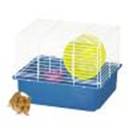
My 1st home 1 storey from Super Pets
Connectable Cages
These are the more fanciful cages which are sold
in the market. They are often very expensive (the price may range from $18 to
$60 over, depending on the brand and the design). And unless you are willing to
take the time and effort to slowly dismantle each connectors and parts; this is
never the cage you should consider.
And connectable cage is definitely a “NO!” for
pregnant or a Syrian hamster; they might just end up getting stuck inside the
tunnels and starve to death. The size of the tunnel seem to be more suitable
for the dwarf hamsters as they are smaller and can pass through the tunnels
with no sweat and you need not have to worry that they might get stuck in the
tunnels too (unless your dwarf is as big as your Syrian hamster).
The advantage of this type of cage is that more
compartments can be added when there is an increase in the population or when
you decide to give them more running space. There can be a lot of climbing fun
for the little furballs.
I rate this type of cage for
housing dwarf hamsters
but onlyfor
housing Syrian hamster.

Super Pet Critter One
Glass/Plastic Aquariums
Using
aquariums to house hamsters might sound foreign to most beginners mainly
because of the over excessive marketing of fanciful cages in the market. But do
not be surprise when you find most breeders using plastic aquariums (or what we
more call the competition size tank). It may be due to the number of hamsters
we keep therefore we go for such plastic tanks; being lighter, easier to clean
and also more affordable than the connectable cages and it also provide a clear
unobstructed view of the hamsters too.
Bedding
are not kicked out as easily too.
This
is the most ideal kind of cage for housing pregnant hamsters, Syrian hamsters
and baby hamsters.
The
disadvantage is when having to hang the accessories like the water bottle or
how to fix the wheel to the cage. Actually those are not much of a problem too
as you can buy adhesive Velcro pad to fix the water bottle to the side of the
cage and some water bottles can be hanged from the top of the cage. You can buy
wheels with stand instead too.
I
rate this type of cage .
(My kind of cage)
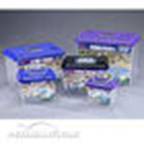
Rectangular Kritter Keepers by Lee’s
Bedding
A
covering for the floor of the cage is a MUST. It is needed to provide a
comfortable surface for the hamster as well as to soak up the urine. Some of
the beddings can even prevent the cage from smelling fast.
There
are also many different types of bedding available in the market, not all are
advisable though.
Cedar
wood shaving should never be use as they contain phenol which can be irritating
to hamsters. And the other type is pine wood shaving which is known to cause
liver problems.
In

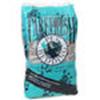
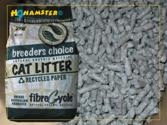
Kaytee
Bedding Carefresh
bedding BC Bedding (with
courtesy from H4 Hamster)
Water Bottle
Another
necessity for the hamsters, they must have access to water 24 hours round the
day. NEVER provide water to the hamsters in bowl, chances are that they will
kick the bedding into the bowl and dirty the water, or they may tip the bowl
and wet the cage.

Water bottle from All Living Things
Food Bowl
Food
bowl isn’t really a necessity and I feel that we should actually do without it.
Throwing the food on the ground will help make them feel more at home as they
pick up food on the floor when in the wild. Some prefer to provide food in a
bowl to gauge the amount of food the hamsters are eating and not to give
excessive food too.
Bathing Material
This
is a very sensitive topic to most hamsters’ owner. Whether to bathe the hamster
or not? Personally I take the stand of NOT. Hamsters are too small to be bath,
they might easily drown in the basin or they can get pneumonia.
Then
how to remove the dirt from their body? In fact, hamsters are very clean
animals; they spent almost as much time as cats in grooming themselves. But if
you still think it is a need to do so, another recommendation before you walk
to the sink with your hamster is BATHSAND. Provide a little bowl or buy those
specially made bath sand toilets for your hamster and pour the bath sand into
the bowl. You will enjoy seeing them roll about in the sand.
Wheel
The wheel is another necessity. They will travel over several
miles in the wild to look for food; therefore most hamsters need a wheel.
There are many types of wheels in the market too, metal, plastic
and such. But metal wheels are often very prone to squeaking; adding a little
vegetable oil or baby oil will fix the problem nicely. Since I am using
aquariums therefore I tend to buy exercise wheels with a base.
NEVER buy wheels with holes as the hamster might get its foot
stuck while running and end up breaking its leg. Always buy wheel with solid
surface for running.
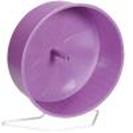
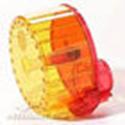
Comfort wheel from super pets S.A.M
Workout Wheel
Other toys
Other
accessories such as a wooden/plastic house, tubes, see saws can be added to the
cage for both decorative purpose and to add fun to your hamster’s life.
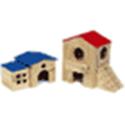
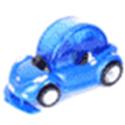
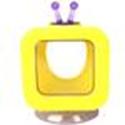
Wooden house Critter Cruiser from
super pets Hide N Seek TV from
Super Pets
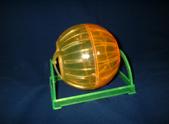
Hamster ball
Another
heated topic for most hamsters’ owner is the use of hamster ball. I admit that
I used to put my hamsters in the balls. But then I realized they aren’t too
keen in using it so I have stopped using it completely.

Most
pictures here are obtained from Petsmart.
(PETsMART.com™ & © 2003 PETsMART.com, Inc. All rights reserved. Terms of use.)
Back to
FurbiesLand Back to Cavy Page