| From the Artist |
 |
| Source: stock.xchng |
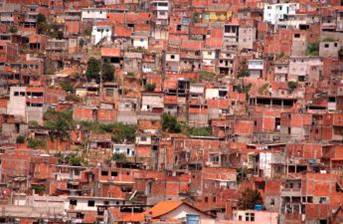
| Right: A favela in Sao Paulo, Brazil. Favelas are Brazilian slum areas, characterized by poorly-constructed housing with an almost total absence of sanitation networks, electricity, or plumbing. It is estimated that nearly 20 percent of Brazilians live in such conditions. |
| �Favelados say proudly, �I am root,� meaning, �I belong to my past.��
- Alma Guiermoprieto |
| The first favela was founded in the early twentieth century, when the Brazilian government decided to demolish a large tenement in the city of Rio de Janeiro. Displaced, without money and with nowhere else to go, the residents made their way to hills surrounding the city and built their homes from old rubble. These settlements, which now total 500 in Rio alone, have become a widely-recognized symbol of poor urban planning. Because of government neglect, most favelas have high rates of crime and lack even the most basic utilities�clean water, sewage disposal, and electricity, to name a few. In addition, annual mudslides have been known to wipe out entire favela communities, resulting in a continuing cycle of destruction, dislocation, and death for Brazil�s poorest residents, commonly known as favelados.
|
| Out of this constant cycle of disruption comes the favelados� obsession with root. In Samba, a book describing the exuberant song and dance culture of the favelas, author Alma Guillermoprieto gives some insight as to what the concept means. �The secret of [their] rootness,� she writes, �is that their ancestors travel with them and they can make them present at will.� Though favelados have no written record of their origins, root is ever-present in their culture, both in their stories and in the rhythms and tunes of samba�a musical form that is known for its driving, rapturous beat. Regardless of the visible squalor in which they live, it this constant connection with the past that gives them the strength to cope with the ever-changing world of the present. |
| This sense of root is what initially drew my attention to the plight of the favelados. As a research fellow for the Centers for Disease Control, I had many opportunities to come in contact with displaced populations. From Cambodian refugees to American Indians who had been forced off their lands many years ago, I was struck by how the very act of dislocation caused entire populations to think differently about their past. Few people, however, embark on this reflection with as much zeal and unabashed joy as the favelados. What is striking to me is how such people can find such an intense source of happiness amidst such poverty, and it is in hopes of observing the social, political, and environmental story behind this �rootness� that inspires my interest in studying in Brazil.
|
 |
| As preparation for this trip, I have chosen to set forth on a musical exploration of root. Drawing from my experiences as a music practitioner and as a research fellow, today�s concert will feature music and stories used by different cultures to maintain a link with their past in the face of difficultly and uncertainty. In doing so, I hope to reconnect with my own past and to say, as the favelados do, that �I am root.�
- Margret W. Chang |