The Torah (Law, Pentateuch, or Five Books of Moses)
Deuteronomy: Introductory Discourse
First Introductory discourse of Moses
The first introductory discourse , spoken by Moses, traces the journey of the Israelites from
Mt. Horeb to Moab, with some noticiable differences in detail from the account in Exodus and
Numbers and an emphasis on Moses being banned from entrance into the promised Land because
the Lord was angry at the Israelites. To this historical retrospect is appended an exhortation to the people to obey God's laws and norms, recalling the imageless God of the revalation and Covenant
at Horeb as a warning against making images and serving man-made gods.The uniqueness and
soleness of the God of Exodus and Covenant, his power and presence in his marvellous acts of redemption and revalation, and his gracious selection of Israel are proclaimed in rethorical questions
moreover, it is emphasized that the God of Israel ("YHWH your God") "is God in heaven above and on earth beneath; there is no other." The injunctions against idolatry appear to come from later experience and religious crisi in Canaan. The fact that other nations have their own gods and objects of worship is recognized elsewhere in Deuteronomy.
Second Introductory discourse
The second discourse, also ascribed to Moses, again refers to the Covenant at Horeb and sets forth the Ten Commendements, which the people are admonished to obey rigorously, emphasizing the mediating function of Moses at Horeb between the awesome divine prsence and the awestruck people. Israel is further admonished to obey the law through wholehearted love of God, expressed in
what became the central liturgical expression of Israel's faith, begining, "Hear, O I srael: The Lord is our God, the Lord alone. You must love the Lord your God with all your heart and with all your soul and with all your might." If they obey God's laws, avoid other gods, and do what is right and good,
they are to avoid marriage and all other intercourse with the peoples of the Land , ulterly destroying them and their idolatrous altars and cultic places, for they are a special, holy people chosen by God out of all the peoples because of his love, not because of their greatness or power. This marvellous love will continue to be exercised, and the peolple will be blessed with all good things - prosperity,
fertility, health , and success in battle- if they obey God's ordinances. They are urged to remember the 40 year period of wilderness wandering , in wich they were tested (disciplined) by God through hardship and hunger (to find out whether or not they would keep his commands) and saved by him:
man does not live by bread alone but, rather, by whatever God provides (e.g.,manna from heaven).
Another of testing will come when they live in the rich, fertile land of Canaan and eat their fill and perhaps forget the Lord and his Laws, ascribing their wealth to their own power and might and venturing into idolatrous worship of goods of the land. If they shall perish, just as the idolatrous nations of the land shall.
A long list of the apostasies of Israel is presented in chapter 9 to demonstrate the point that Israel is going in to possess the land of Canaan not through any virtue of their own but because of God's promise to the patriarchs.This is followed in chapter 10 by a moving declaration of what God requires of Israel _ fear (reverence), walking in his ways, love, wholehearted service, and keeping his commendements__ and an extolling of the wondrous , unique, powerful God who liberated them from Egypt. Chapter 11 extols the richeness of the land of Canaan and describes how it will bloom for they are observant of God's commandments and promises that they will hold the territory from the wilderness to Lebanon and from the Euphrates to the western sea (Mediterranean) . It closes with the choice set before them by Moses of "a blessing and a curse"_the former if they obey the commandments, the latter if they do not .This choice is posed to them immediately before the prsentation of the laws and norms beginning in chapter 12.
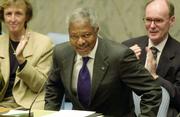
Annan Nobel Peace Price 2001
Blessed are the peace-
makers, for they will
be called sons of God.
-Matthew 5:9
================
Renewing Your Soul
Miracles of Faith
Invitation to the thirsty
Nobel Peace Price 2001
Photo Galleries
Baptism
Bible (NIV)
Bible Study
HealingII
Poetry
Jesus healing Power
===============
Free The Children
Footprints
Resources
Discipleship
Meditation
Prayer
The Lord's Prayer
Prayer Listings
Heavenly Prayer
Unconditional Love
Contact Us

Life's Adventure Prayer Prayer Lists Faith Healing Uncond Love Success