 The U.S. and Cuba:

The Cold War Continued?
 The U.S. and Cuba:
| Brief Political History of Cuba |
| Fidel Castro |
| The Cuban Missile Crisis |
| Differing Ideologies |
| The U.S. Position |
| Links |
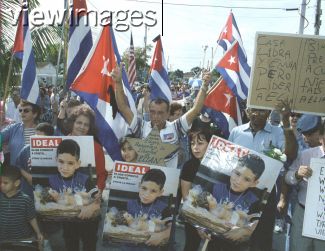
� � �Since the rise of Fidel Castro in 1959, all that has changed. He immediately took a firm stance against the strong American presence in Cuba. Now, the dynamic has completely changed. Instead of funneling money into Cuba, the U.S. has held an embargo against Castro�s Communist government. Now, the U.S. influence in Cuba has become more indirect. The government and the people of Cuba blame the embargo for their economic hardship in the post-Cold War era. The U.S. also strongly supports anti-Castro dissident groups throughout Cuba. Though the U.S. government maintains their hard line against Castro, there has been growing support recently for easing the sanctions against the Cuban people. This site aims to examine the dynamic between the U.S. and Cuba through an objective lens in order to fully understand the ideological conflicts that have frought the relationship between these two neighbors for the past forty years. ���
e-mail the creator

You are visiter number...
