| Contents |
History Of Flight |
The Jet Engine |
Control In The Air |
Light Aircraft |
Vertical Take-off | Helicopters |
|
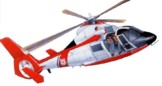
| The rotary wing: Aircraft have a "fixed-wing" design and only creates lift when the plane moves through the air. The rotor blades of the helicopter act as the helicopter wings. The blades rotate so it acts like the wings of a plane moving forward. The air is pushed downward by the blades therefore they pull the helicopter upward. With the use of the main rotors and tail rotors the helicopter can hover mid-air and manoeuvre. |
|
 |
|
| Rotor Design: |
|
| The rotors are made from "composite" materials, which are combinations of metals and carbon fibre, which allows it to be flexible yet strong and light. The rotor is designed by computers to create the "paddle" tip design so that the shape and flexibility varies along the blade allowing greater lift power. |
|
| The Tail Rotor: |
|
| The main rotors spin one way forcing the body to spin in the opposite direction so the tail blades push the body in the opposite direction holding the helicopter steady in the air. Speeding up or slowing down the tail rotors allows the helicopter to twist round while hovering. |
|
| The rotor head: |
|
| The turbine engines turn gears, which rotate the main drive shaft, which turns the rotor blades. The aerofoil shape creates lift as the rotor blades spin, to take off the rotor spins faster and the angle of pitch steepens creating more lift. The blades are tilted forwards slightly at the central disc so air is pushed backwards as well as forwards to create forward motion. |
|