 Stakeholder
Workshop on Darjeeling Himalayan Railway (DHR)
Stakeholder
Workshop on Darjeeling Himalayan Railway (DHR)


|
|
|
Background to
the stakeholders workshop A South Asia Seminar on heritage tourism and sustainable development was organized in Bhopal, India in January 2000. Dr Amareswar Galla, Chairperson Asia Pacific Organisation of the International Council of Museums (ASPAC-ICOM), and Principal Technical Adviser to the Ha Long Bay World Heritage Area Ecomuseum Project in Vietnam facilitated the proceedings. National Rail Museum had participated and made presentations. It was proposed to hold a training workshop at Darjeeling to consider its significance as a world heritage area and the possibilities for bringing the neighbouring communities together for the sustainable development of the area without compromising the conservation values. UNESCO office in India and Indian National Commission for Co-operation with UNESCO favoured the proposal and also, a follow-up was suggested to the UNESCO’s workshop Darjeeling – Past, Present & Future held during 17th to 19th December ‘1997. The bureau of the World Heritage Committee approved this at its 24th session in June 2001.
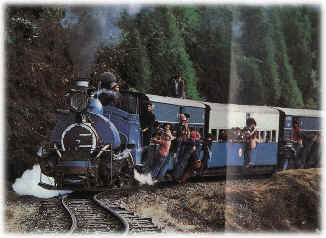
This Railway needs to be operated as a preserved heritage tourist Railway and get necessary community support as is done in similar such systems in other parts of the world. The following problems that are severely affecting the Railway: - 1.
Suitable Tourist Circuit: During Darjeeling’s Workshop on Past, Present
& Future, a resolution was as follows(item 4.5):- “The Railway and its route to be made into a dynamic tourist circuit
with cultural notices along the route with local cuisine, music, performances,
guide services within the car, supported by a Museum, which ties the history of
the Railway with the history of the events of different towns, pioneers and
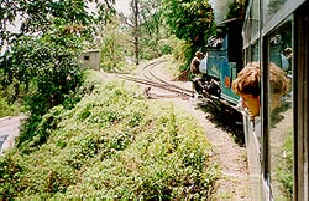
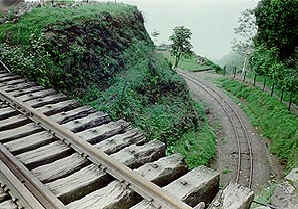
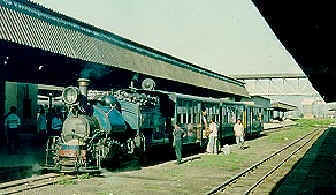
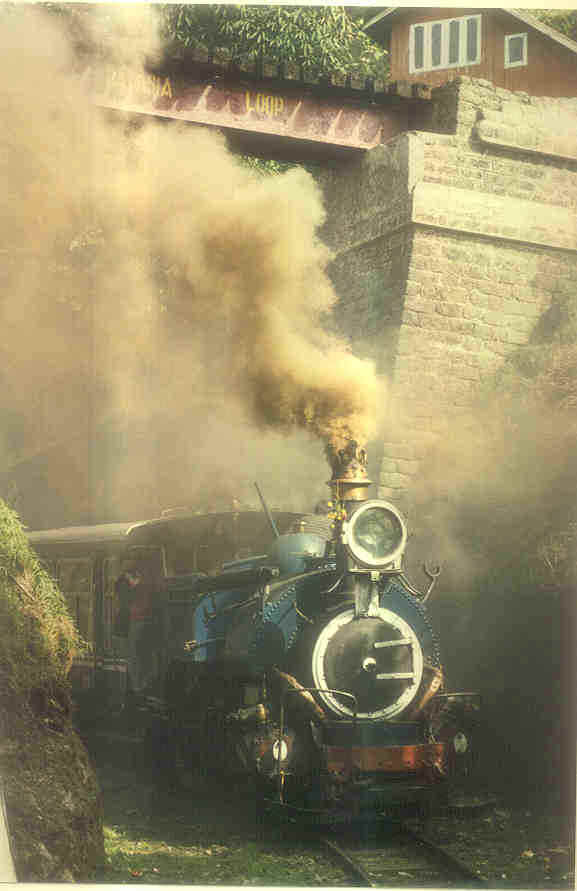
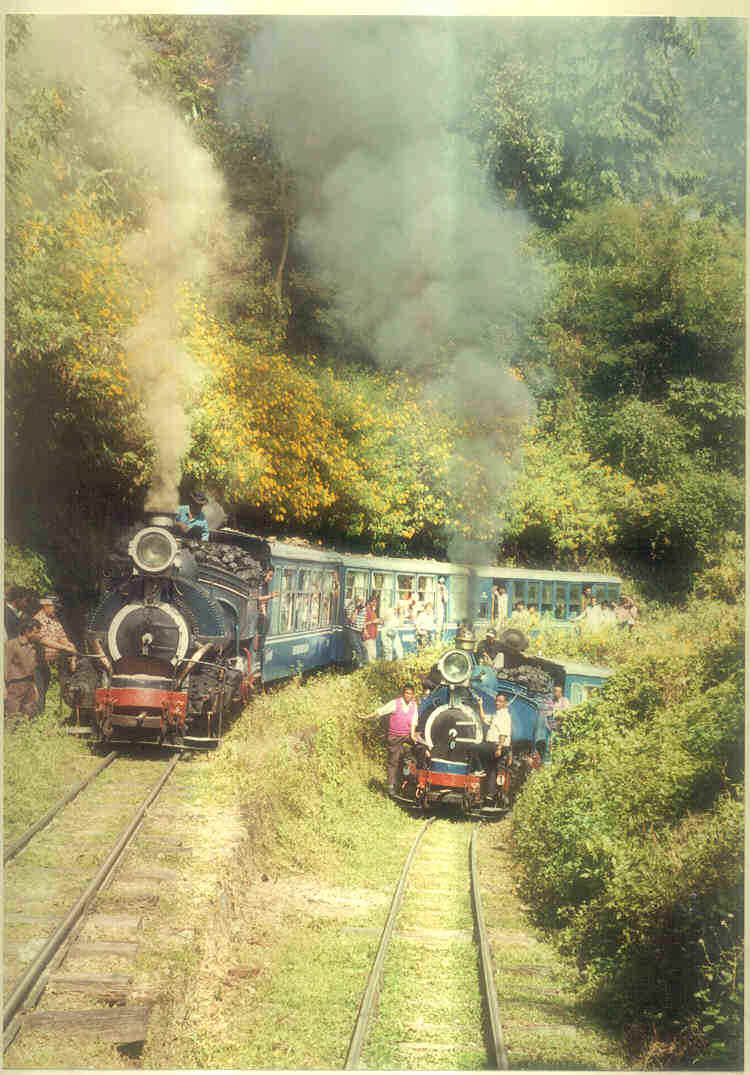
prospectors along the route.” 2. Original Rolling Stock: The Darjeeling Steam Locomotives, icons of this Railway, are between 70 years and 110 years old. There are problems in maintenance but the lovers of this mountain Railway in India & abroad are receiving news of the introduction of diesel locomotives with hesitation and regret. Similarly, the coaches also are working without technological inputs such as vacuum/air brakes, roller bearings, lights, toilets, suitable riding qualities etc. Old skills will have to be passed on and volunteer support built up. 3. Urban degradation: Encroachments, infringements of buffer zones, unauthorised constructions and deforestation are adversely affecting this world heritage site. The Railway’s own station buildings and architecture need urgent attention all along the line. Also, an action plan is required for preventing landslides. 4.
Viability: Economic viability, staff rightsizing, support, Tourism potential
aspects need to be considered in the perspective of world heritage, heritage
tourism and sustainable tourist activity. Additional sources of income for the
Railway through commercial utilization of land, workshop, building, hospital and
other resources, revenue through sale of souvenirs, contracts for stalls, food,
beverages and advertising and event management can be planned.
There
are over 100 heritage steam Railways operating successfully. The Ffestiniog
Railway in Wales, UK has historical links and is similar to the Darjeeling
Himalayan Railway. The Steam Railway in Victoria, Australia with the formation
of the “Puffing Billy Preservation Society” is operating successfully and
can serve as a model. “Semmering Railway” in Austria, world’s first and
only other Railway World heritage site could also be studied in relation with
the Darjeeling Himalayan Railway. These particular Railway models together with
other relevant perspectives can serve as inputs to the Darjeeling Himalayan
Railway to help in revitalizing this Railway for better operation, better
attraction and a better World Heritage site. Back to Top
|
|
Convenor Rajesh Agrawal Director, National Rail Museum Chanakyapuri, New Delhi 110021 India. Tel: 91-11-6880804, 3304137 Fax: 91-11-6880804 Web: http://www.railmuseum.org Email: [email protected] Last Updated: Sunday, October 07, 2001 01:39 PM |
