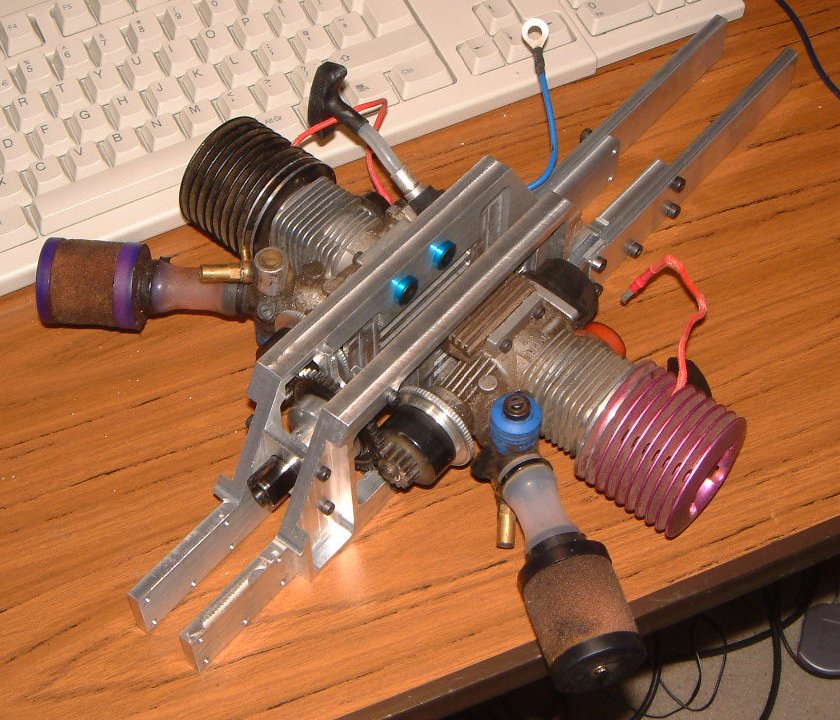
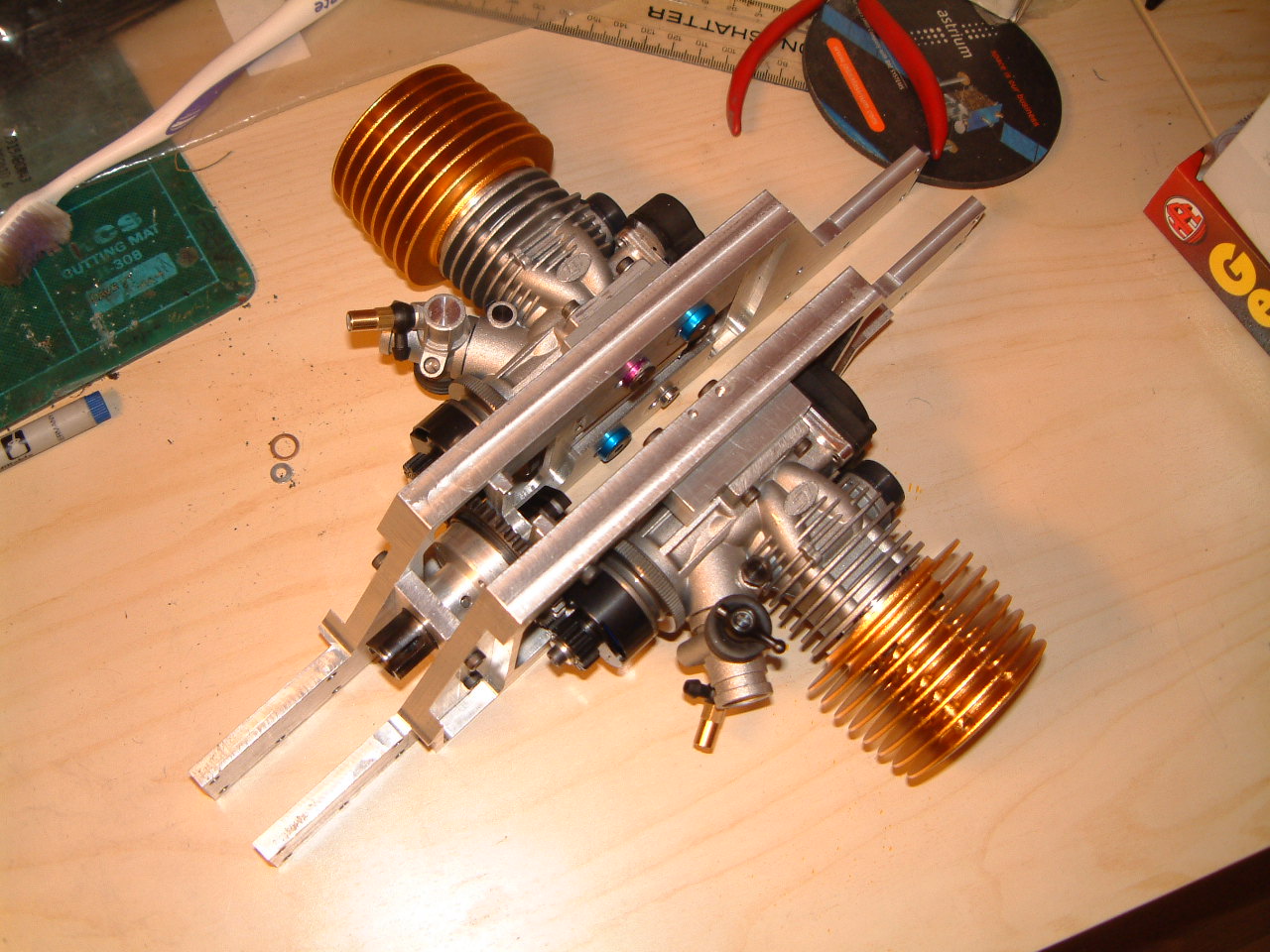
For power I originally kept the set up that I had refined in the original Twin21 truck. The legendary 2 Hyper-21 engines have enough low down torque to rip out the hub of a T-Maxx wheel and enough RPM to bring tyres up to twice their normal diameter! Needless to say grunt is not lacking. 175cc of fuel disappears in about 5 minutes.
The major difference this time is the mounting of the engines. They will be horizontally mounted and opposing each other. Apart from CoG lowering, the other advantage is that all carb adjustments can be made on either engine without needing to remove them! So, much better than before. The CNC machined, deep-finned mount plates form the chassis centre section and will carry a lot of heat away. Gear mesh is adjusted by shimming the engines out on their mounts, so it will be quite important to get the mesh close first time. The CAD has helped quite a bit here.
Each engine is protected by the chassis under plate so they don't get bashed to pieces on heavy landings. The throttles will be controlled by a rocker mechanism attached to a standard servo, simultaneously opening both throttles. I really liked the still air box I used on the first truck, until it got smashed in a fight with a manhole cover. I might try the same idea again, but this time mount the box securely and out of the way of anything heavy and moveable!
I decided against a single fuel tank in the end, opting for 2 isolated systems. The main problem with 1 tank is that if one engine stops, the tank pressure continues pumping fuel into it and floods the engine. Plus, with thirsty engines, you can't run for long either.
After the first off-road run it became clear that the Hypers were overgeared and not moving the truck out with enough authority, although top speed was very good. A drop to 13T clutch bells would probably have done it, but I got a nice deal on a couple of the brand new .32 engines from Collari. This machine has to stay extreme, so the current largest big-block nitro engines were duly installed.
|