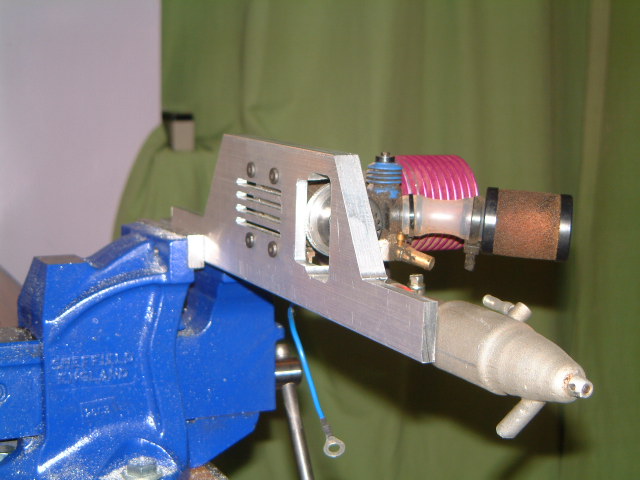
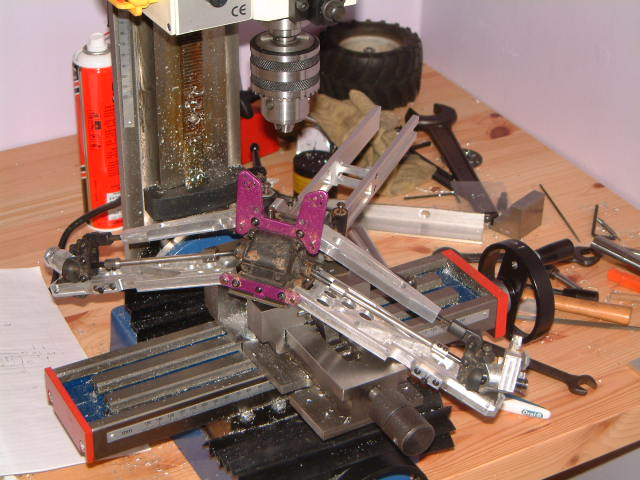
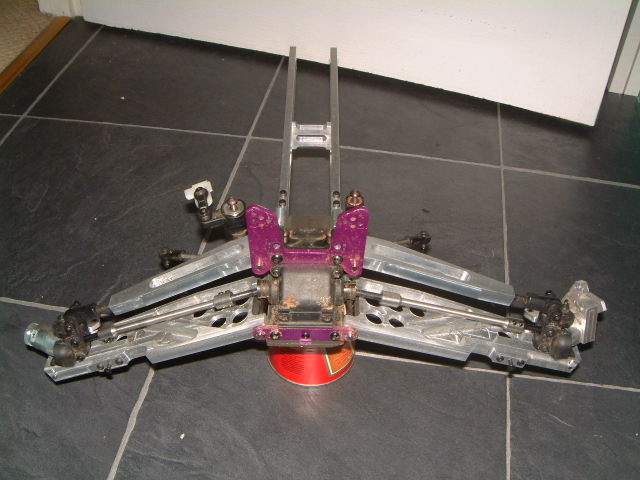
The chassis is based around two vertical plates. This is similar to the set up used on the Tamiya TXT-1 and HPI Savage, apart from the fact that my plates are half an inch thick. This is overkill of course, and weight will be reduced by milling most of the material away to leave an I-beam section, with holes drilled in to further lighten it. The engines are mounted in their pockets which have already been made, CNC-cut using my first ever bit of CNC code! Unfortunately I do not have any more access to these machines so most of the rest of the work will be done on my own manual gear.
The two chassis plates will support everthing to run the vehicle between them, keeping the CoG very low and the structure super strong and stiff. To protect the engines and carbs, there will be a plate beneath them attached to the chassis. I would like to think this will limit the amount of muck that gets thrown onto the engines, but from previous experience I imagine this is wishful thinking. If its not air-tight, it may as well be completely open. The plate will also add to the torsional rigidity of the chassis.
|