| Wild Edible Plants |
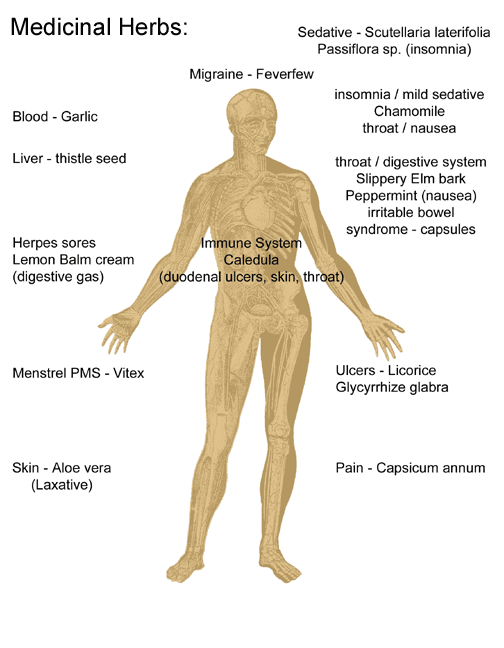
| I Home I Artwork I Current Projects I Blog I Email I Diet and Medicines Human health and well being reflect what people absorb from their environment. When one thinks of environmental assimilation, one first thinks of diet. What we eat surely affects one�s health. It seems that the best sources of food are those that achieve the closest measure to natural consonance. Farm fresh produce is said to be better than processed foods. Better yet, let the food be organic, free of pesticides and non-natural fertilizer sources. Even better is food that is wild-caught. When working as a trail guide on the Oregon coast, I used to tell the tourist that it was impossible to starve in this place because there was so much food found in the ocean and forests. For those suffering from long term illnesses, I suggested extended stays while training them how to find and catch food in the wild. I told them of how I myself, was cured of an unidentifiable illness that plagued me for years. While living in Seattle, I had seen a menagerie of doctors and specialists about an assortment of painful symptoms that seemed to be worsening through the course of years. Their diagnosis included everything from depression to exotic forms of athlete�s foot. In the end, there was no relief and my symptoms became painfully unbearable. Eventually, I moved to Rockaway Beach, Oregon because I decided I was about to die. I figured if I�m going to go, I might as well do it in the most beautiful place I can find. Upon arriving in Rockaway, I began a diet composed of 90% wild-caught food. Within a month, instead of dying, I became cured of an illness no doctor on earth could relieve me of. The relevance of diet�s source became uncontestable. The Case for Medicinal Herbs The healthful benefits of wild plants may be suggested in the preoccupation some have with medicinal herbs. As a horticultural biologist, I understand these plants to be wilder sources of nourishment than most. Most vegetable sources are products of hybridization and hormonal modification. Herbs, on the other hand, when grown as nature intended, rarely require insecticide sprays. They are, in fact, no more than weeds on the verge of domestication. Would it seem so curious that this is an essential requisite of the plant�s medicinal attributes? There is concern that through breeding, genetic and artificial manipulation, they could inadvertently loose their beneficial properties. |
 |
| Favorite Links: |
| The Birth of a New Agriculture
My experience at Rockaway suggested that something was wrong with the food supply in the United States. I don�t know if it�s the pesticides, processing techniques, or just plain old bad karma. It seems important to gain mastership over the production of one�s own food. This insures that nothing contaminates it from garden to mouth. With this in mind, I decided upon a new type of farming. I grow an organic vegetable garden. Being fortunate enough to have the space, I�ve built a greenhouse to insure a continuous supply of fresh herbs and produce all year round. In Oregon, what I couldn�t grow myself, I would catch, from the lakes, rivers, and ocean, shellfish, crab, and fish. Berries were harvested from the woods and canned into jams and sauces. Now that I live on the California coast, I hesitate to go after wild-caught food. There are so many people in this state that, if everyone in California harvested from the wild, the forests would be destroyed in a matter of months. With this deficit, I soldier on by supplementing my diet with organically grown food from the garden and local farmer�s markets. This seems an adequate compromise. In making a break from mainstream agriculture, a new form of food production seems apparent. This new agriculture has two approaches. The first, works by separating the process from the natural habitat. Urban agriculture, like our greenhouses and organic gardens, use the geographic isolation generated by the urban infrastructure to separate the growing process from the field. By locating itself within the city, it makes readily available the products and benefits of plants, vegetables and flowers without the use of resources to transport them from countryside to town. Urban agriculture makes use of hydroponics and automation to achieve its objectives. Isolating it in greenhouses, patio planter boxes, and dwelling spaces, it becomes insulated from potential pests and weather related adversity. This assures a very high degree of success. Should it achieve ideal effect, it could supply all a populated city�s needs freeing the countryside of its agricultural mandate and returning vast quantities of farmland to nature. The second aspect of the alternative agriculture model is called �paleoculture.� This involves the initialization of natural ecosystems. It is an attempt to bring the system as close to natural consonance as is possible. The territory around a city is allowed to return to its natural state of stability. Through careful management this space provides recreation and even food for the local urban population. The food is provided by wild plant and animal species that thrive in the area. Harvesting is done perhaps through hunting but more likely by non-traditional automated systems which make use of natural processes. Harvests are balanced with waste manufactured from urban areas. This extreme form of permaculture manages the buffer zones between city and nature assuring stability and harmony. These two approaches, working together, provide a clean democratized source of food that in ecologically sustainable. Urban agriculture serves as the primary and immediate landscape and food supply, while paleoculture serves as a secondary. The natural zone between cities also serves as a buffer where mono-cultured landscapes would not. If the gardens in one urban system become sick, say an infestation of plant virus, it is less likely to move to other cities when the wilderness checks and blocks its spread. The Domestication of New Vegetables When I moved to the Central California coast, it didn�t take too long for me to miss the wild jams and robust salad greens of the north. As a result, I began to experiment with the domestication of wild edible plants. This has led to a progressive marginalization in my garden of traditional vegetables like tomatoes, corn, lettuce, cucumbers, and carrots for gooseberries, currants, coffee, salal, miner�s lettuce, yerba buena, and violas. The best reason for growing these wilder species is in that they taste good, yet, in California, can�t be ethically obtained. Conventional vegetables can readily be found at the farmer�s market, but not these wilder vegetables. It makes perfect sense to grow these and buy the others. In addition, they also have natural resistance to all local diseases and pests. This means they require no pesticides and they are more than an effective at competing against weeds in growth. Their lack of fertilizer addiction (unlike most of today�s vegetables), insists lower fertilizer application rates, reducing contamination of ground water and streams. Other than very little water and the initial propagation and planting, they don�t require much of anything except sunshine. Below is a list of plants I am currently studying and growing or attempting to propagate in my garden for their nutritional and medicinal value. The natural habitats of these species range from our southern outposts of Santa Cruz and Monterey and go all the way up the coast to the Alaskan frontier. |
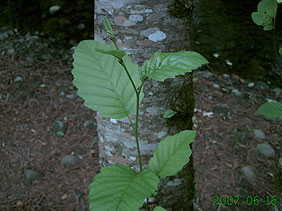 |
| Alnus rubra � Red Alder
Growth habit: tree Exposure: sun to shade Height: 25 m A solution of the bark was used against tuberculosis and other respiratory ailments. The bark solution was also used as a tonic. It was also used as a wash for skin infections and wounds, being understood to have strong antibiotic properties. |
 |
 |
 |
 |
 |
 |
 |
 |
 |
 |
 |
 |
 |
 |
 |
 |
 |
 |
 |
 |
 |
 |
 |
 |
 |
 |
 |
 |
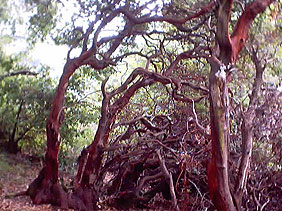
| Arbutus menziesii � Madrone
Growth habit: tree Exposure: sun Height: 7 � 30 m Roots and leaves were brewed into a tea to treat stomachaches |
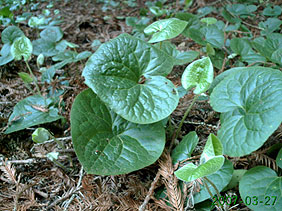
| Asarum caudatum � Wild Ginger
Growth habit: perennial herb Exposure: part shade to shade Height: 10 � 30 cm Dried and grated roots are used as a spice. Candy is made by boiling the roots in sugar. It was considered a remedy for flatulence and whooping cough. (How it was prepared for this, is unknown.) |
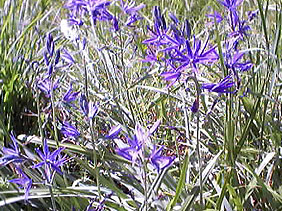
| Camassia quamash � Western Camass
Harvest time: summer, autumn, winter Growth habit: perennial herb Exposure: sun to part sun Height: 80 cm Bulbs are edible |
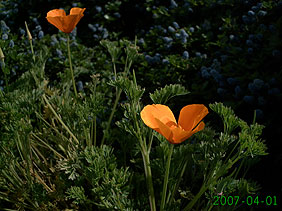
| Eschscholzia californica � California Poppy
Growth habit: perennial Exposure: sun Height: 5 � 60 cm This species and its relatives are known for their narcotic properties. The leaves are crushed and packed around aching teeth to kill pain. Today, this drug is still used in some places as a headache cure. |
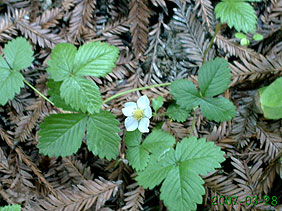
| Fragaria californica � Wood Strawberry
Harvest time: summer Growth habit: perennial Exposure: sun to part sun Height: 25 cm Berries are edible |
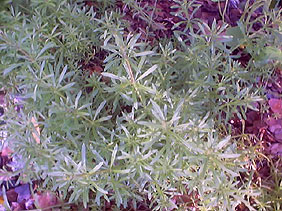
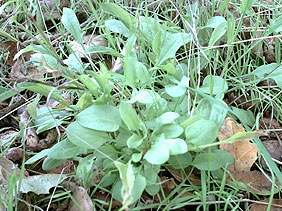
| Galium sp. � Bedstraw
Growth Habit: Tap rooted annual Height: 20 � 100 cm The seeds of some species are used as a coffee substitute. The roots can be used to make a purple dye. Young greens are eaten as a potherb. |
| Gaultheria shallon � Salal
Harvest time: summer - autumn Growth habit: shrub Exposure: sun to part sun Height: 0.3 � 2.5 m Berries are edible |
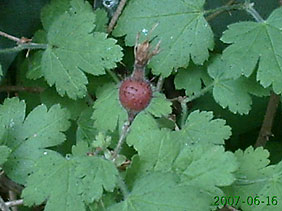
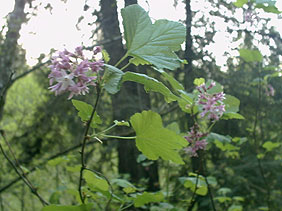
| Grossularia sanquineum � Canyon Gooseberry
Growth habit: shrub Exposure: sun to part sun Edible berries |
|
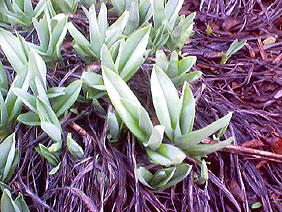
Hemerocallis sp. � Daylily
Harvest time: spring, summer, autumn Growth habit: perennial herb Exposure: sun to part sun Height: 0.5 � 1.7 m Young shoots, flowers, and tubers are edible |
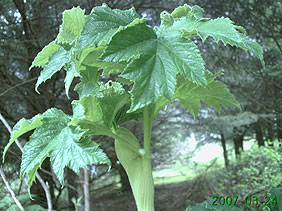
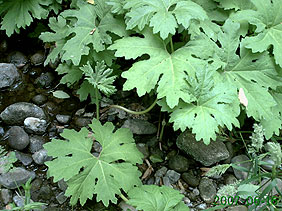
| Heracleum lanatum � Cow Parsnip
Growth habit: perennial Height: 1 � 3 m Used as a green vegetable by most Pacific Northwestern tribes. Young stalks and leaf stems were collected before flowers matured and were peeled and eaten raw or sometimes boiled. |
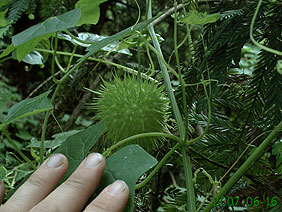
| Marah fabaceus � Wild Cucumber
Growth habit: climbing perennial The Squaxin mashed the upper stalk in water and bathed sore hands in the mixture. Large brown seeds, extracted from pod and covered with soapy pulp, can be roasted and eaten for kidney related ailments. The seeds may also used as marbles in children�s play. |
|
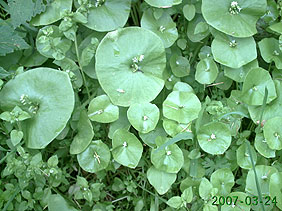
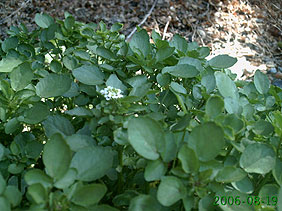
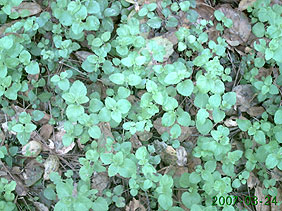
Montia perfoliata � Miner�s Lettuce
Growth habit: annual Exposure: part sun Height: 5 � 30 cm Can be eaten raw in salads or boiled like spinach. The Indians made a tea from the leaves, which were used as a laxative. |
| Nasturtium officinale � Water Cress
Growth habit: perennial herb Height: 15 � 30 cm Leaves are eaten raw as a salad green. |
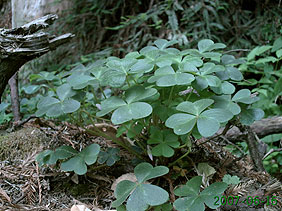
| Oxalis oregana � Redwood sorrel
Growth habit: perennial herb Exposure: part shade Height: 5 � 15 cm Stems and leaves can be eaten in salads. Stems are used to make �rhubarb like� pie. |
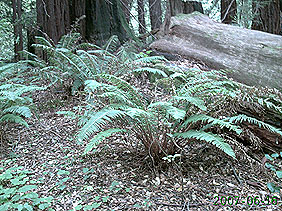
| Polystichum munitum � Western Sword fern
Harvest time: spring Growth habit: hardy fern Exposure: part shade to shade Height: 1.5 m Large rhizomes were dug and eaten as starvation food in the spring. Rhizomes were roasted over fire or steamed, peeled, and then eaten. Cooked rhizome was known to cure diarrhea by the Nure-chah-nulth. |
| Petasites palmatus � Western Coltsfoot
Growth habit: perennial Exposure: part sun Height: 10 � 50 cm Early spring vegetable, ash of leaves is used as a salt substitute |
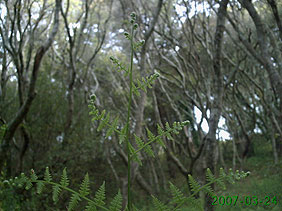
| Pteridium aquilinum � Bracken fern
Harvest time: spring, summer, autumn Growth habit: hardy fern Exposure: sun to part shade Height: 3 � 5 m Young fronds, less than a foot high, are edible and can be eaten raw or steamed. They have a mucilaginous quality, making them ideal for thickening soups. |
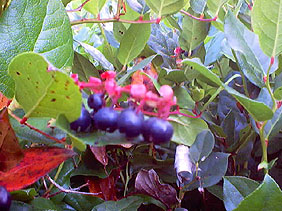
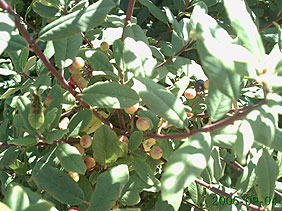
| Rhamnus californica � Coffee Berry
Growth habit: shrub Exposure: sun to part shade Height: 1 � 5 m The berries are edible. |
| Rubus parviflorus var velutinus � Thimbleberry
Growth habit: shrub Exposure: sun to part sun Height: 0.5 � 3 m Fruits are edible both raw and cooked. |
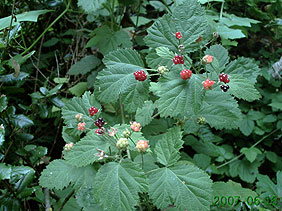
| Rubus ursinus � California Blackberry
Growth habit: shrub Exposure: sun to light shade Height: 50 cm Blackberries are edible. Young shoots can be sliced and eaten in salads. Blackberry brandy was used as an efficient cure for diarrhea. Berries were also used to make a black dye for basketry by the Luiseno Indians. |
| Rumex acetosella � Sheep Sorrel
Growth habit: perennial Exposure: sun Height: 15 � 30 cm Sheep Sorrel is native to Europe but has naturalized to the point that it grows wild in open areas along the coast. Its leaves are edible. |
| Satureja douglasii � Yerba Buena
Growth habit: perennial Exposure: sun to part sun Height: 10 � 20 cm Dried leaves can be steeped 15 to 25 minutes to make a tea. |
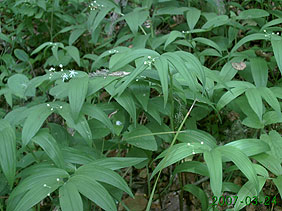
| Smilacina stellata � Star-flowered False Solomon�s-seal
Harvest time: spring, summer, autumn Growth habit: perennial herb Exposure: part sun Height: 20 � 60 cm Berries are edible but bitter. |
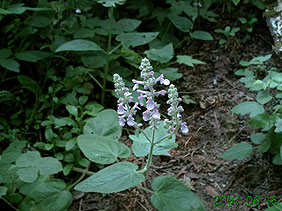
| Stachys bullata � California Hedge Nettle
Growth habit: perennial Exposure: part shade to shade Height: 50 � 100 cm The leaves either soaked or steeped in water, can be used to treat wounds and sores. |
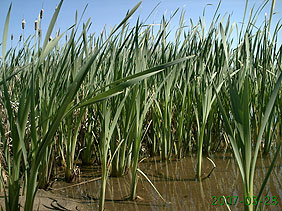
| Typha sp. � Cattail
Harvest time: all Growth habit: perennial herb Exposure: sun Height: 3.0 m Tubers, shoots, bloom spikes, pollen are edible. |
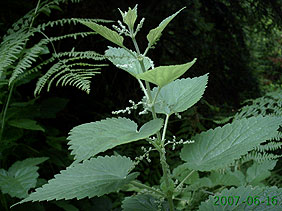
| Urtica holsericea � Stinging Nettle
Growth habit: perennial Height: 1 � 3 m Nettle leaves and stems are edible when steamed or boiled and make a good spinach substitute. |
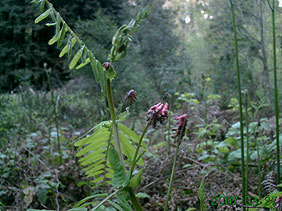
| Vicia sp. � Vetch
Growth habit: perennial herb Height: 1.0 m Young seeds and shoots can be cooked and eaten like domestic peas. |
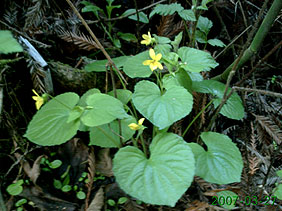
| Viola semperverens � Redwood Violet
Harvest time: spring � summer Growth habit: perennial herb Exposure: winter sun, summer shade Height: 3 � 8 cm Leaves are high in vitamins A and C. |
 |
 |
 |
 |
 |
 |
 |
 |
 |
 |
 |
 |
 |
 |
 |
 |
 |
 |
 |
 |
 |
 |
 |
 |