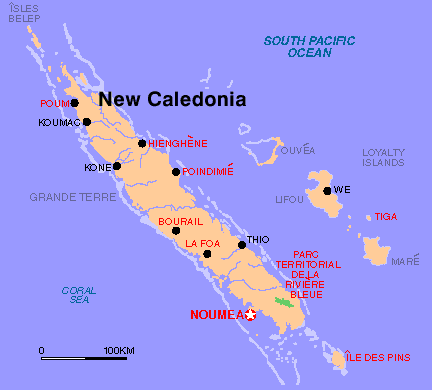
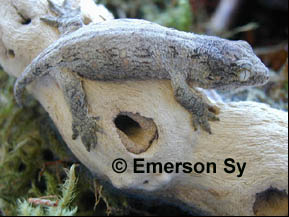
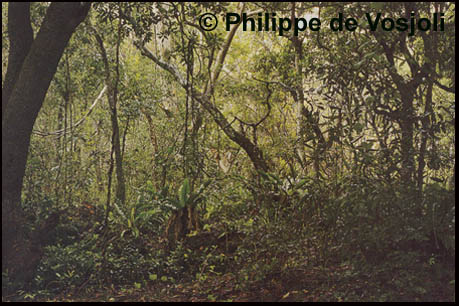
| NEW CALEDONIA HISTORY The Oceanians from South-East Asia were the first settlers in the western Pacific 50,000 years ago. Between 7000 to 5000 BCE, waves of immigrants from South-East Asia brought agriculture, canoe- building and pottery to the islands. From the 1000's to 1700's, further immigrants from present-day Samoa and Polynesia settled in the islands. In late 1500's, Spaniards began exploring the Pacific regions in search of spices and the msytical Terra Australis. In 1774, the English explorer Captain James Cook sighted Grande Terre and named it New Caledonia. In 1788, Louis XVI sent an expedition, which was lost in a cyclone in the Solomons. Three years later, Admiral Bruny D'Entrecasteaux was sent in a search expedition. Napoleon III was looking for a strategic military location and annexed Grande Terre in 1853 under the pretext of protecting France's missions. New Caledonia was under French military rule for the rest of 1800's. Slavery was practiced in New Caledonia up until the 1900�s. The Kanaks (Native New Caledonians) viewed the ever increasing power of French Missions with resentment. The French figured the Pacific was a good place to dump their social misfits. Between 1864 to 1897, Map Source: Lonely Planet Publications a total of 21,000 French convicts were deported to New Caledonia. Waves of French settlers after the discovery of nickel worsen the race tensions. The problem was epithomized in 1878 when a seven-month revolt against French broke out. After World War II, New Caledonia�s status was changed to French Overseas Territory. The Kanaks began demanding much needed political and social changes. The Kanaks were granted citizenship in 1946 and the right to vote in 1957. Pro-independence movements increased in the late 1960�s to 1980�s. This period was also marred by rounds of violence. The Noumea Accord of 1998 put off indenpence referendum for the territory unitl 2013 at the earliest. The population of New Caledonia is approximately 200,000 and composed of Melanesian (44.1%), European (31.4%), Pacific Islanders and Indonesians. The official language is French but Melanesian-Polynesian dialects are also spoken. 70% of New Caledonian people (the Caldoches, M�tros and Kanaks) are Roman Catholic and the rest are Protestant (16%), Muslim or Indigenous beliefs. ENVIRONMENT New Caledonia and Dependencies (Nouvelle Cal�donie et D�pendances) have a land area of 19,000 square kilometers (7,410 square miles). The moderate temperature varies very little throughout the year. The average maximum temperatures vary from 21.7�C to 27.8�C (71�F to 82�F) and the average minimum temperatures vary from 17.8�C to 23.3�C (64�F to 74�F). Generally, daylight hours alter very little, which is twelve hours throughout the year. Average yearly precipitation is 1,115 mm (43.9 inches) and the average relative humidities range from 73% to 83%. About 80% of New Caledonia�s original forest cover have been cleared to make way to mining and agriculture, its two major industries. Similar to other islands, New Caledonia has a high rate of endemism. The genus Rhacodactylus is an example of endemic fauna of New Caledonia. RHACODACTYLUS The word Rhacodactylus is Greek in origin and may be translated as �lobe-finger.� There are currently six (6) recognized species and two (2) subspecies in the genus: R. auriculatus (Gargoyle gecko) Bavay, 1869 R. chahoua (Bavay�s giant gecko) Bavay, 1869 R. ciliatus (Crested gecko) Guichenot, 1866 R. leachianus - leachianus (New Caledonian giant gecko) Cuvier, 1829 - henkeli (Henkel�s giant gecko) Seipp & Obst, 1994 R. sarasinorum (Roux�s giant gecko) Roux, 1913 R. trachyrhynchus - trachyrhynchus (Tough-snouted giant gecko) Bocage, 1873 R. leachianus hatchling, Isle of Pines - trachychycephalus (Less tough-snouted giant gecko) Boulenger, 1878 Further studies of the genus Rhacodactylus will most likely reveal cryptic species and subspecies within the current recognized species. RHACODACTYLUS CILIATUS Rhcodactylus ciliatus was first described by Guichenot as Correlophus ciliatus in 1866. In 1883, Boulenger placed it in the genus Rhacodactylus where it practically remain unchanged except in 1934 when it was again placed in the genus Correlophus by Brongersma. Guib� reverted the species to Rhacodactylus in 1954 where it remains since. R. ciliatus is found in several southern Grande Terre locations, Isle of Pines (�le des Pins) and Koutomo. A crested gecko is found in primary forest where undergrowth or leaf litters are abundant. In the wild, R. ciliatus can be found in tree canopy about 3.3 meters (10 feet) and 10 to 15 meters (30 to 45 feet) above the forest floor and as well as near the forest floor. R. ciliatus is nocturnal and forage throughout the night. Almost all adult crested geckos observed in the wild have lost their tails. This may be due to intraspecies aggressions especially among males and/or high pressure from predators. Once the tail is lost, it will not regenerate. Tail-less specimens will have a small tail nub. A crested gecko can also be found sleeping on twigs on the canopy. This behavior is also observed in captive environment, but most specimens prefer to sleep underneath a large cork bark or moss. A habitat where R. ciliatus might be found Photo: Philippe de Vosjoli |
 |
| INTRODUCTION |
 |
 |
 |
 |
 |
 |
 |
 |
 |
 |
 |
 |
| The CGI website is designed and maintained by: |
| All Rights Reserved. Copyrighted � 2001 by Emerson Sy. |
 |
 |
 |
| PHYSICAL CHARACTERISTICS |
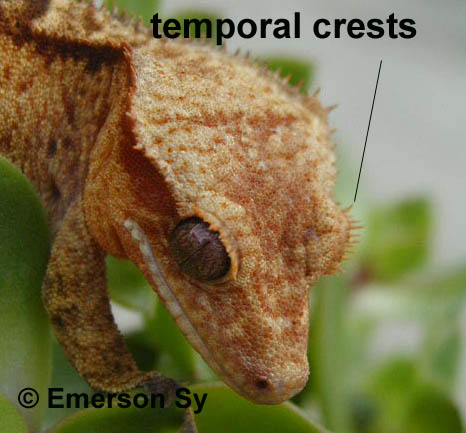 |
| The most distinguishable physical characteristic of crested gecko is the large temporal crests extending dorsalaterally onto the shoulder blade area. Some specimens have crests that extend all the way down to anterior of hind legs. The superciliary scales, temporal and dorsalateral crests might serve as sensory structures. Crested gecko has a broad triangular shaped head and the limbs are compact. The body is stocky and massive. Typical snout to vent lengths (SVL) of adult specimens range from 9.0 to 10.5 cm (3.5 to 4.5 inches). The tail is almost as long as the SVL. Weights of specimens with tails range from 35 to 45 grams. Normally, females are stockier compared to males and might weight 2 to 5 grams heavier. The tail of crested gecko is semi-prehensile and has a rounded flat tip. R. ciliatus do not have the ability to regenerate its tail, but tail-less specimens do not show any major disadvantage to their tailed counterparts. R. ciliatus are polymorphic by nature. This means that various colors and patterns occur naturally in the wild. The variations do not represent localities since very different looking individuals are observed within the same general area. The polymorphism of R. ciliatus might be an evolutionary response to high pressure of predators. Studies in other animals have shown that it is much more difficult to find different colored and patterned specimens than similar looking specimens. |
| The colors range from different shades of yellow, green, reddish brown, brown, cream and gray. Patterns range from black spots, strippings and blottings. Various names or morphs such as Tiger, Bicolor, Dalmatian, Fire and Harlequin are used to describe the combination of colors and patterns. R. ciliatus has some ability to change color as well. The color and patterns are usually lighter and less intense during the day and more vibrant at night. |
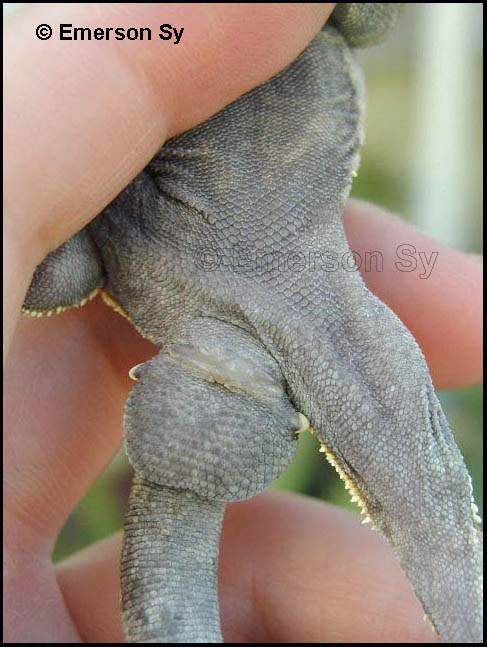
| SEXING The most reliable sexing method is by checking the hemipenal bulge, which is prominent on an adult male crested gecko. The hemipenal bulge will start to become obvious at the approximate age of 9 months. Sexing before the age of six months tend to produce more "females." Sexing hatchlings and juveniles is challenging especially if you only have one or two specimens. If you have a large population, sexing can be done by comparing the off-white cloacal spurs. The spurs are larger on males compared to females. This sexing method will yield fairly accurate results when done to specimens that are alteast four to six months old. Functions of cloacal spurs are not sufficiently studied, but they may be used as intraspecies visual signal or stimulator prior to mating. |
| ACQUIRING A CRESTED GECKO Crested geckos have proven to be prolific and easy to keep in captivity. Most specimens available for sale in the reptile trade today are captive bred. Various sources such as local petshops, reptile shows, private breeders and Internet retailers regularly advertise the availability of crested geckos. Male specimens are usually less expensive than female specimens since breeders need more females for propagation purposes. Expect to pay higher prices for more colorful and nicely patterned specimens and guaranteed females. |
| Tail-less specimens are also available at lower cost. This does not negatively affect the crested geckos ability to breed. It is basically aesthetic preference of would-be keepers whether to purchase tail-less specimens. Whenever possible, it is better to physically inspect specimens you are interested in before purchasing. Healthy crested geckos are active and readily walk or jump when handled. It should have a good weight based on its size. The eyes should be clear and not sunken. The toes should have ability to grip without problem. If you have to purchase specimens on the Internet or without prior physical inspection, buy from reputable breeders or online retailers. These sources will usually provide pictures of actual specimens and will most likely represent specimens honestly and fairly. You might pay a little more, but you will most likely be happier with your purchase than paying lower prices and getting inferior quality crested geckos. |
 |
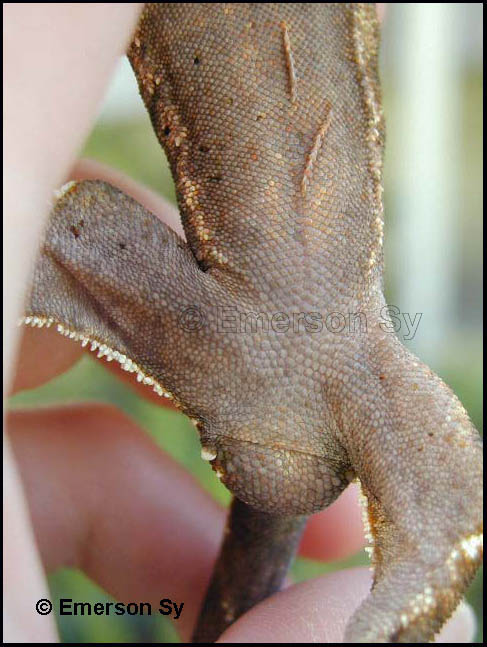 |
| Comparison of male (left) and female (right) cloacal regions. |
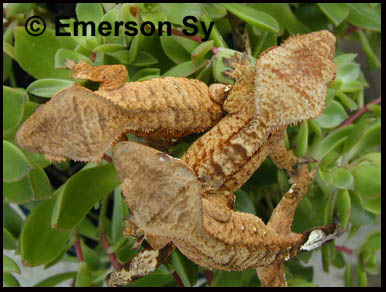 |
| Orange tiger CG's are one of the most popular morphs with herpetoculturists. |
| Close-up of R. ciliatus |