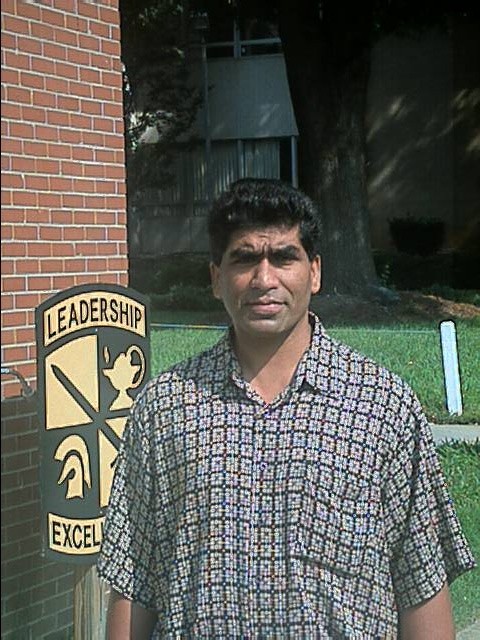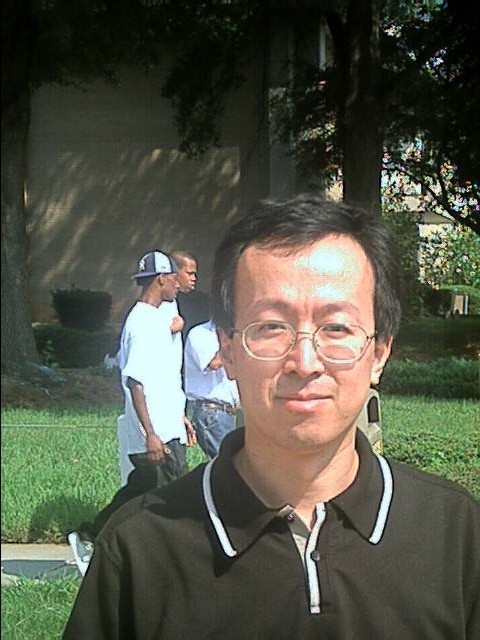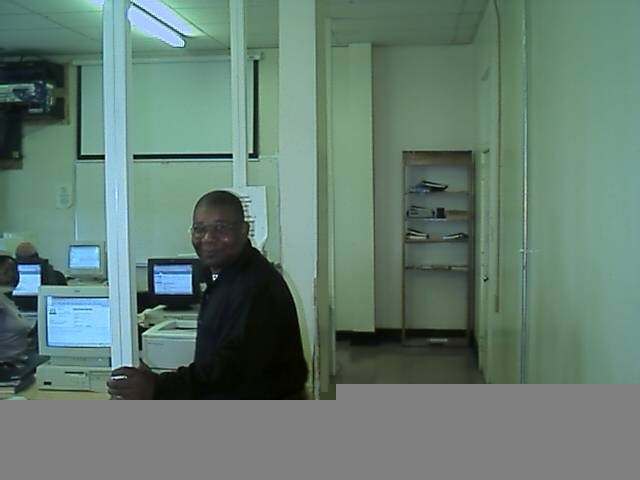
Department Members are:
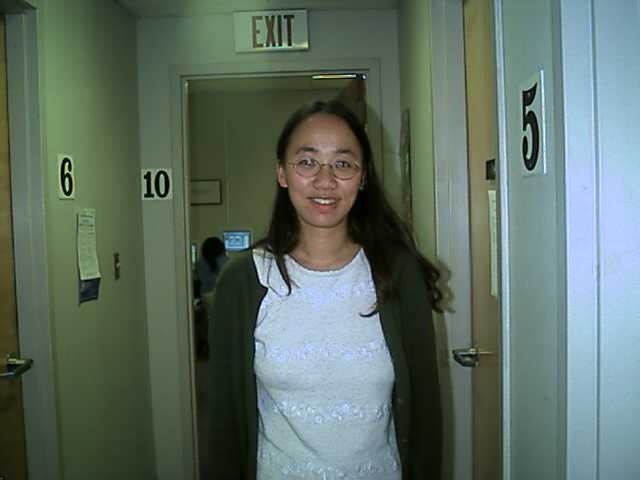
Dr Anozie Nebolisa
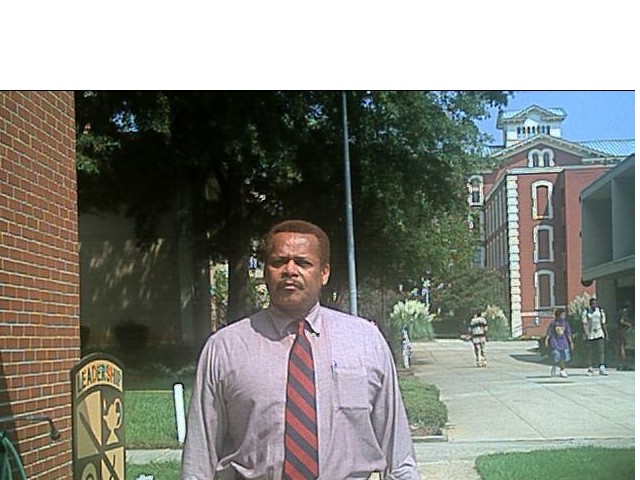
W. S. A. Johnson, Jr., Ph.D.
Department Chairman
Degrees Offered:
Bachelor of Science in Computer Science
Bachelor of Science in Computer Information Systems
Computer technology is one of the most dynamic and progressive intellectual enterprises of our age, and knowledge of computers is becoming essential for all areas of government, industry, and education. The Department of Computer Information Science offers courses and programs that provide students with the understanding of computer information systems and computer science they will need for any career.
The mission of the Department of Computer
Information Science is to expand both education and research programs in a
complementary approach to respond to the pressing needs of society and the
rapidly changing technology in the information era. Specific focuses are
providing the needed human capital and upgrading the existing work force in
the computing industry and organizations that depend on computing, taking
research leadership in exploring new directions and new developments in
computing and its application areas and preparing all university students for
entering the information era.
The program objectives of the Computer Science and Computer Information Systems are to:
· Produce graduates whose breadth of knowledge will allow them to contribute to computing projects in various roles: as individuals, as members of multidisciplinary teams, and ultimately as team leaders.
· Produce graduates who will work professionally or continue with graduate education in computer science, computer information systems, or other related areas.
· Produce graduates who continue to improve their skills through professional and post-graduate education
Computer Science, generally defined, is the study of problem-solving procedures, computability and computational systems. Computer Science professionals often work with individuals from other disciplines to coordinate new developments in hardware and software. Computer utilization has made the solutions to complex problems, once considered intractable, feasible because of the speed, accuracy and versatility of the modern computer.
The undergraduate curriculum provides students with a comprehensive knowledge of the theory, design and application of digital computers, information processing technologies and systems management with emphasis on the management of computer software, as well as computer graphics, and artificial intelligence, with particular stress on software and the software/hardware interface.
Introductory courses. The department offers a range of introductory courses to accommodate students of varying backgrounds and interests.
Computer information systems focuses on the technological foundation of computer information systems including areas such as database systems, human-computer interaction, data and computer communications, computer security, software engineering, and object-oriented programming. The major is designed to give students a thorough knowledge of the field and to provide an enduring foundation for future professional growth. The program blends theory and practice into a learning experience that develops skills applicable to complex real-world problems.
|
FRESHMAN
YEAR First Semester Sem. Hrs. ENG
111
English Composition I
3
FRS
111
Freshman Studies
I .5 ETH
100
Found of Knowledge
3 ETH
000
Ethics Seminar
0 MAT
111 General
Math I
3 CIS
101
Concepts of Computers 3 HPE
111
Requirement 1
TOTAL
17.5
|
Second
Semester
Sem. Hrs.
ENGL 112 English Composition II
3
SSC
115
Survey of Soc
3
HIS 115 Survey of World Civil
3
MAT 112 General
Math II
3
BIO 111 General Biology/Lab
3
FRS
112 Freshman Studies II
.5
TOTAL
15.5
|
|
SOPHOMORE
YEAR First
Semester
Sem. Hrs. CSC
201
Programming I
3 COM
210 Public Speakiing
3
ENG
113
College Comp & Argu
3 ETH
200
Ethical Concepts
3 CIS
120 Web Page Design I
3 TOTAL
15
|
Second Semester
Sem. Hrs
CIS 220
Discrete structure
3
HPE 112
Requirement
1
HUM 200
Intro to Humanities
3
CIS 210
Web Page Design II
3
CSC 202
Programming II
3
BUS
204 Principles of
Business
3 TOTAL 16 |
|
JUNIOR
YEAR First
Semester
Sem.
Hrs. ACC
241 Principles
of Account I
3 CIS
311
Visual Programming I I
3 BUS 260
Principles of Microeconomics
3 Elective
Free Elective
3 CIS
321 System Design
3
|
Second
Semester
Sem. Hrs.
ACC 242 Principles of Accounting II
3
CIS 312 Visual Programming II
3
ETH
300
Professional Ethics
3 EVR 200 Elementary Statistics
3
Elective
3
TOTAL
15
|
SENIOR
YEAR
First
Semester
Sem. Hrs. CIS
421 Management Infor
Sys
3 Elective In CIS or BUS
3
PAD
320 Org. Theory &
Behavior
3 CIS 332 Database
Management Concepts
3
Elective
3 TOTAL
15
|
Second
Semester
Sem. Hrs.
CIS 432 Computer
Network & Tele
3
CSC 475 Special Topics
3
CIS 411
Operating Systems
3 BUS 480 Quantitative
Methods
3 Elective
Free Elective
3 |
The computer science major offers instruction and performs research in the essential areas of computer science including software, Web and Internet computing, networking, hardware systems, operating systems, compilers, parallel and distributed computing, theory of computing, and computer graphics. This major is designed to prepare students both for graduate study in computer science and for technical careers in software development, computational science, networking, information systems, and electronic commerce.
|
Freshman
Year First
Semester
Sem. Hrs. ENG
111
English Composition I
3
FRS
111
Freshman Orientation I
.5
ETH
100
Found of knowledge
3
ETH
000
Seminar
0
MAT
113 General
Math
3 CIS
101
Concepts of Computers
3
HPE
111
Requirement
1
TOTAL
13.5
|
Second
Semester
Sem.
Hrs. ENG 112 English Composition II
3
MAT 115 General Math
4
BIO 211 Biology
4
SSC
115 Survey
of So
3
HPE
112 Requirement
1
FRS
112
Freshman II
.5
TOTAL
15.5
|
|
Sophomore Year First
Semester
Sem. Hrs. CSC
201 Intro
to Program I
3
MAT
201 Calculus
4
ENG
113 College
Comp & Argu
3
ETH
200 Ethical
Concepts
3
HIS
115 Survey of World
Civil
3
TOTAL
16
|
Second
Semester
Sem. Hrs.
MAT 212 Discrete Structures
3
HUM 200
Intro to Humanities
3
MAT 202 Calculus II
4
CSC 202 Intro to Program II
3
COM
210 Public Speaking
3
|
|
Junior Year First
Semester
Sem. Hrs. CSC 330 Data Structure& Algo
3
CSC
312 Compt
Syst & Arch
3 ETH
300 Professional
Ethics
3 CSC
205 JAVA I
Programming
3 CIS 332
Database Design & Mang
3 TOTAL
15
|
Second
Semester
Sem. Hrs.
CSC 206 JAVA II
3
MAT
312 Linear Algebra
3
MAT 313 Probabil &
Statistics
3
CSC
315 Compt Org & Assem
3
Elective
3
|
|
Senior Year First
Semester
Sem. Hrs. PHY
201 General Physics I
4
CSC 445
Software Engineering
3
CSC
435 Comp Langs&
Compiler
3 Elective
6 TOTAL
16
|
Second
Semester
Sem. Hrs.
CSC 475 Special Topics
3
|
COURSE DESCRIPTIONS
Computer Information Systems
CIS 101
Concepts of the Computer (3) F,S Prerequisite:
none
This course provides the student with the knowledge and skills necessary to understand and use microcomputer systems for professional, home, and small business tasks. Applications software packages are used to create various types of documents, and to explore cyberspace.
CIS 120
Introduction to Web Page Design I (3) F,S
Prerequisite: CIS 101
This course is designed to make students familiar with web page designing techniques using HTML and applications such as FrontPage for possible use in e-commerce. Students learn to incorporate basic graphical skills in developing a Web Page. Students are encouraged to use their imagination when developing web pages.
CIS 210
Web Page Design II (3) F, S Prerequisite:
CIS 101, MAT 111
This course introduces HTML and JavaScript concepts in designing web pages. Students use many of the skills developed in CIS 120. The course presents more progressive complex language skills such as Javascript and JAVA applet.
CIS 220
Discrete Structures (3) F, S
Prerequisite: MAT 112
This course is designed to provide the student with knowledge of mathematical topics related to the computer and information sciences, including various number systems and their relationship, logic, sets and relations, algorithms, graph theory, logic circuits, grammar, Boolean algebra, and automata.
CIS 230
Object Oriented Programming I (3) F, S Prerequisite:
MAT 112
Students are introduced to programming using C++ as their first programming language. The procedural aspects of programming are stressed first to make the language accessible to an introductory audience. This course provides the student with the knowledge and experience necessary to use the computer effectively in solving general problems and algorithm programs using C++. The requirements of computing systems, the structure of programs and programming, debugging and verification of programs written in C++, and an introduction to object-oriented programming are studied and practiced.
CIS 235 Object Oriented Programming II (3) F S Prerequisite: CIS 230 or CSC201
This is a second part course introducing the concepts of object-oriented programming using C++. A shift is made from procedure aspects of programming to object-oriented programming. This course provides the student with the knowledge and experience necessary to use the computer effectively in solving general problems and algorithm programs using C++.
CIS 311
Business Programming I- (3) F Prerequisite:
CIS 230
An introduction to computer programming in common business-oriented applications. Included are analysis of the problem, development of the structure, formulation of the algorithms, design of the programs, coding and debugging the programs, and hands-on running of the programs.
CIS 312 Business Programming II- (3) S Prerequisite: CIS 311
A second course in programming is a continuation of CIS 311. The emphasis is placed on determination of the structure, design on the program, preparation of appropriate documentation, I/O editing, table processing, preparing test data files, file creation and access, and hands-on running of the program.
CIS 321
Systems Analysis and Design (3) F Prerequisite: CIS230 or CSC201
This course focuses on the methods of systems and analysis and the skills needed to be effective. It provides an overview of the systems development life cycle (SDLC) and delves into the study and design phases through the use of both classical and structured tools and techniques for describing process flows, I/O designs and program specifications. It includes discussion of the information gathering and reporting activities and of the transition from analysis to design.
CIS 332
Database Design & Management (3)
S Prerequisite: CIS235 or
CSC202
An in-depth study of the analysis and implementation of computerized filing systems for the support of large databases. Included are relational model and design, syntactic and semantic design issues, database specifications, DBMS, design processes, and implementation.
CIS 411
Operating Systems (3) S
Prerequisite: CSC312
This course introduces students to the use of operating systems in such a way that the allocation and utilization of the computer system’s resources are optimized. It also introduces students to operating system structures, process and storage management, I/O systems, distributed systems, security, and case studies.
CIS 421
Management Information Systems (3) F Prerequisite:
CIS 321
This course is an in-depth study of the computer as an organizational information system. It also provides students with an opportunity to gain practical skills in designing, implementing, and maintaining computer-based information systems.
CIS 432
Computer Networks & Telecommunication (3 cr. Hrs.)
Prerequisite: CIS 220
This course is an introduction to computer networks, protocols and standards, regulatory issues, network topology, multiplexing, data link, local area network, TCP/PI AND THE Internet, and network management.
Human-computer
interaction is a discipline concerned with the design, evaluation and
implementation of interactive computing systems for human use and with the study
of major phenomena surrounding them. Human-computer interaction combines disciplines within the fields of
computing and information sciences (information systems, software engineering,
artificial intelligence) and the behavioral sciences (cognitive science,
cognitive psychology, sociology, organizational psychology, and social
psychology) to study the design, implementation, and evaluation of interactive
computer-based technology. The main purpose of this course is to understand the
nature of human-computer interaction and the constraints on design of such
systems from understanding perceptual and cognitive aspects of humans.
The first course in a two-semester sequence in algorithmic problem solving. Basic data structures, data and procedural abstraction, and problem-solving strategies are discussed and exemplified using modern programming technology. Programming laboratory experiences to build problem-solving skills accompany this course.
CSC 202
Introduction to Programming II (3 cr. hrs) F S Prerequisite: CSC 201 or
CIS 230
A continuation of CSC 201, including topics of searching and sorting, algorithmic complexity, and elementary numerical analysis. Laboratory experiences extended to the user interfaces of variety systems.
CSC 205
JAVA I (3 cr. hrs) F
Prerequisite: CSC 201 or CIS230
An introduction to the syntax, semantics, and application of a modern programming language. Topics include declaration, variables, output, input, selection, loops, subprograms, arrays, stings, pointers, and union. Guided laboratory.
CSC
206 JAVA
II (3 cr. hrs) S Prerequisite: CSC 205
A continuation of the principles of good programming style developed in both CSC 210 and CSC 205. Structured programming methods and top-down program design. String processing, internal searching and sorting methods, pointers, elementary data structures, and recursion. Guided laboratory.
CSC
312 Computer Systems & Architecture(3 cr. hrs) F
Prerequisite: CSC
202, or CIS235
A first course in digital systems, including a treatment of logic and digital circuits as well as design using register-level components. Data representation, device characteristics, and register transfer notation are covered in a manner that stresses application of basic problem-solving techniques to both hardware and software design. Requirement specifications, the design process, and issues associated with the use of graphical interfaces are also discussed.
CSC 315
Computer Organization with Assembly language (3
cr. hrs) S Prerequisite: CSC
312
A first course in computer organization and assembly language programming. Students are exposed to the register-level architecture of a modern processor and gain experience programming in the assembly language for that processor. Topics associated with data representation, I/O devices, and bus transactions that have been previously maintained are reinforced and amplified.
CSC 320
Database Design & Management (3 cr. hrs) S Prerequisite: CSC202 or
CIS235
An in-depth study of the analysis and implementation of computerized filing systems for the support of large databases. Included are relational model and design, syntactic and semantic design issues, database specifications, DBMS, design processes, and implementation.
CSC 330
Data Structure & Algorithm Analysis (3 cr. hrs) S Prerequisite:
CSC202 or CIS235
A course in algorithms that treats such topics as appropriate choice of data structures, recursive algorithms, complexity issues, and issues associated with computability and decidability. Intractable problems, such found in artificial intelligence, are discussed. An introduction to parallel algorithms is also included.
CSC 340
Computer Networks &
Telecommunication (3 cr. hrs) S
Prerequisite: CIS220
An introductory course in data communications, including digital data communications techniques, data link controls, multiplexing and design of networks. Guided laboratory.
CSC 345
Internship Experience (3 cr. hrs) F S Prerequisite: Junior Standing
Supervised work experience in computer science or a closely related area, resulting in meaningful work for the employing firm and a scholarly project for the student.
CSC 435
Programming Languages and Compilers (3 cr. hrs) F Prerequisite: CSC 202
or CIS235, CSC 330
A course that treats language-design issues and language translators after students have had exposure to variety of programming languages and problem-solving paradigms, so that linguistic issues and programming paradigms can be treated at a more advanced level.
Overview and definitions
of Artificial Intelligence (AI). Search, including depth-first and breadth-first
techniques with backtracking. Knowledge representation with emphasis on logical
methods, Horn databases, resolution, quantification, unification, solemnization
and control issues; non-monotonic reasoning; frames; semantic nets. AI systems,
including planning, learning, natural language and expert systems. An AI
programming language may be taught at the instructor's discretion. Spring
CSC 445
Software Engineering (3 cr. hrs) F Prerequisite: CSC 330
A course that treats topics associated with the design and implementation of large software systems. A continued emphasis on problem-solving concepts is integrated with a treatment of software life cycles, requirement specifications, and verification and validation issues. Social and ethical issues faced by the computing professional are discussed in the context of software engineering.
CSC 465
Operating Systems (3 cr. hrs) S Prerequisite: CSC 312
A course in systems software that is largely concerned with operating systems. Such topics as process management, device management, and memory management is discussed, as are relevant issues associated with security and protection, networking, and distributed operating systems.
Hardware, software, and
algorithms for computer graphics. Scan conversion, 2-D and 3-D transformations,
object hierarchies. Hidden surface removal, clipping, shading, and antialiasing.
The fundamentals of input, display, and hardcopy devices, scan conversion of
geometric primitives, 2D and 3D geometric transformations, clipping and
windowing, scene modeling and animation, algorithms for visible surface
determination, introduction to local and global shading models, color, and
real-time rendering methods. Written assignments and programming projects. There
will be a strong emphasis on the mathematical and geometric aspects of graphics.
CSC 475
Special Topics in Computer Science (3 cr. hrs) Prerequisite:
Dependent on the Topics To Be Offered
Detailed study of special topics in Computer Science,
including (but are not limited to) structure and use of various operating
systems; introduction to parallel and distributed processing and systems;
introduction to artificial intelligence; web design and authoring; computer
graphics; simulations and multimedia programming; and any emerging technologies.
Click on the subjects below to view the
syllabus for that course