|
|
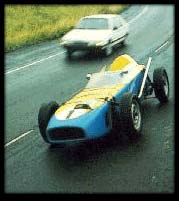
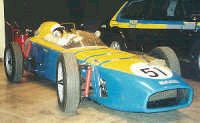
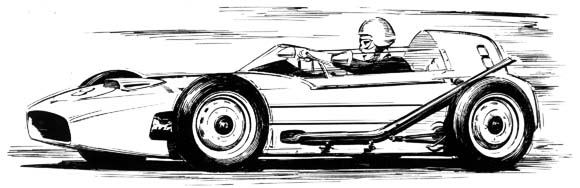
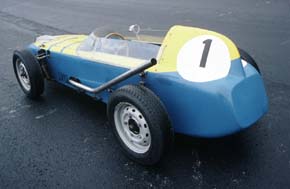
In 1960, following the road less traveled in typical SAAB fashion, a few of the fellows in SAAB's Combined Testing and Competition Department decided to try their hand at a Formula Junior race car. Formula Junior had been instituted a year earlier as a single-seat class, with the intention of providing a low-cost entry-level option for up-and-coming young drivers. The rules mandated that a standard engine up to 1100cc be used from a production automobile, with no major modifications as to tuning or valve adjustments. SAAB's little 3-cylinder 2-stroke was nowhere near this displacement limit, but the lightweight fiberglass monocoque chassis that was designed for it provided a significant power:weight advantage over the typical frame designs that the competition was using. The engine was installed in the front, driving the front wheels, and developing 86hp. Even with this relatively under-powered set-up, the SAAB was able to speed down the straights, leaving many other cars sucking stroker smoke. Plus, given this significant weight advantage, the SAAB Formula Junior could afford to brake much later than most, which added to its speed. In the fall of 1960, SAAB created quite a sensation when it brought the two brand new Formula Junior race cars to the track - first to Gelleras track in Karlskoga, Sweden, and then to the Djurgerds Race in Helsinki, Finland. However, with 70% of the car's weight over the front wheels, the car understeered horribly, and lacking better handling, the project was abandoned after two years. Besides, the purpose of the class was clearly fading by this point, as home-built cars were quickly out paced by more pro- |
|