|
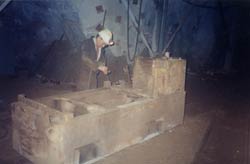
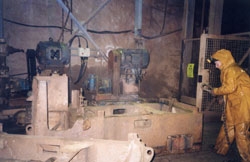
THE RISE AND FALL OF THE LOCOS The photo shows the author blowing out the surplus dust that accumulated below the Locomotive battery. This part of the loco, (namely, the battery) were lifted each week or sooner if necessary to inspect the drive motor. The mechanical parts of the locomotive was also inspected, especially the wheel bearings and brackets. Because of some bad track conditions it wasn’t unusual for the locos to come off the rails.
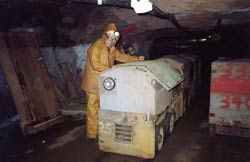
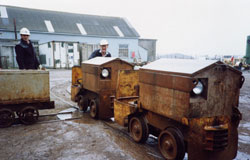
Each day, it was necessary to top up the batteries on the locos on all levels of the mine. The loco is a 1.75 ton Clayton Loco and works off a voltage of 72 volts dc. If you look carefully you will see that the other locos on that level are laying behind the one being worked on. This operation would have to be carried before the miners arrived.
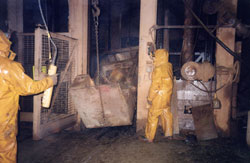
Topping up one of the locomotive batteries with distilled water. The watering can was looked at as a joke when it arrived on the scene, but like I said, ‘What’s good for Kew gardens is good enough for Crofty’.
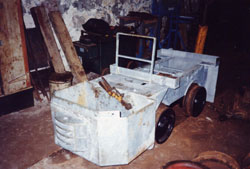
New locos were very expensive so Crofty made their own. The fabrication shop made the chassis and then they were sent away for galvanising. This was most important as the conditions underground were such as to cause excess deterioration of metals. The galvanising gave it more life.
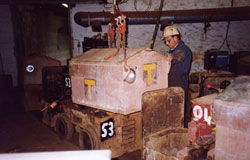
The box being fitted on the 1.75 loco chassis is the control panel which allows the driver to drive the loco at various speeds. There is a hand brake fitted just below this unit, necessary for parking.
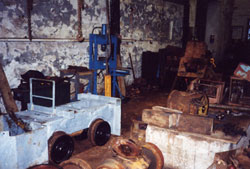
Loco chasis with wheels and motor fitted in the Loco repair shop. In the background is an Hydraulic Press.
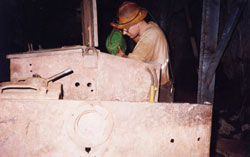
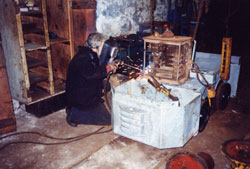
Loco having some welding performed on it with the welding equipment to the right of the machine.
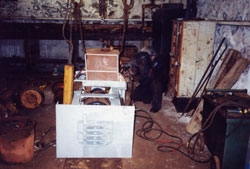
Two of South Crofty’s stalwarts- the carpenter and winder driver, preparing locos for underground. Note the Alluminium Container to the left of the picture. This would be used to house explosives and taken underground.
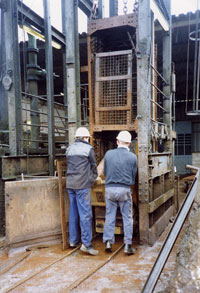
A 1.75 ton loco being loaded into the cage at Robinsons Shaft. This shaft eventually became unsafe for man riding and so all the locos were taken underground and repairs were carried out there
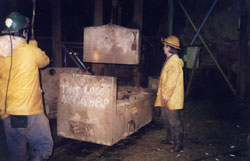
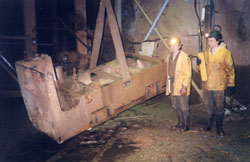
The battery belonging to a 5ton loco being removed for stripping down. Notice the logo.
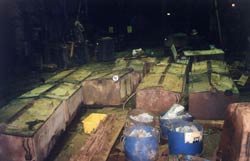
A scene taken down at 400 level in the last days of the mine. The picture shows battery cases from the 5.5 ton Clayton Locos which would have to be opened and the various sections of battery cells removed. The blue tubs contained various rock samples for souvenirs.
A 5ton loco chassis being attached by chain ready to be taken to the surface. Two small pump units in the background that had been removed previously
The chassis of a 5 ton loco being lifted up Cook’s Shaft. This was taken in the last few days of the mine.
‘Up she goes’. Another 5 ton chassis is transported to the surface.
Machinery | Cooks Repairs | Rope Maintenance | Flooding | The Closure | Personal Memories Click here to switch to Falmouth Docks website. |