The B-52 Stratofortress
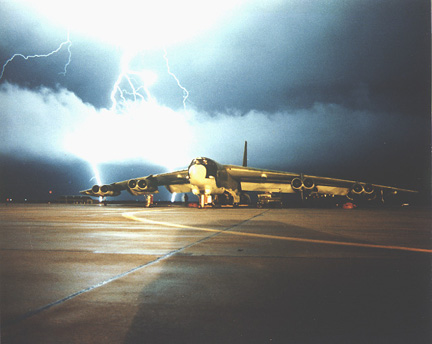
When someone thinks of a heavy bomber, many think of the B-52. The B-52 has been so influential in the modern history of the U.S., that some wonder where the U.S. might be today if the B-52 had never been developed. It is hard to find anyone who has not been affected directly or indirectly by the B-52. My uncle flew B-52's over Vietnam. In fact, he flew the B-52 during Vietnam that is currently being displayed at the Air Force Academy here in Colorado Springs, Colorado.
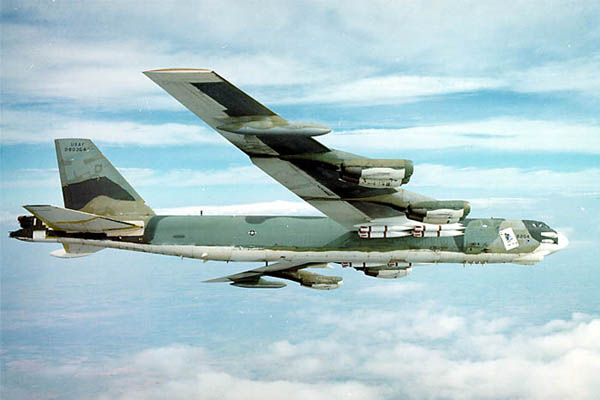
The B-52 first came on the scene in the late 1950's when it replaced the obsolete B-36 Peacemaker. The advantages of the jet engines over the propellers were immediately evident. They were able to fly heavier loads of bombs farther into enemy territory. The B-52's first major role was in the Cold War. Squadrons of B-52's were on constant alert so that they could be ready in a moments notice to decimate the Soviet Union with nuclear weapons. Unlike in the movie Dr. Strangelove, no B-52 ever dropped any warhead on the Soviet Union.
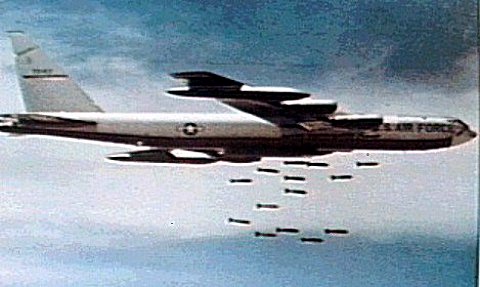
The first time that a B-52 ever dropped any bombs on an enemy was during the Vietnam War. The B-52's role in the war was priceless, constantly bombing enemy troops, military installations, anything that the enemy used. Because of the B-52's huge payload, it was able to demolish anything that it dropped its bombs on. It has been said that the North Vietnamese used the B-52 to their favor during the war. There are reports that when they were building the Ho Chi Min trail, and came upon an impassable hill, they merely set a few truck decoys near the hill. Inevitably, B-52's would eventually fly over and demolish the fake truck and the hill that they needed to be moved in order to continue building the trail. How true this is, I don't know.
The next time that B-52's saw combat was during Desert Storm. Even though the design of the plane was nearly 40 years old, they were able to bring the Iraqi army to its' knees in a matter of days. During Desert Storm, B-52's dropped 40% of all of the bombs dropped on Iraqi forces.
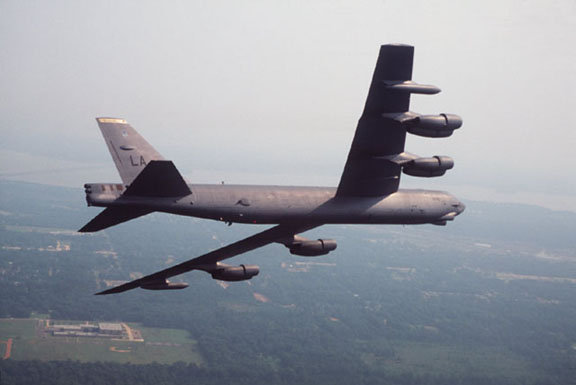
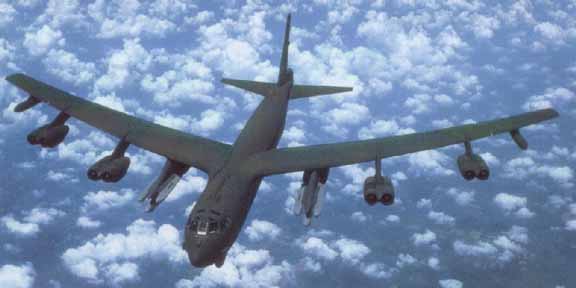
In all, 744 B-52's were produced in various models. The newest model still flies today with a few small changes. The newest B-52's have an increased range and have better engines. They are occasionally outfitted to carry the military's newest bomb. Although the B-52 has never dropped a nuclear bomb as it was designed, the conventional weapons that they have dropped have changed the course of history.
General Characteristics
Primary Function: Heavy bomber
Contractor: Boeing Military Airplane Co.
Power plant: Eight Pratt & Whitney engines TF33-P-3/103 turbofan
Thrust: Each engine up to 17,000 pounds
Length: 159 feet, 4 inches (48.5 meters)
Height: 40 feet, 8 inches (12.4 meters)
Wingspan: 185 feet (56.4 meters)
Speed: 650 miles per hour (Mach 0.86)
Ceiling: 50,000 feet (15,151.5 meters)
Weight: Approximately 185,000 pounds empty (83,250 kilograms)
Maximum Takeoff Weight: 488,000 pounds (219,600 kilograms)
Range: Unrefueled 8,800 miles (7,652 nautical miles)
 |
 |