The B-24 Liberator
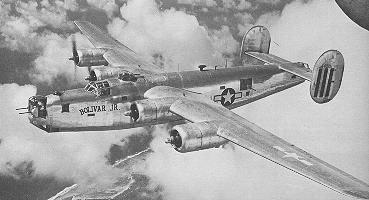
With the impending war in Europe, both Britain and France knew that they would need a new bomber if they were to beat Hitler. It was because of these needs that the B-24 Liberator was built. The British already had the B-17 Flying Fortress, so the B-24 was to be built knowing what did and did not work for the B-17. They needed to be long range and be capable of carrying large amounts of bombs deep into enemy territory. They also needed to be tough. Like the B-17's, the range of the B-24s was longer than any escort early in the war. This would mean that they would have to fend for themselves and fight of enemy fighters.
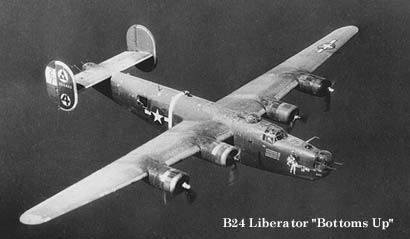
With all of this in mind, designers made a plane with sturdy airplane that could go long distances with thousands of pounds of bombs. The first flight of this new aircraft was on December 29, 1939 for the Army Air Corps. Orders soon came from Britain and France.
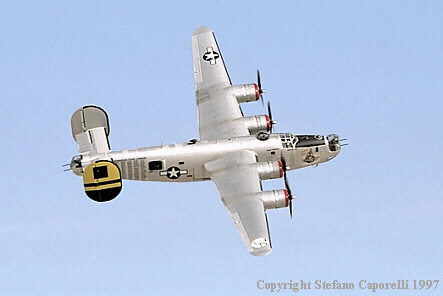
However, by time the B-24 started being mass-produced the war had started and the Germans had already captured France. All of the planes that France had ordered were delivered to Britain to be used by the Allies. Thankfully, the B-24 lived up to what everyone wanted of it. It flew deep into Germany and destroyed industrial facilities. The B-24 also hit targets in Italy and occupied Poland. Some notable targets include Ploesti, Hamburg, Naples, and Rome. On many bombing runs, the B-24 worked closely with the B-17.
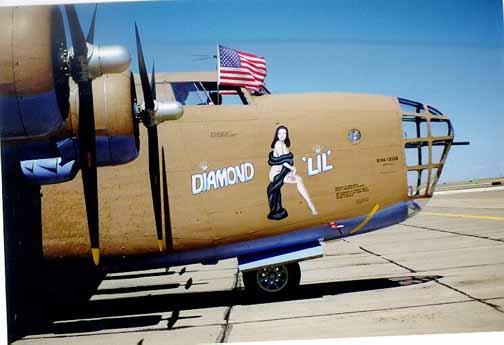
The B-24s were also very good at defending themselves, much like the B-17s. Each plane carried 5,200 rounds of ammunition on each run to use in the machine guns to ward off enemy fighters. Sadly, also like the B-17, a huge number of the planes were lost in combat. The generals felt that the number of planes lost was an acceptable number for what they were doing. The British had long ago resorted to night bombing because of the loses that they suffered. However, the Americans felt that it was better to bomb during the day and strive for accuracy. That, plus the fact that the B-24's did not fighter escorts, made them easy prey for German fighters. Despite that, B-24s did manage to drop over 630,000 tons of bombs onto German held territory during the war.
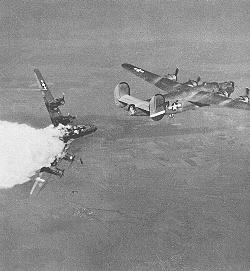
After the war, the B-24s feel into obscurity once again. Their biggest use was in the U.S. Coast Guard during the 1950's doing air rescue and weather reconnaissance. As with the B-17, many were merely chopped up and sold for scrap. That really is such a sad end to the plane that was mainly responsible for bringing Germany to its knees during the Second World War. Most of the remaining B-24s are in museums across the world and very few are still in flying order today.
General Characteristics:
Wing span: 110 ft 0 in (33.53 m)
Length: 67 ft 2 in (20.47 m)
Height: 18 ft 0 in (5.49 m)
Empty: 37,000 lb. (16,798 kg)
Operational: 65,000 lb (29,510 kg)
Maximum Speed: 290 mph (467 km/h)
Service Ceiling: 28,000 ft. (8,540 m)
Range: 2,200 miles (3,540 km)
Powerplant: Four Pratt & Whitney R-1830-43 or 65 1,200 hp 14 cylinder radial engines.
Armament: Six .50-calibre guns, two each in nose and dorsal turrets and in waist positions, and four .303-in. guns in a Boulton Paul tail turret. Internal bomb load of 8,000 lbs. (3,632 kg) with optional external bomb racks.
 |
 |