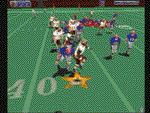
Your rushing game is the foundation for a dominant offense. If you can run the ball successfully, you'll have a better chance of winning games. Call a running play on most of your first downs to set up both pass and short yardage plays.
For short yardage blasts through the middle of the line, it's better to call plays that don't involve your halfback (unless your halfback is Jamal Anderson or Jerome Bettis). Instead, use your fullback for these plays. (Fullbacks are also useful if you use your halfback extensively and he needs a breather.) If your halfback gets too tired, he'll be prone to fumble and his overall skills will diminish. (The game's default setting will automatically substitute overfatigued players.)
Calling plays for your fullback occasionally can catch the defense off guard if they are keying on your halfback. Calling draw plays in long third-down situations can also catch the defense in a loose, pass-defensive formation.
Good scouting is beneficial. Check out your team's player stats to see which side of the offensive line is strongest, then run more to your strongest side. Check out the opposing team and note where the weaker players line up. Avoid running straight at the superstar defensive linemen.
The key is to mix up your play calling with sweeps, dives, sprints, and so on to keep the defense off-balance and to make the most of your particular running back's strengths.