|
Edit > Rest pose > Set rest pose |
Defining a Rest Pose for IK Skeletons |
|
| |
The single-chain IK solver uses a rest pose from which all its unique solutions initiate. The rest pose is a set of values for each joint that provide an initial value for the IK solution. | |
|
For Versions before 7.5, it was recommended that you set keyframes for all skeleton joints at frame 0 or -1, and go back to a skeleton's "starting pose". |
Each skeleton joint "remembers" a rest value for its translation and rotation, X, Y, and Z values. The rest pose can be copied and mirrored onto a similar skeleton. For information on reverting to a rest pose, see Edit > Rest pose > Assume rest pose on page 307. How to Use |
|
Alternatively, you can pick an IK handle to set rest pose for all joints on the IK chain. |
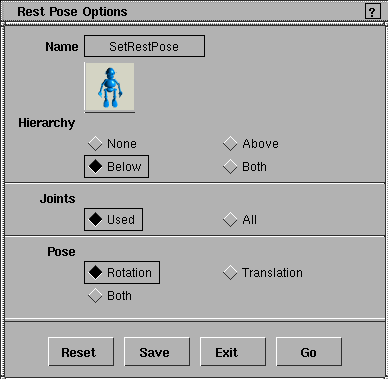
Rest Pose Options |
|
Select Edit > Rest pose > Set
rest pose - |
HierarchyNone
Above
Below
Both
JointsUsed
All
PoseRotation
Translation
Both
|
| Copyright © 1998, Alias|Wavefront, a division of Silicon Graphics Limited. All rights reserved. | Please send questions or comments regarding the documentation to: [email protected] |
 to open the
Rest Pose Options box:
to open the
Rest Pose Options box: