|
|
         
|
Shelters Made From Natural Materials
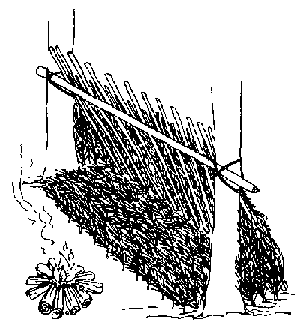
It's unlikely that you will ever have to build a shelter entirely out of natural materials, but you never know when it may be necessary. The main problem with building natural shelters is that you have to redesign each shelter for the area that your in. Each area will have its own difficulties that you have to overcome to build a shelter (i.e.: such as scarcity of materials, bad ground, lack of insulate material, ect.). Because of this all that I can do is provide you with some basic designs, and some tips. Basic Designs: The Brush Lean-to: The brush lean to is the easiest shelter to build. What you have to do
is find two tree's slightly farther apart then you are tall. Then find a
stick slight longer then the space between the trees and attach it between
the tree's about 1 m (3 feet) off the ground. Once this is done find
several shorter sticks and lean them against the cross beam you just made,
put one stick every 15 - 20 cm (8 in). The sticks should only be placed on
the windward side of the shelter. To make the shelter stronger the sticks
can be driven into the ground and/or tied to the cross beam. Once all the
sticks are in place fill in the gaps with brush, build a sleeping mat (or
place down you sleeping gear...), and your done. A small fire can be built
to increase warmth.
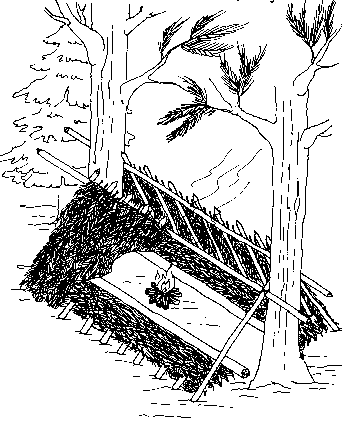
The Double Lean-to: This is a warmer shelter that can sleep two, or one person and their
equipment. It has the advantage that it blocks weather from more then one
direction, and since it's enclosed it is warmer. To build it, fallow the
instructions for the brush lean-to, but make two lean-to's, one on each side
of the tree (each one should have it's own cross beam and everything). A
small fire can be built between the two bed's, but keep it small, as a large
fire could burn you, or set the lean-to on fire.
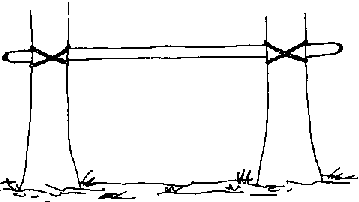
Tips and Hints The Cross Beam Probably the hardest thing in building these shelters is getting a stable cross beam between the tree's. The best option is to find two tree's with branches at the right height to support the cross-beam. Of course tree's like this rarely exist in nature, and if your building the double lean-to it's almost impossible to find two tree's with four branches at the right height. There are two ways around this: 1) Tie them in place. This is easiest if you have rope, but if you don't you can use your shoe laces, pack ties, unused pieces of clothing, willow roots, or plaited grass (see section below on how to make plaited grass).
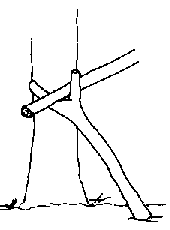
2) At times you may have to find another way to support the cross-beam.
About the only other way is to find a forked stick, and use the fork to jam
the cross-beam against the trunk of the tree. This woks best if the forked
stick can be driven into the ground. The picture below shows how to do
this.
Plaited grass: To make plaited grass pick a couple handfuls of grass stalks (preferably green). Remove all the leaves from the grass, and pick three stalks that are different lengths. Tie these stalks together at one end, and braid them together. Then you reach the end of one of the stalks take another stalk, and trace it back along the braid four or five braids. Once the new stock is firmly woven into the pattern, continue braiding. Whenever you come to the end of a stock weave another stalk back into the braid, and continue braiding. Continue until you have a strand long enough for your purpose. This strand will not stand up to a lot of tension, but should be strong enough to hold a cross piece in place. If it is not take three of these plaited strands and braid them together.
Filling Materials Once the cross piece is in place it's easy to finish off the shelter. However some people may run into problems when it comes time to cover the frame. The simplest method is to rip branches off pine trees and to stack them, several branches deep, on the frame. This will produce a wall that will block the wind and wild rain. Sometimes the branches wont stay put. One way to fix this is to lean several heavy branches onto the lean-to once the branches are in place. Of course if its raining the above method of filling in the lean-to will not be satisfactory. To build a relatively waterproof shelter start by building the lean-to with a steep back wall. Place down a thin layer of pine branches. Then cover the pine branches with a few layers of moss. When laying down the moss start at the top of the shelter and work your way to the bottom. This way the moss will act like shingles. This should provide you with a waterproof roof.
|
This Page Copyright (2004), Knights of Dionysus
Authored by: Bryan Heit