|
 |
 |
 |
What is Vat Dyeing?The name VAT DYEING has been derived
from the fact that the dyeing process is performed in a VAT or
bucket. It is preferred when anyone wants to obtain a solid even
shade, the same color over the entire garment using almost any dye,
including fiber reactive dye, direct dye, acid dye etc. |
 |
 |
 |
 |
Vat Dyes are based on original Indigo dye that is a
kind of natural Dye. Vat dyes are an ancient class of dye. Now a days,
Indigo dyes(parent of Vat dyes) are manufactured synthetically. Various
kinds of fibers can be washed by using vat dyes and the main categories
of fibers are cotton and wool. One thing we should remember that in all
Vat dyeing process, Vat dyes are not used. "Tie Dyeing" which
is a kind of direct dye application is the opposite of Vat Dyeing. For
the home dyers, vat dyes are not so suitable as fiber reactive dyes.
This is because it is difficult to work with as these require reducing
agent to dissolve in water. These dyes can be dissolved into water only
when these are oxidized.
 Process
of Vat Dyeing in brief Process
of Vat Dyeing in brief |
The fibers which have to be dyed are immersed in
oxygen-free vat or bucket repeatedly and then these fibers are exposed
in the air. When it is done so then the dissolved water in the fibers
reduces and the color change is occurred there as oxygen turns the dyes
to water insoluble form. For an example, Indigo (a kind of Vat dyes)
changes from yellow to green in the vat (dye bath) and when it is
exposed in the air then it turns in green.
|
Commonly
used Vat Dyes |
The commonly used vat dyes are:
 Anthraquinone: Anthraquinone:
These kind of dyes are often found in the classes of Vat dyes and
Disperse dyes. Its fastness capacity is very high and therefore, the
high cost of these dyes is ignores. Mostly these dyes are applied on
cotton and cellulose fibers.
Indigoids:
These dyes are intensely insoluble in water and therefore they are
unable to dye the fibers directly until and unless they are not being
oxidized.
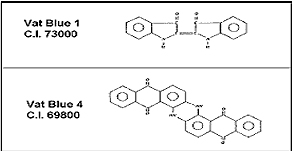
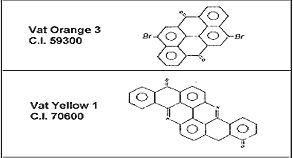
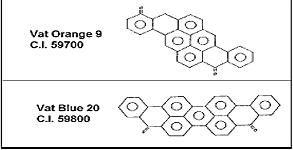
Molecular Structure of Some Vat Dyes
|