 |
Titchfield
Haven Nature Reserve
Solent |
Solent Landmarks Map Hillhead Harbour The Canal Some Birds
| 308
acres of rare wetland habitats
A reserve best known for its wintering wildfowel and waders . In the summer the reed beds provide nesting sites for warblers,water Rails ,bearded tits and the rare Cetti's warbler. |
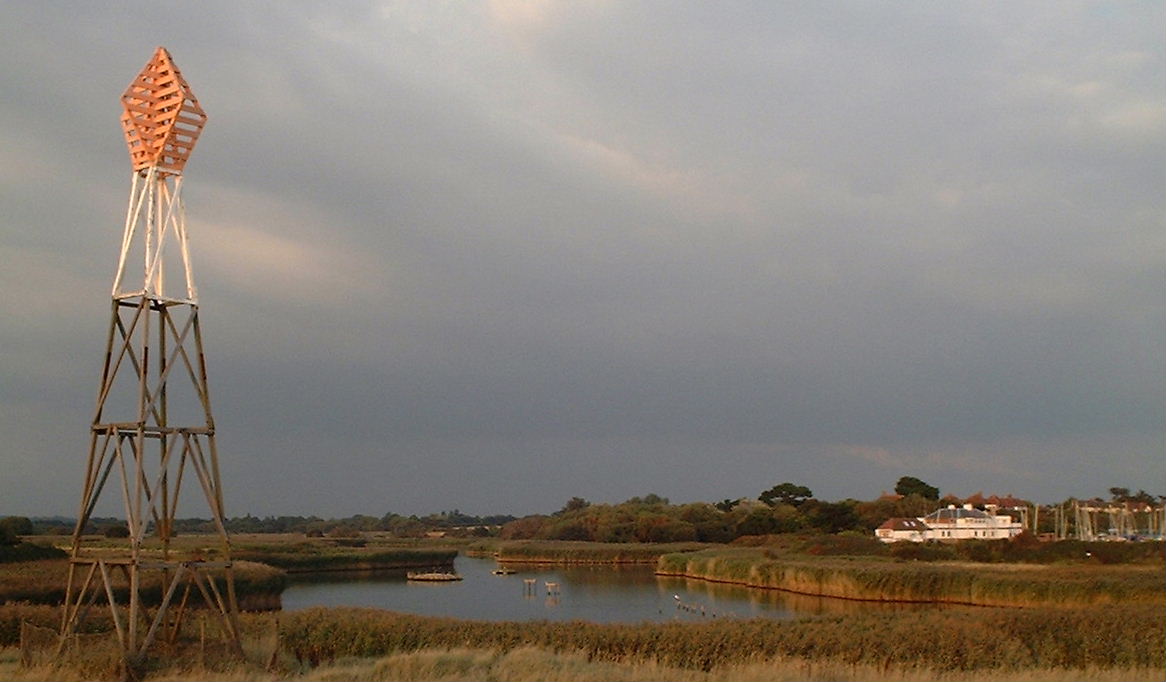
The Reserve looking from the seawall towards the visitors centre. Autumn 2001 |
|
| History
of a manmade landscape
. Despite its Titchfields importance as a nature reserve it is a landscape that has been formed and is maintained by man's actions. The vegetation is managed to maintain the required diversity. Without such management the area would progress into woodland. Water levels are controlled, pools dug, reedbeds established and hedgerows planted, all to favour an environment for bird life.
|
1611
The Titchfield Canal is built and the estuary is turned into a freshwater marsh which became a huge asset to the landowners for hunting. 1820s Delame family obtained Estate,wildfowling becomes a very popular pastime. 1870's The Canal diverted to new outlet at Hillhead Harbour 1890's Culverts built to manage water meadows with canal water. 1945 Hunting is Ceased. WWII The Area is made out of bounds and the sluice gates are left to fall in to disrepair. As a result salt water invades the Haven and reed beds are destroyed. 1945 Cattle are introduced to the meadows. 1945 Sluices are repaired 1929 The area is operated almost as a private a sanctuary under ownership of Colonel Alston and his family. 1959 The importance of the habitat is recognised with the declaration of an SSSI 1972 Hampshire council purchases the Haven. 1973 The site is declared a statutory local nature reserve.. 1976 The first of the scrapes are built others are made in 1980 and 1984 1998 Haven house converted to visitors centre. |
|
| Access
A visitors centres exitsts at close to Hillhead harbour. Access to the reserve is controlled by permits which can be obtained from the centre. Paths and hides exist within the reserve for permit holders. |
 |
|
| The
Habitats
Southern Hampshire is an area under great pressure from development. The coastal areas are particularly attractive for new luxury housing. Habitats provided at Titchfield are therefore valuable in maintaining natural diversity. |
The River Meon
This forms the heart of the reserve and is used by fish eaters such as Heron and kingfishers. In the Autumn resting areas are created by cutting back vegetation which are used by Mallard, Teals and shovelers. Marsh and scrub These are found at the edges of the reserve and provide shelter and fool all year round.Many smaller birds collect seeds,fruit and insects from the vegetation Scrapes These have been created to provide feeding areas of shallow water and mud for wildfowl and waders. Meadows West grassland such as these are now rare in Britain,the meadows are the remains of the water meadow system and are crossed by water filled ditches.These meadows are grazed by cattle in summer and in the winter are used by waders and wildfire. Hedges These surround the haven and some have been recently planted to provide new habitats Brackish Saltmarsh This exists in the vicinity of the shingle bank where some salt water leakage occurs. |
|
| Some suggested TeamManley links to
follow
Penlee Point: A coastal Nature reserve in Cornwall |
The Birds of Titchfield Haven:Barry Duffin
Information boards at the reserve.
Exploring Hampshire's coast:Hampshire Recreation
The Solent Shore:Hampshire Recreation