| Rights of Stem Cell Research |
| An Agreement Was Reached! In August of 2001, an agreement was reached over the commercialization of human embryonic stem cell technology. The agreement resolves a lawsuit filed by theWisconsin Alumni Research Foundation(WARF) and the Geron Corporation. Geron now holds the rights to develop therapeutic and diagnostic products from the testing of stem cells. This agreement gives scientists the rights to use stem cells in their research. Scientists have been given the right to test on stem cells on multiple occasions such as this and by the government authorising the legality of the testing of stem cells. Political Issues Political issues concerning the rights of stem cell research include the governmental funding of stem cell research. NIH (National Institute of Health) issued guidelines for the research of stem cells and will consider grant applications provided that the scientists do two things. First of all, researchers have to use frozen surplus embryos that would have been discarded by fertility clinics and that the scientists rely on supplies from privately funded companies. Scientists can use stem cells to help humanity and it's causes, but giving the human body less immunity and potential to rid itself of these diseases by itself. One could even argue that scientists are getting in the way of evolution itself by using an unspecialized cell to cure diseases that our bodies should learn to cure by themselves. On the other hand, we were composed of only stem cells when we were embryo's and therefore we are using bodily tissue to cure diseases. Religious Issues Religious issues concerning the rights to test stem cells include the concern of man playing God. However, this concern could be countered by the fact that God created man in his own image (this topic relates to cloning as well as stem cell research) so that creating a human being in the image of a human being would literally be more correct. Another fact is that the whole population of the country does not believe in God and it would be legally improper for the government to purely restrict the right for scientists to use stem cells based on religion. If the government was to do this, it would be denying the constitutional right of the first amendment, which states "freedom of religion" as well as the rights of the common people in their trust in the government that all the rights of citizens are recognized. Importance to the Future Stem cells will be important to the future.The rights of stem cell research will expand as technology and medicine increases. The reason is because there will be more options as human technology increases and therefore stem cell research will not be such a controversial topic. In the present, however, stem cell research has many differing opinions and scientists have limited rights to use them. |

|
| R I G H T S O F S T E M C E L L R E S E A R C H |
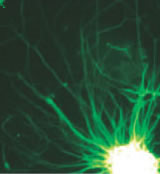 |
| Pearson, Helen "Fused cells become nerves and other cell types." (c) Nature |